Public Research Institutes' Joint Open Source Event to Expand the AI Collaboration Landscape
AI TIMES ·
✦ AI Summary
According to AI TIMES, the Ministry of Science and ICT, the National Research Council of Science & Technology, and ETRI will hold the "OST 2…
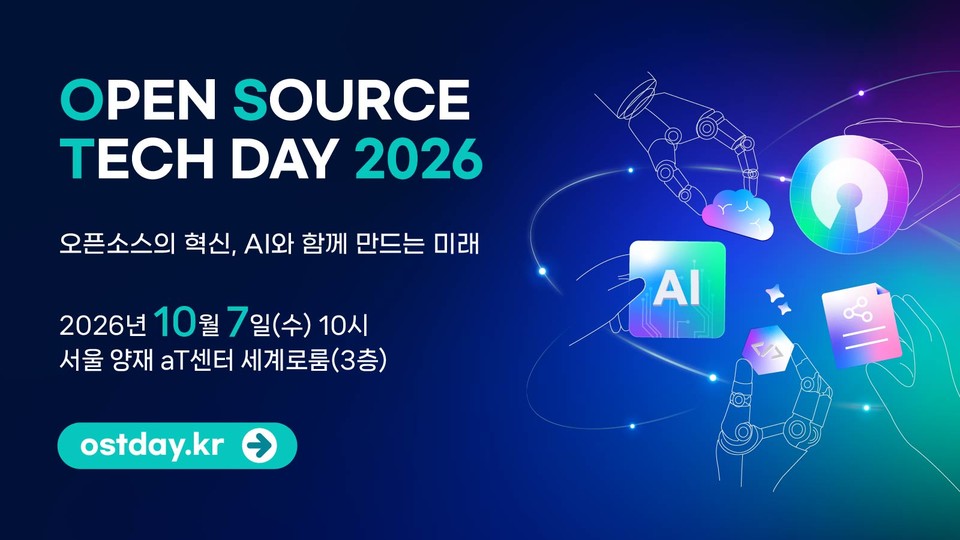
According to AI TIMES, the Ministry of Science and ICT, the National Research Council of Science & Technology, and ETRI will hold the "OST 2026 Open Source Tech Day" on October 7 at the aT Center in Yangjae-dong, Seoul, to discuss innovation directions for research and development based on open source in the AI era. The event will bring together 9 government-funded research institutes and place trends such as agentic AI, sovereign AI, and AI safety at the center of discussion. It aims to expand the open source collaboration framework centered on government-funded research institutes to industry, academia, public institutions, and developer communities, creating a venue that connects research sites with policy and the industrial ecosystem. A key point is that open source is being reinterpreted not merely as a way to release software, but as a foundation that determines technological competitiveness, research speed, and usability. Presentations will also cover issues including open standards, legal risks, intellectual property, digital sovereignty, and embedded AIoT operating systems. Through this, the event seeks to share the experience accumulated by government-funded research institutes and spread an open research culture needed in the AI era.
Perspective
This issue matters because open source is no longer being treated as just one development option, but as infrastructure that shapes AI competitiveness and the structure of research collaboration. In particular, if the collaboration framework of government-funded research institutes connects with the broader ecosystem, the focus is likely to shift from simply releasing research results to aligning standards, legal and institutional frameworks, and practical use cases. Ultimately, the line between who creates the technology and how it is connected and spread is becoming clearer as the decisive factor in whether R&D innovation succeeds.
This perspective is BizCrush's own commentary and is not part of the reporting by AI TIMES.
This article was produced with the help of an automated content generation algorithm.
Source: AI TIMES
View originalThis article was summarized and organized by BizCrush based on the original article from AI TIMES. For exact quotations and full details, please refer to the original article.