KT Unveils Standard Model for Hospital AX, Combining AI Assistant and Data Platform
TECHWORLD ·
✦ AI Summary
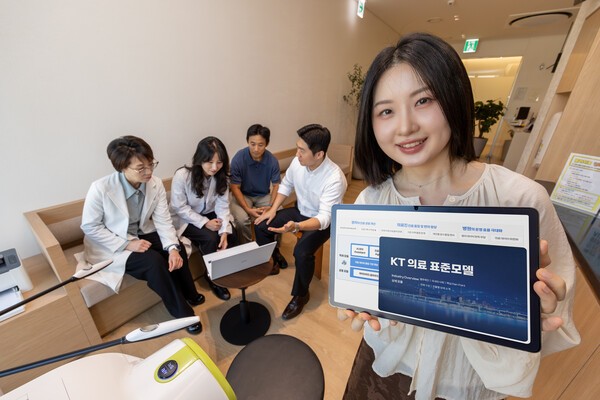
KT has unveiled a standard model for medical AX that integrates hospital infrastructure, a data platform and AI services.
The standard model is aimed at improving patient care experiences, supporting medical staff, and making hospital operations more efficient, with a focus on linking and using data across the full hospital workflow.
KT plans to verify services in each hospital's environment before gradually expanding application to tertiary and general hospitals.
KT has unveiled a standard model for medical AX that integrates hospital infrastructure, a data platform and AI services. KT is presenting a "medical standard model" tailored to each hospital's system and data environment, and plans to expand its application to tertiary and general hospitals.
The standard model is aimed at improving patient care experiences, supporting medical staff, and making hospital operations more efficient. It focuses on using data across the full hospital workflow, from patient admission and registration to diagnostic testing, treatment, administrative work, billing, discharge and post-discharge care, by linking it with existing systems.
KT conducted a demand analysis among medical staff and hospital executives, and based on that analysis selected patient guidance, clinical administration, workforce and facility operations, and medical data utilization as the main AX application areas.
An "AI patient assistant" will be applied at patient touchpoints. The "AI patient assistant" supports reservation, guidance and confirmation tasks with AI, while the AI voice bot provides 24-hour inquiry handling, symptom-based appointment intake and post-discharge care guidance.
For medical staff use, KT presented a nursing schedule agent and an operating room schedule agent. For hospital administrative work, it presented a "clinical administration agent." This agent recognizes and analyzes conversations between medical staff and patients, and writes clinical notes by reflecting medical terminology and abbreviations. After medical staff review and approval, the completed clinical notes are linked with electronic medical records and test and prescription systems, supporting everything from note creation to orders and billing.
KT also plans to add a medical knowledge-based RAG function to the AI patient assistant in the first quarter of next year. The purpose of adding the RAG function is to expand the scope of medical information search.
The medical data platform will also be responsible for collecting and storing electronic medical records, medical imaging, test and research data. It will also perform data linkage based on health information exchange standards. Based on this, the platform concept includes providing medical data search, providing data for AI training, and providing an environment for medical AI development and verification.
KT plans to combine solutions from specialized medical companies, a data platform, and hybrid cloud and GPU computing infrastructure in the future. It also plans to expand the standard model into diagnosis, interpretation and decision support areas. The target applications include an AI cancer diagnosis CDSS that links clinical and imaging information with treatment guidelines, and an AI interpretation service for real-time endoscopic image analysis.
KT is pushing ahead with participation in the government's "AI Basic Medical Strategy"-linked AI specialized hospital project. KT said it will expand medical AX adoption in line with national policy to spread medical AI.
KT is taking into account that each hospital has different systems, data environments and AX priorities. Accordingly, KT plans to verify services in each hospital's environment before gradually expanding the scope of application. Kim Bong-gyun, vice president and head of KT's Enterprise Division, said the company will provide a foundation that combines KT's infrastructure and AX capabilities and support the staged introduction of needed services.
KT has reorganized its dedicated medical AX team and is expanding discussions on adoption with tertiary and general hospitals nationwide. KT plans to invite hospital officials this month to hold a medical AX seminar, where it will discuss AI-based medical productivity and ways to innovate hospital operations.
Source: TECHWORLD · Kim Seung-gi
Original: https://www.epnc.co.kr/news/articleView.html?idxno=407720
References
This article was produced with the help of an automated content generation algorithm.
Source: TECHWORLD
View originalThis article was summarized and organized by BizCrush based on the original article from TECHWORLD. For exact quotations and full details, please refer to the original article.