Seoul Moves to Launch Regular Autonomous City Bus Service
AI TIMES ·
✦ AI Summary
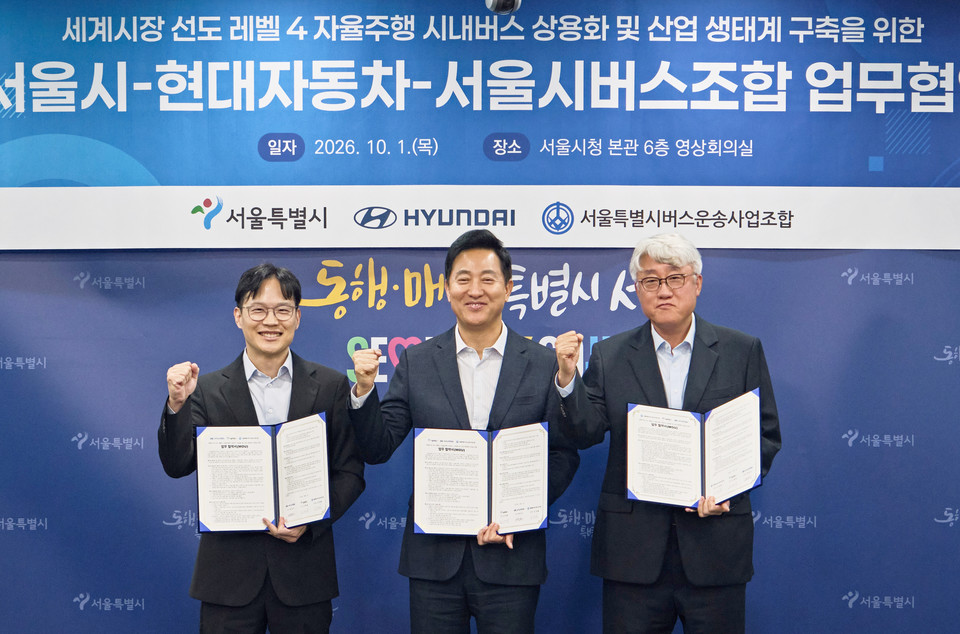
According to AI TIMES, the Seoul Metropolitan Government signed an agreement on October 1 with Hyundai Motor and the Seoul City Bus Transpor…
According to AI TIMES, the Seoul Metropolitan Government signed an agreement on October 1 with Hyundai Motor and the Seoul City Bus Transport Association to introduce 500 Level 4 autonomous city buses into the regular public transportation system by 2030. The key is to go beyond converting vehicles for demonstrations and instead build dedicated buses, a common platform, and standardized AI training data together to connect them into an actual operating system. The Seoul Metropolitan Government will handle policy and institutional improvements, while the vehicle developers and the transit industry will separately take charge of manufacturing and maintenance, as well as control and on-the-ground operations. In particular, the plan calls for standardizing sensor configurations, installation criteria, and data accumulated during operation to create an open ecosystem that companies and research institutes can use for technology development and verification. Another factor adding weight to the plan is that it will prepare an operating system that includes dispatch, maintenance, charging, and safety management in order to move from demonstration-centered projects to regular route operations. The vision even extends to spreading the model verified in Seoul to other cities, suggesting that this agreement is more than a simple introduction plan and instead a starting point for shaping the industry structure.
Perspective
This vision matters because it shifts autonomous driving from a competition over the performance of a single vehicle to a public transportation system issue in which data, operating systems, institutions, and field experience all work together. If dedicated buses, standardized data, and an open ecosystem are pursued as a package, it can reduce dependence on a specific operator and move the benchmark for technology verification closer to real-world operations. In the end, that means the main battleground shifts away from the buzz of pilot runs and toward the design of a service that runs reliably.
This perspective is BizCrush's own commentary and is not part of the reporting by AI TIMES.
This article was produced with the help of an automated content generation algorithm.
Source: AI TIMES
View originalThis article was summarized and organized by BizCrush based on the original article from AI TIMES. For exact quotations and full details, please refer to the original article.