Solid Completes NTN Communication Demonstration Using Mugunghwa Satellite with KT SAT
IT DAILY ·
✦ AI Summary
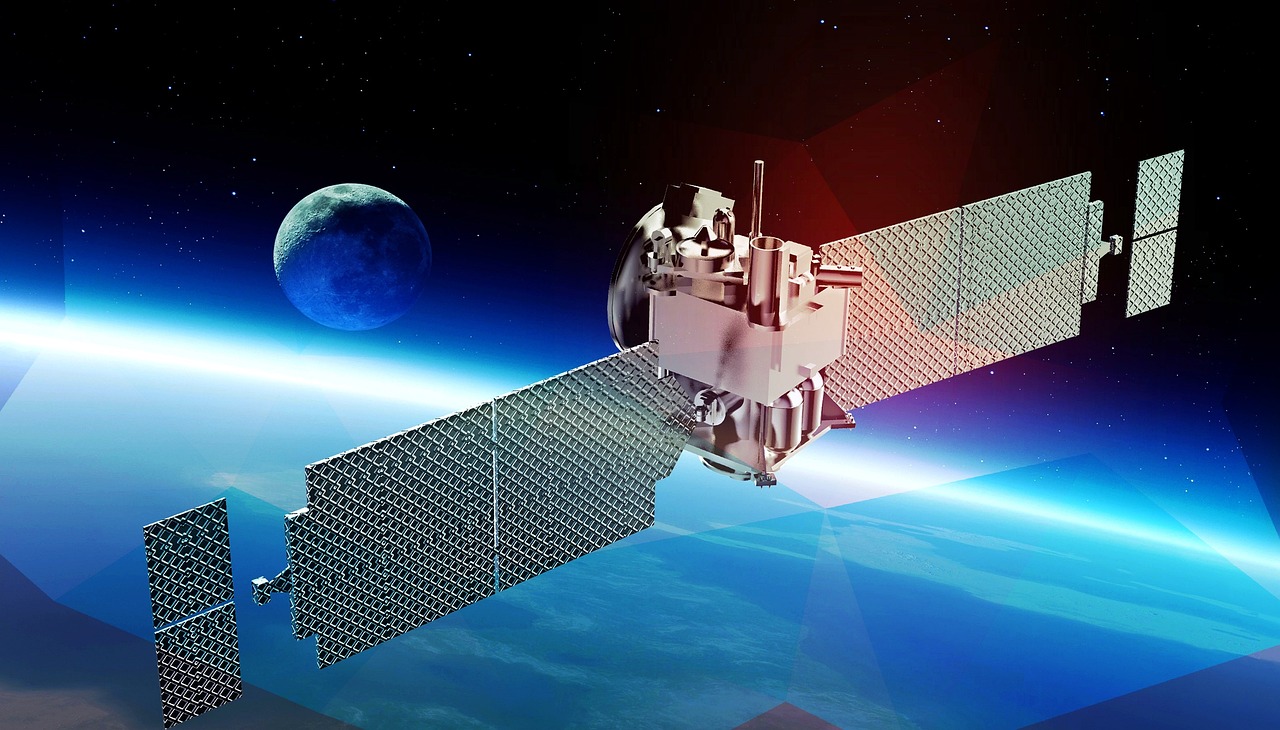
Solid announced on the 1st that it had successfully demonstrated non-terrestrial network (NTN) data communications using the geostationary (GEO) Mugunghwa satellite in cooperation with KT SAT.
The demonstration was carried out based on the Mugunghwa satellite operated by KT SAT and the ground station infrastructure at the Geumsan Satellite Center, and it took place last August at the KT SAT satellite center ground station.
During the demonstration, the companies examined the entire process by which the NTN terminal and base station access the communications network through the satellite, and confirmed actual data transmission and reception as well as maximum downlink speeds of 100 Mbps and uplink speeds of 77 Mbps.
Solid, a telecommunications equipment specialist, announced on the 1st that it had successfully demonstrated non-terrestrial network (NTN) data communications using the geostationary (GEO) Mugunghwa satellite in cooperation with KT SAT.
The demonstration verified NTN data communications using the geostationary (GEO) Mugunghwa satellite through cooperation between Solid and KT SAT.
Solid is a telecommunications equipment specialist.
Solid’s core business is repeaters.
Solid recently began research and development in the satellite communications field.
A geostationary satellite is located at an altitude of about 36,000 km above the Earth’s equator. It revolves at the same period as the Earth’s rotation.
For that reason, it appears to be stationary over a single point when viewed from the ground, and the term geostationary derives from that characteristic. A single geostationary satellite covers about one-third of the Earth’s surface.
The ku band is used for satellite communications and satellite broadcasting, and its Frequency Range is 12 to 18 GHz.
3GPP Release 17 is a 5G technology standard. Its key features include a 5G standard for NTN using satellites and HAPS. Starting with Release 17, 3GPP has reflected NTN standards.
NTN is a concept that replaces ground-based fixed base stations. The infrastructure used for NTN includes satellites, HAPS, and drones. NTN uses aerial and space infrastructure as base stations and repeaters.
NTN aims to expand services to maritime, mountainous, and disaster-stricken areas. Since the standard was reflected by 3GPP, global carriers and equipment makers have continued testing and preparing for commercialization.
This demonstration is a case that verified the process of an actual NTN terminal accessing a communications network via satellite. In this demonstration, the companies verified data transmission and reception and also checked transmission speeds.
The demonstration verified the entire communications process. According to Solid, the verification was conducted using the FR2(Frequency Range 2) range. It was also carried out in an environment using a 50 MHz channel bandwidth.
The joint test was conducted to technically explore the applicability of the FR2-50MHz specification, the high-frequency band of the 3GPP NTN standard, in a wireless environment based on the Mugunghwa satellite operated by KT SAT. FR2 refers to mmWave, the extremely high-frequency band for 5G mobile communications. The Mugunghwa satellite used in the test is a geostationary communications satellite intended for global satellite communications and broadcasting services.
KT SAT established a real geostationary wireless test environment based on the Mugunghwa satellite and the ground station infrastructure at the Geumsan Satellite Center. In addition, KT SAT designed the test configuration and RF conditions, provided satellite orbit information, and laid the groundwork for the test.
Solid developed the NTN terminal, base station, and core equipment, and also handled the test execution. The test was carried out last August at the KT SAT satellite center ground station.
The verification was conducted by transmitting signals through the ku-band Mugunghwa satellite and then checking the path returning to the ground station. This verified the round-trip communications path.
Solid’s NTN terminal and base station carried out tests based on 3GPP standard procedures. The test systematically examined the entire process by which the NTN terminal and base station access the communications network through the satellite, and the procedure proceeded in the order of synchronization acquisition, receiving SIB19 satellite orbit information, random access, and network registration and session establishment.
In this test, Solid’s NTN terminal and base station successfully transmitted and received actual data. This means that the entire process, from the Solid NTN terminal’s normal access to the satellite-based communications network to actual data exchange, was verified.
The test results showed that round-trip communications between the terminal and the core network via the geostationary satellite remained stable, and maximum speeds of 100 Mbps for downlink and 77 Mbps for uplink were also confirmed.
Based on the test data secured through this demonstration, the two companies plan to continue reviewing the applicability of the FR2 specification to geostationary satellites. They also plan to continue discussing ways to advance and use NTN technology.
Source: IT DAILY · Seong Won-young
Original: https://www.itdaily.kr/news/articleView.html?idxno=241963
References
This article was produced with the help of an automated content generation algorithm.
Source: IT DAILY
View originalThis article was summarized and organized by BizCrush based on the original article from IT DAILY. For exact quotations and full details, please refer to the original article.