Naver, Kakao, Google 'False Information Response' to Be Scrutinized by Transparency Center
IT DAILY ·
✦ AI Summary
Under the revised Telecommunications Business Act, online platforms of a certain size are subject to autonomous policies to respond to illegal and false information and to the obligation to disclose transparency reports.
The Ministry of Science and ICT, along with the Korea Communication Standards Commission and the Korea Communications Commission, announced the official launch of the Information and Communication Service Transparency Center on the 1st.
The center will inspect major online platforms' response records, support report verification, and support private fact-checking activities.
As the revised Telecommunications Business Act imposes on online platforms of a certain size the obligation to establish autonomous policies to respond to illegal and false information and to disclose transparency reports, a dedicated body will be launched to support them. The Ministry of Science and ICT, along with the Korea Communication Standards Commission and the Korea Communications Commission, announced the official launch of the Information and Communication Service Transparency Center on the 1st.
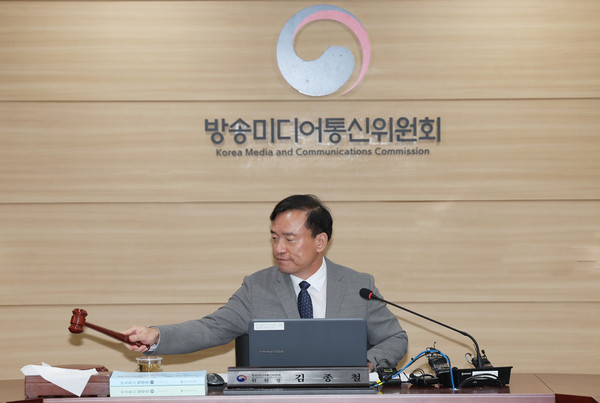
The center will be established within the Korea Communication Standards Commission, and the legal basis for its establishment is the Act on Promotion of Information and Communications Network Utilization and Information Protection, etc. The Korea Communications Commission has secured operating staff and budget, and has also formed a task force to prepare for the center's establishment within the foundation. On the 30th of last month, Kim Jong-cheol, chair of the Korea Communications Commission, held the '39th plenary meeting of 2026.'
The Information and Communication Service Transparency Center will be responsible for examining how major online platforms respond to illegal and false information. Naver, Kakao, and Google are among the targets, and the center will support verification of the transparency reports released by platforms as well as private fact-checking activities.
The services subject to the revised Telecommunications Business Act are information intermediary services between users, such as social networking services (SNS), online communities, and video-sharing services. The application criterion is business operators with an average of 1 million or more daily active users (DAU) over the previous 3 months as of the end of the previous year.
The Korea Communications Commission has designated major domestic and overseas platforms as large-scale information and communication service providers. The designated companies are five domestic firms — Naver, Kakao, Nate, DC Inside, and AXZ — and four overseas firms — Google, Meta, X, and TikTok.
The commission has required these designated operators to establish autonomous operating policies for responding to illegal and false information. Such policies must include criteria for determining illegal and false information, reporting procedures, and response procedures. For reported information, the platforms may delete it, block access to it, or limit its exposure in accordance with their own policies.
Designated operators must disclose the status of related reports, processing results, and appeals in the form of transparency reports. The Transparency Center will support verification of the transparency reports released by operators, as well as support for fact-checking groups' activities, related research, public education on responding to misinformation, and international cooperation.
Fact-checking will be carried out by private organizations. The government will support fact-checking activities through the center. Platforms will process reported information in accordance with their own policies. Liability for damages will be determined by the courts. Fines for the repeated distribution of illegal and false information will be determined by the Korea Communications Commission on the basis of final court rulings.
Kim Jong-cheol, chair of the Korea Communications Commission, said the purpose of establishing the Transparency Center is to create a policy foundation for balancing the autonomy and accountability of the private sector in relation to large-scale information and communication service providers and fact-checking groups. He added that the center will examine whether large-scale information and communication service providers are fulfilling their legal obligations while respecting the independence and autonomy of the private sector and supporting fact-checking activities.
Source: IT DAILY · Kim Byeong-ju
Original: https://www.itdaily.kr/news/articleView.html?idxno=241949
References
This article was produced with the help of an automated content generation algorithm.
Source: IT DAILY
View originalThis article was summarized and organized by BizCrush based on the original article from IT DAILY. For exact quotations and full details, please refer to the original article.