CXLab Holds 'Infrastructure Day 2026'... “Token Production Efficiency and GPU Operations Are the Core Challenges for AI DC”
IT DAILY ·
✦ AI Summary
CXLab held the 'AstraGo AIDC Infrastructure Day 2026 SEOUL' on the 30th.
The event was organized to discuss how companies should configure infrastructure and operate GPUs efficiently amid the shift to AI data centers.
CXLab shared strategies for building enterprise infrastructure during the AIDC transition and for optimizing GPU resources.
CXLab held the 'AstraGo AIDC Infrastructure Day 2026 SEOUL' on the 30th. The event was organized to address how companies should configure their infrastructure and operate GPUs more efficiently amid the shift to AI data centers.
The event aimed to examine the tipping point for AI infrastructure buildout and to explore technical solutions for improving GPU operating efficiency. It focused on identifying the infrastructure direction needed during the transition to AI data centers.
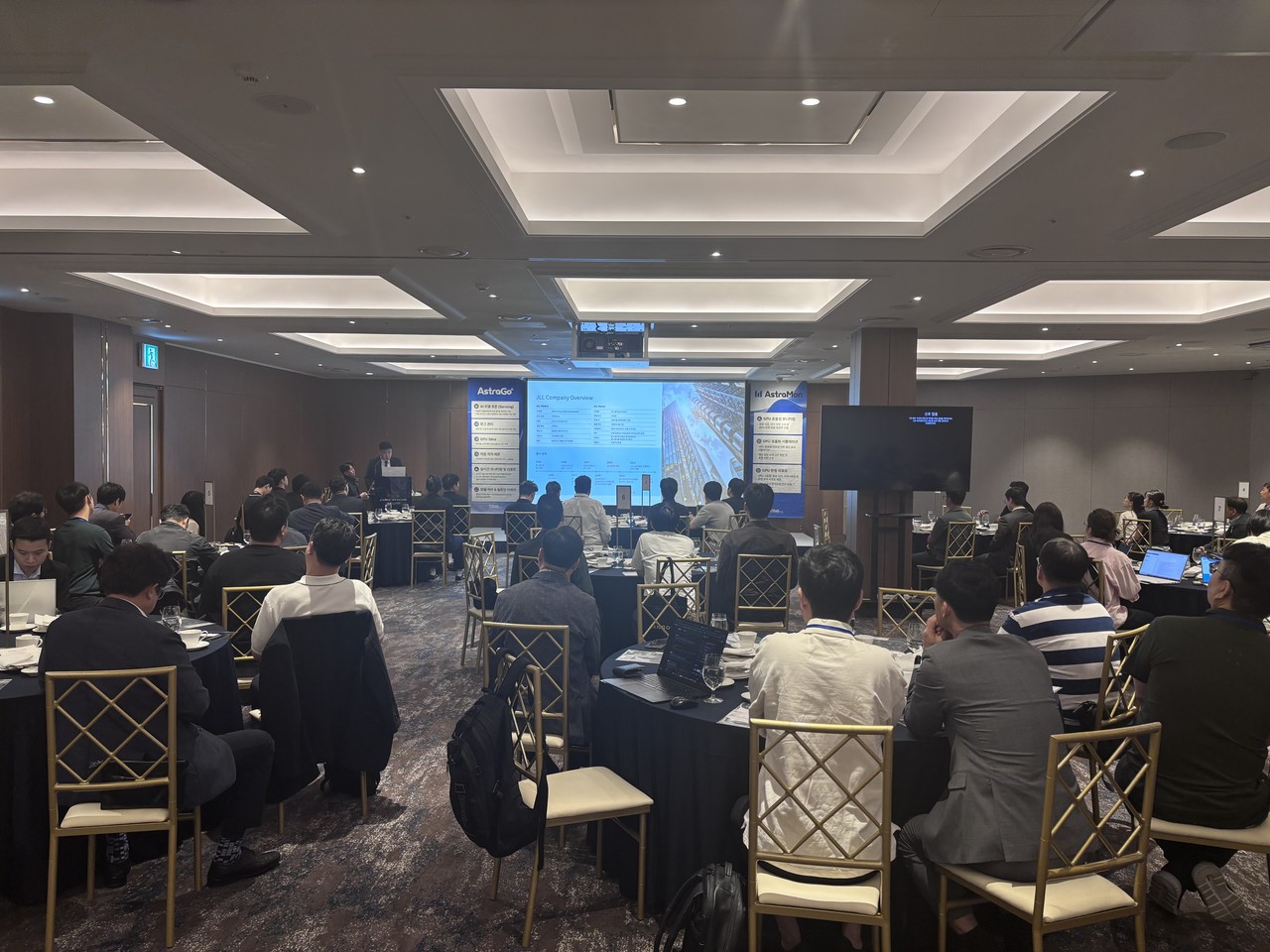
At the event, CXLab shared strategies for building enterprise infrastructure during the AIDC transition and ways to optimize GPU resources. The photo shows the scene from CXLab's 'AstraGo AIDC Infrastructure Day 2026.'
In his welcome remarks, CXLab Chairman Lee Woo-young said the standards in the GPU market are changing. He explained that the standard is shifting from the number of GPUs a company owns to its ability to deliver optimized AI services.
Chairman Lee said the company began a large-scale GPU project for the Ministry of National Defense in 2016. He then introduced AstraGo three years ago, explaining that the focus shifted from training to inference and services.
Chairman Lee said the company has been an Nvidia partner for 10 years. He also described CXLab as a solution provider for major domestic AIDC projects and said it is committed to providing optimal infrastructure solutions that allow developers to focus on development.
CXLab CEO Chae Jeong-hwan spoke at the event. The photo was taken by reporter Kwon Young-seok.
CXLab CEO Chae Jeong-hwan was the first speaker. His presentation was titled, 'The Tipping Point in the AI DC Transition: What Companies Need to Prepare Now.'
Chae explained that traditional IT rooms and data centers had the character of cost centers. He then mentioned that Nvidia had introduced the concept of an 'AI factory,' saying the definition of an AIDC has changed into a 'factory' that takes in data and power to produce tokens.
As the key investment metric has shifted from buying GPUs cheaply to maximizing token production per unit of power, CXLab reorganized its business units into two headquarters: 'Physical AI' and 'AIDC.' He also said the standard for an efficient system is whether it can produce and deploy far more tokens, even at high cost.
CXLab's Physical AI strategy is based on Nvidia's 'Omniverse DSX Blueprint.' The company aims to pre-simulate the full range of computing, heat, cooling, and power infrastructure to build and operate data centers optimally.
At the same time, CXLab is working with Samsung SDS on the 'Vera Rubin Superpod.' The 'Vera Rubin Superpod' is a large-scale infrastructure project, and to support it, the company has established a 'Vera Rubin Professional Service Team' made up of performance specialists and integration developers.
CEO Chae said that for companies to survive in the AI market, they need their own distribution system or proprietary products. Regarding CXLab's support policy, he said the company will help clients build their own premium AI services based on efficient token production infrastructure.
These remarks continued through a presentation by CXLab CTO Song Yu-jin. Song spoke on the theme, 'The Layer That Drives AIDC: The Role of GPU Orchestration.' The photo was taken by reporter Kwon Young-seok.
Song explained that after GPUs were introduced, resource imbalances have emerged in the field. He compared the problem to 'a taxi company without a dispatch center.' He said research departments end up with idle resources, while service departments face waiting times due to GPU shortages.
He pointed out that the cause of the problem is not a lack of resources, but the absence of a 'dispatch center (orchestration)' to connect those resources. This was explained as meaning that integrated control is needed.
Song explained that GPUs are five-year depreciable assets. He also emphasized that even 10% idleness can lead to significant financial losses. In addition, he said that cost per token must be calculated.
Song analyzed that in GPU operations, if the top 4 of the 8 layers in the GPU stack are missing, cost leakage becomes more severe. As examples of the top 4 layers, he cited unified observability, GPU orchestration, a token gateway, and metering. As alternatives to address this, he presented 'AstraMon' and 'AstraGo.'
'AstraMon' has functions to detect idle resources inside closed networks and report financial losses. 'AstraGo' provides functions for multitenancy, partitioning, and automatic resource reclamation. Song explained that these tools can reduce hidden cost leakage.
Song proposed deriving 'cost per token' by combining a control room for time and power, a service window for token counts, and a meter for departmental settlement. He explained that calculating the internal token cost would make it possible to compare costs with external APIs and shift departmental budget standards from the number of GPUs to token volume. He also said that even presenting usage specifications without actual billing can greatly improve resource efficiency, and that once cost per token is established, executives' decision-making criteria would shift from whether to buy more GPUs to how GPUs are allocated by department.
Source: IT DAILY · Kwon Young-seok
Original: https://www.itdaily.kr/news/articleView.html?idxno=241919
References
This article was produced with the help of an automated content generation algorithm.
Source: IT DAILY
View originalThis article was summarized and organized by BizCrush based on the original article from IT DAILY. For exact quotations and full details, please refer to the original article.