AI Semiconductor That Reads Fast and Slow Signals Together Unveiled
AI TIMES ·
✦ AI Summary
According to AI TIMES, KAIST researchers said on Sept. 29 that they had developed an AI semiconductor technology that stacks semiconductor d…
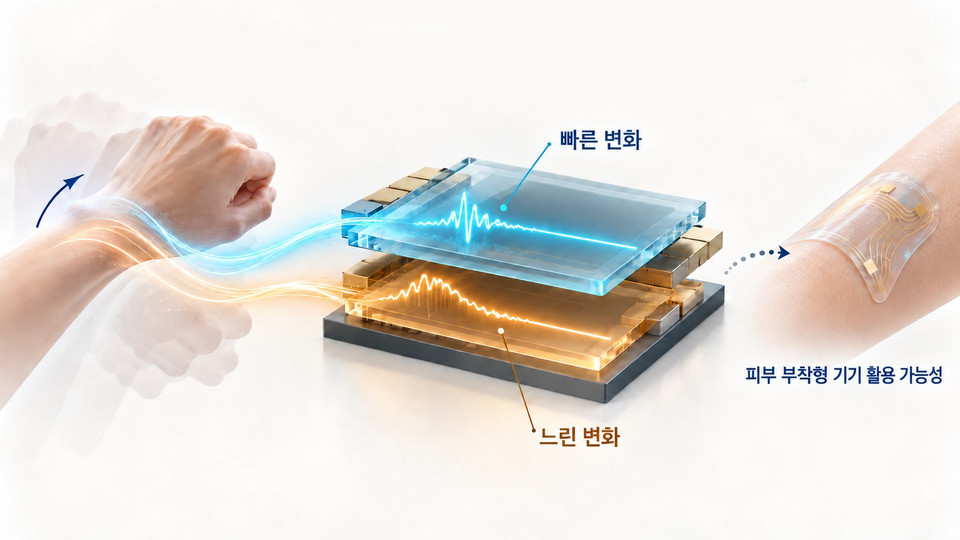
According to AI TIMES, KAIST researchers said on Sept. 29 that they had developed an AI semiconductor technology that stacks semiconductor devices with different response speeds in multiple layers to read both newly arrived changes and the flow of earlier changes at the same time. In model validation that reflected measurements from actual devices, it identified video signals with different speeds with more than 90% accuracy. The core of the research is that it turns the slow movement of ions from a weakness into a device that reads traces of previous signals. The researchers made ion-containing materials into hard, thin films to implement devices with different response times, then layered them so they could separately process short changes and the changes that follow. The approach is suited to handling motions and body signals that need to be distinguished over time, such as walking and a brief arm swing, inside small devices. However, the media said that performance when applied to actual wearable devices and the effect on power savings still need additional verification.
Perspective
The significance of this technology lies in its potential to make it possible to read temporal context inside small devices. If a method that handles fast and slow changes at once is implemented, some functions that have relied on outside servers or complex postprocessing could move onto the device itself. This suggests that the way signal interpretation works could change in low-power environments such as wearables. At the same time, since the additional verification noted in the article remains outstanding, competition in real-world deployment will likely continue to focus on both implementability and efficiency.
This perspective is BizCrush's own commentary and is not part of the reporting by AI TIMES.
This article was produced with the help of an automated content generation algorithm.
Source: AI TIMES
View originalThis article was summarized and organized by BizCrush based on the original article from AI TIMES. For exact quotations and full details, please refer to the original article.