Angel Robotics Unveils 'phai-x1' Wearable Robot for Physical AI R&D
TECHWORLD ·
✦ AI Summary
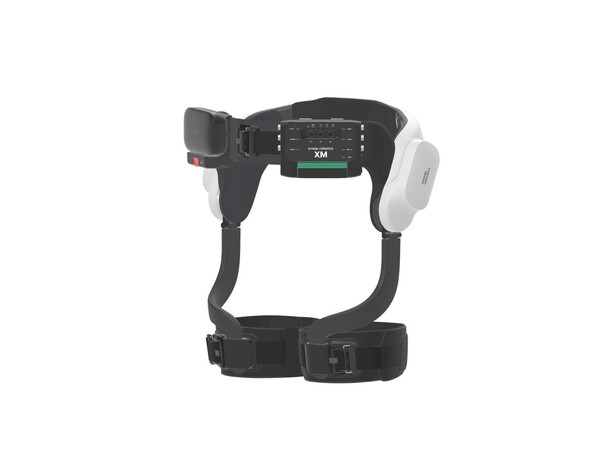
Angel Robotics unveiled its wearable robot 'phai-x1(phai-x1)' on the 29th.
'phai-x1' is a product for physical AI research and development, and was developed from the middle of last year based on the walking-assist robot 'ANGEL SUIT H10(ANGEL SUIT H10).'
The company designed it so researchers can develop control algorithms and record and use data without the burden of building hardware themselves, and plans to expand its supply to research-related institutions broadly.
Angel Robotics unveiled its wearable robot, 'phai-x1,' on the 29th. 'phai-x1' is a product for physical AI research and development.
The product originated from its walking-assist robot, 'ANGEL SUIT H10.' Angel Robotics determined that various research projects could be conducted by applying each researcher's algorithms to the 'ANGEL SUIT H10' hardware, and began developing 'phai-x1' in the middle of last year.
The company said 'phai-x1' was designed so that control algorithms can be freely developed and tested on a reliable hardware foundation. It added that the development goal was to provide a common research environment for researchers in robotics, control engineering, physical AI, biomechanics, human motion analysis, biomedical engineering, and rehabilitation engineering.
Angel Robotics said its development goal is to help ease the burden of having to build robot hardware directly, allowing researchers to focus on their individual research topics.
Angel Robotics said phai-x1 supports independent left-right hip joint control. It also said the expansion module XM10 handles the implementation of user algorithms and data collection, and that researchers can freely configure customized programs through XM10. In addition, it said designed control algorithms can be executed at a cycle of 1,000 times per second (1kHz) and applied directly to the robot for verification.
Angel Robotics said it can record joint movements and robot status data during walking. It also explained that by connecting an IMU, it can detect body tilt and movement; by connecting an EMG meter, it can check muscle activity; and by connecting a GRF sensor, it can measure the force generated when stepping on the ground. It added that by linking various sensors and recording data together, human movement data can be converted into AI training data.
The company said the recorded data can be used for human gait analysis, human-robot interaction analysis, movement intent estimation, user motion-tailored assistive control, and AI reinforcement learning-based control. It also added that the recorded data can be used broadly across research on various human movement data.
Angel Robotics plans to expand the supply of phai-x1 to research-related institutions broadly. The expansion targets include universities, public research institutes, corporate research labs, university hospitals and medical school labs, and biomedical and rehabilitation engineering research institutions.
Angel Robotics plans to go beyond simple sales and expand the range of phai-x1 applications. The planned uses are educational programs, research projects, competitions, and joint research.
Kong Kyung-cheol, head of future technology at Angel Robotics, said phai-x1 is a platform that records and preserves as data the exchange of force between humans and robots, the timing of muscle activation, and the force generated when the foot contacts the ground. He said he hopes it will become a common research foundation for researchers in multiple fields, and added that he hopes it will contribute to the mutual growth of Korea's physical AI research ecosystem and the broader industry.
Source: TECHWORLD · Lee Gwang-jae
Original: https://www.epnc.co.kr/news/articleView.html?idxno=407445
References
This article was produced with the help of an automated content generation algorithm.
Source: TECHWORLD
View originalThis article was summarized and organized by BizCrush based on the original article from TECHWORLD. For exact quotations and full details, please refer to the original article.