PIPC, Mobile Carriers Launch Cooperation on a 'Trustworthy AI and Digital Society'
IT DAILY ·
✦ AI Summary
The Personal Information Protection Commission held a meeting on the 28th with the CEOs of SK Telecom, KT, and LG Uplus to discuss measures to prevent a repeat of personal information leaks.
The three mobile carriers released a joint declaration for an AI and digital society trusted by the public and said they would make personal information protection their top management priority.
The meeting discussed internal controls to prevent repeat leaks, a preventive protection system, management of the telecommunications distribution network, a public-private cooperation framework, and ways to operate the AI special provisions.
The Personal Information Protection Commission held a meeting on the 28th with the CEOs of SK Telecom, KT, and LG Uplus to discuss cooperation measures aimed at preventing a repeat of recent personal data leaks. The agenda was to discuss public-private cooperation measures for a trustworthy AI and digital society to prevent repeated personal information leaks. The participating companies were the three major mobile carriers, SK Telecom, KT, and LG Uplus.
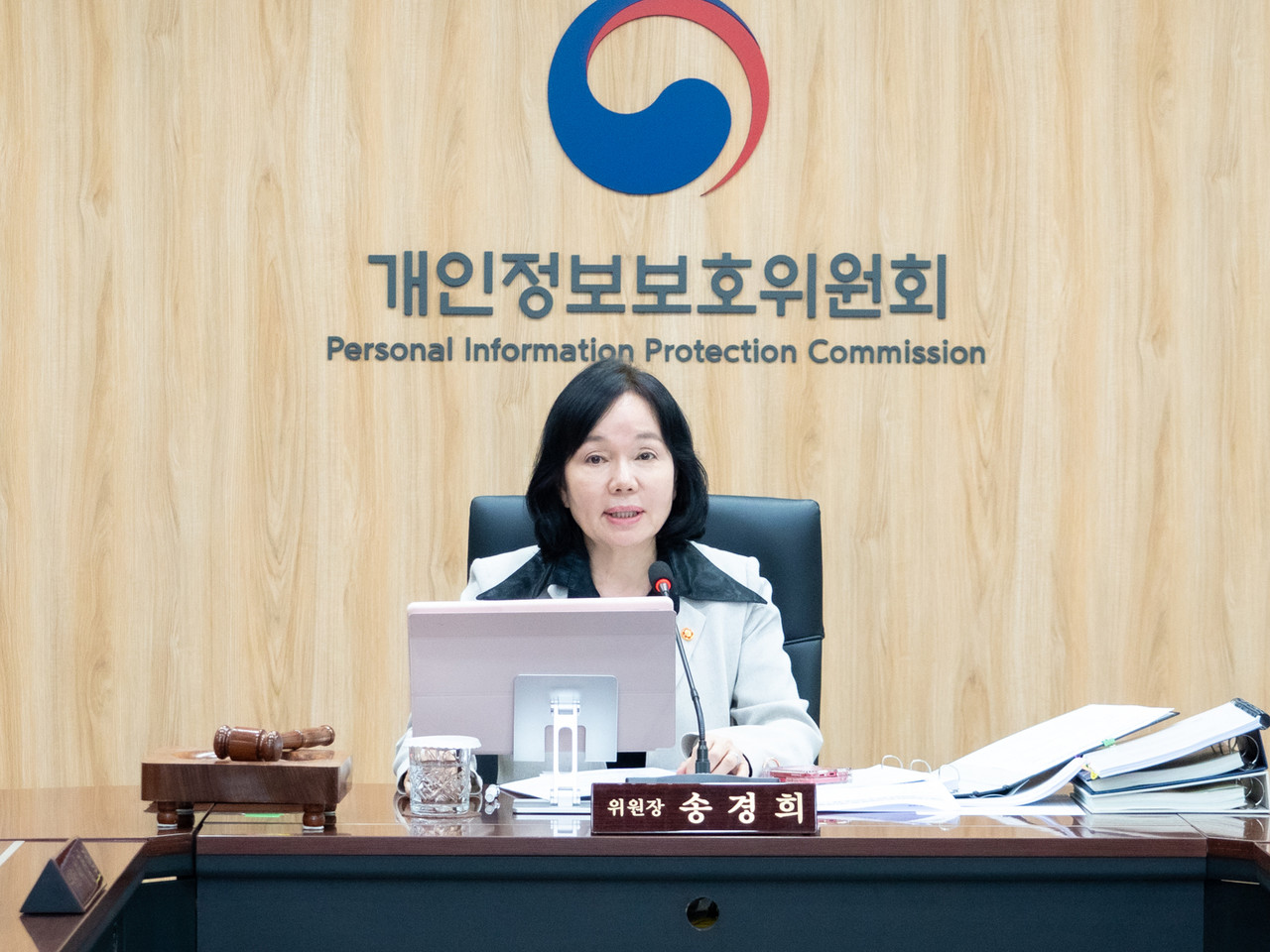
PIPC Chair Song Kyung-hee released a photo related to the three mobile carriers on the 28th. This meeting was her first official engagement with company CEOs since taking office as PIPC chair.
Song said both the government and companies must take a serious view of the series of personal information leak incidents. She also emphasized the need to shift to a preventive protection system centered on detecting risks before incidents occur and responding preemptively.
The three mobile carriers shared the view that securing public trust is the foundation for the sustainable development of the telecommunications industry and for artificial intelligence and digital innovation, and they released a 'Joint Declaration for an AI and Digital Society Trusted by the Public.' Through the joint declaration, the three carriers pledged to make personal information protection their top management priority.
They also presented the following tasks for implementing the joint declaration: establishing a responsibility governance structure centered on the CEO and board of directors, expanding investment in personal information protection and specialized personnel, embedding personal information protection throughout the entire process of AI service development and operation, securing transparency and accountability in AI services, and developing privacy-enhancing technologies (PET).
At the follow-up meeting, the participants discussed reorganizing internal controls to prevent repeat leaks, establishing a preemptive protection system, systematically managing the entire telecommunications distribution network, and building a public-private cooperation framework to respond to personal information issues.
The PIPC pointed out the complex distribution structure that runs from carriers to agencies to retail stores, and noted that personal information management at retail stores could be vulnerable. The PIPC then asked carriers to strengthen management and oversight across the telecommunications distribution network and called for a responsible stance.
At the meeting, participants asked for cooperation to help grow capabilities in personal information protection and utilization across all industries, based on experience such as developing voice phishing detection technologies. In addition, regarding the introduction of AI special provisions aimed at supporting the development of safe AI technologies, participants said a prior consultation mechanism is needed for effective operation of those special provisions.
There were also calls, in the context of AI development, for clarifying existing lawful grounds for processing such as publicly available information, pseudonymized information, and legitimate interests. Participants also raised the need for AI agent guidelines that reflect companies' processing practices.
In response, the PIPC said it is working on measures for the effective operation of the AI special provisions. It added that it plans to continue gathering opinions during the operating process. The PIPC also said it is preparing a '(provisional) Agentic AI Personal Information Processing Guide' and is also preparing institutional reform measures.
The three carriers proposed the need for a public-private communication channel to respond quickly to personal information issues. In response, the PIPC said it plans to resolve unreasonable regulations and uncertainty through a public-private cooperation framework with the industry, and that it will also support corporate AI innovation.
Chair Song said she hopes the three carriers' joint declaration will not remain a declaration but lead to real changes and improvements on the ground. In line with that, she said the PIPC will continue to monitor the situation and provide all necessary institutional support so that the public's personal information can be protected more safely.
Source: IT DAILY · Seong Won-young
Original: https://www.itdaily.kr/news/articleView.html?idxno=241858
References
This article was produced with the help of an automated content generation algorithm.
Source: IT DAILY
View originalThis article was summarized and organized by BizCrush based on the original article from IT DAILY. For exact quotations and full details, please refer to the original article.