SelectStar Unveils 'Baby Shark AI' Safety Validation Case, Says Trustworthy AI Is Important
TECHWORLD ·
✦ AI Summary
SelectStar and The Pinkfong Company unveiled AI content and safety validation cases using the Baby Shark IP.
The two companies introduced the content planning, AI implementation, and trustworthiness evaluation process around 'Baby Shark Secret Invitation: Becoming Shark' at DDP.
SelectStar said it evaluated 4 languages and 10,000 scenarios, and checked vulnerabilities through red-teaming.
SelectStar and The Pinkfong Company unveiled AI content and safety validation cases using the Baby Shark IP. The two companies shared details of their collaboration through an exhibition-style AI content case based on the Baby Shark IP.
The background for the project was the need for continuous trustworthiness evaluation during operation, in addition to pre-launch review, given the nature of real-time conversational AI content. The companies said that checking before release alone is not enough, and that trustworthiness evaluation must continue during the operational stage as well.
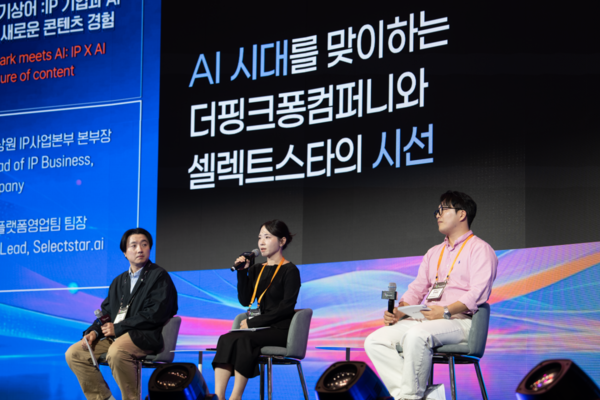
SelectStar announced that it will hold a presentation and panel discussion with The Pinkfong Company at 'Try Everything 2026,' to be held on the 10th at Dongdaemun Design Plaza (DDP) in Seoul. The session, titled 'Baby Shark Meets AI: New Content Experiences Created by an IP Company and an AI Company,' will feature Park Sang-won, head of The Pinkfong Company, and Jeong Se-yeop, head of SelectStar's platform sales team.
The two companies will introduce their collaboration process centered on 'Baby Shark Secret Invitation: Becoming Shark,' an AI interactive exhibition currently being held at DDP. The scope of the presentation includes content planning, AI implementation, and trustworthiness evaluation, and SelectStar emphasized the importance of trustworthy AI.
The exhibition is designed so that AI characters respond in real time to visitors' speech and behavior, unlike existing content with a fixed storyline. Visitors can directly converse and make choices within the Baby Shark universe, creating different experiences for each visitor.
Park Sang-won said that video content is something users encounter as a finished product, whereas in an exhibition, the experience changes in real time depending on what visitors say and do. He added that visitors are not simply following a prewritten story, but are the protagonists who appear directly in the universe and create the story through their own choices.
Because of these real-time AI interaction characteristics, it is difficult to check every question and answer during the pre-stage. SelectStar therefore did not limit itself to review before release, but also evaluated how the AI would respond to unexpected questions and expressions during actual operation.
SelectStar said it used its AI trustworthiness evaluation platform, the Datumo Platform, for the verification. The evaluation was conducted across 4 languages: Korean, English, Japanese, and Chinese.
The scenario set for the safety evaluation was built at a scale of 10,000. The simulation reflected the age and speaking tendencies of real visitors, and included multiple rounds of conversation between AI users and characters.
In this process, the evaluation items included conversational safety, consistency with the Baby Shark universe, and multilingual conversation quality. It also checked repeatedly whether the character generated inappropriate responses and whether the character reacted in ways that deviated from its setting.
The companies then applied red-teaming techniques that assumed attempts to bypass AI safeguards in order to search for vulnerabilities. Red-teaming was conducted using role-play, foreign languages, and circumvention expressions in addition to direct harmful questions, with the goal of identifying vulnerabilities. Jeong Se-yeop explained that even when direct harmful questions are rejected, AI safeguards can still be bypassed when role-play, foreign languages, or circumvention expressions are used. He added that it is necessary to repeat a variety of attacks to identify vulnerabilities, then address those vulnerabilities and revalidate them.
In the panel discussion, the two companies discussed why exhibitions are suitable for AI-based IP content, the points of coordination between IP companies and AI companies during production, and the future direction of the AI and IP industries.
Against this backdrop, SelectStar has experience in trustworthiness evaluation in the content field and is expanding that experience into national AI projects. The SKT consortium in which SelectStar participates passed the second evaluation of the Ministry of Science and ICT's 'Independent AI Foundation Model' project, and SelectStar is participating in the 'Everyone's AI' project to support data construction and quality verification.
Jeong said that standards for AI excellence are expanding from simple performance to trust and usability. He said he expects more cases in which AI directly meets people in content and everyday life in the future, and that the importance of SelectStar's AI trustworthiness verification technology will also grow in that trend.
Source: TECHWORLD · Kim Seung-gi
Original: https://www.epnc.co.kr/news/articleView.html?idxno=406839
References
This article was produced with the help of an automated content generation algorithm.
Source: TECHWORLD
View originalThis article was summarized and organized by BizCrush based on the original article from TECHWORLD. For exact quotations and full details, please refer to the original article.