DGIST Launches 4 Interdisciplinary Research Groups Led by Early-Career Researchers
AI TIMES ·
✦ AI Summary
According to AI TIMES, DGIST has officially launched the InnoCORE project to advance interdisciplinary research in future strategic technolo…
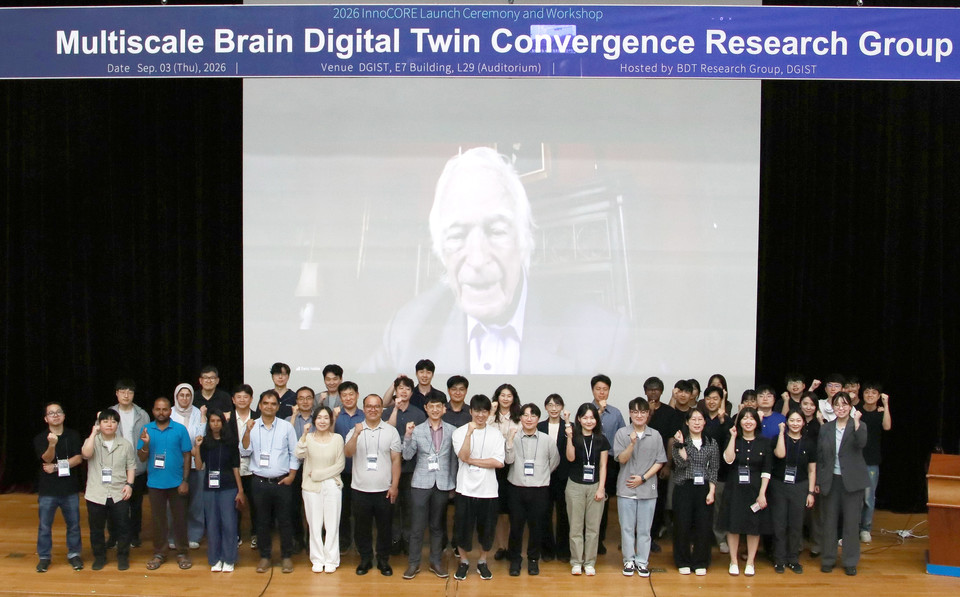
According to AI TIMES, DGIST has officially launched the InnoCORE project to advance interdisciplinary research in future strategic technologies and foster early-career research talent, setting up a total of 4 research groups. From September 18 last month through September 8, the university held a series of launch ceremonies and refined its research framework around energy materials, brain digital twins, and projects for cooperation with government-funded research institutes. The project focuses on postdoctoral researchers taking the lead in interdisciplinary research and building a foundation for collaboration between universities and government-funded research institutes. The leading-type research groups put strategic areas such as AI-based commercialization of energy materials and brain disease modeling at the forefront. The linked-type organizations emphasized strengthening a joint research system that lowers barriers between institutions and aligning project-specific plans. DGIST said it aims to further develop the effort into a research growth platform that connects academia, industry, and startups by adding multi-mentoring and tailored career development.
Perspective
This move appears to be an attempt to shift beyond support for individual research projects and toward a research ecosystem in which early-career researchers sit at the center of collaboration. In particular, by treating strategic technologies not as outcomes confined to a single institution but as connected structures that span fields and organizations, it suggests that future research competitiveness may depend more on interdisciplinary work and scalability than on a single achievement. The fact that researcher development and joint research are being tied together in one framework also signals changes in both entry paths and growth models on the ground.
This perspective is BizCrush's own commentary and is not part of the reporting by AI TIMES.
This article was produced with the help of an automated content generation algorithm.
Source: AI TIMES
View originalThis article was summarized and organized by BizCrush based on the original article from AI TIMES. For exact quotations and full details, please refer to the original article.