In the AI Era, Where Is the Mainframe Headed? 'In-Place Modernization' Is the Answer
IT DAILY ·
✦ AI Summary
Gartner said that despite the spread of AI, many mainframe exit projects at major enterprises in finance, the public sector, and other areas are at risk of falling through.
It said generative AI is effective for code search and systems operations automation, but has limits in fully automatically converting COBOL code and in ensuring integrity and performance after migration.
Gartner proposed In-place Modernization and a Platform-smart strategy rather than a reckless infrastructure removal as the solution.
Contrary to market expectations that AI proliferation would accelerate the cloud migration of legacy systems, an assessment has found that many mainframe exit projects at major enterprises in finance, the public sector, and other areas are at risk of falling through. As a response to mainframes in the AI era, "in-place modernization" was proposed.
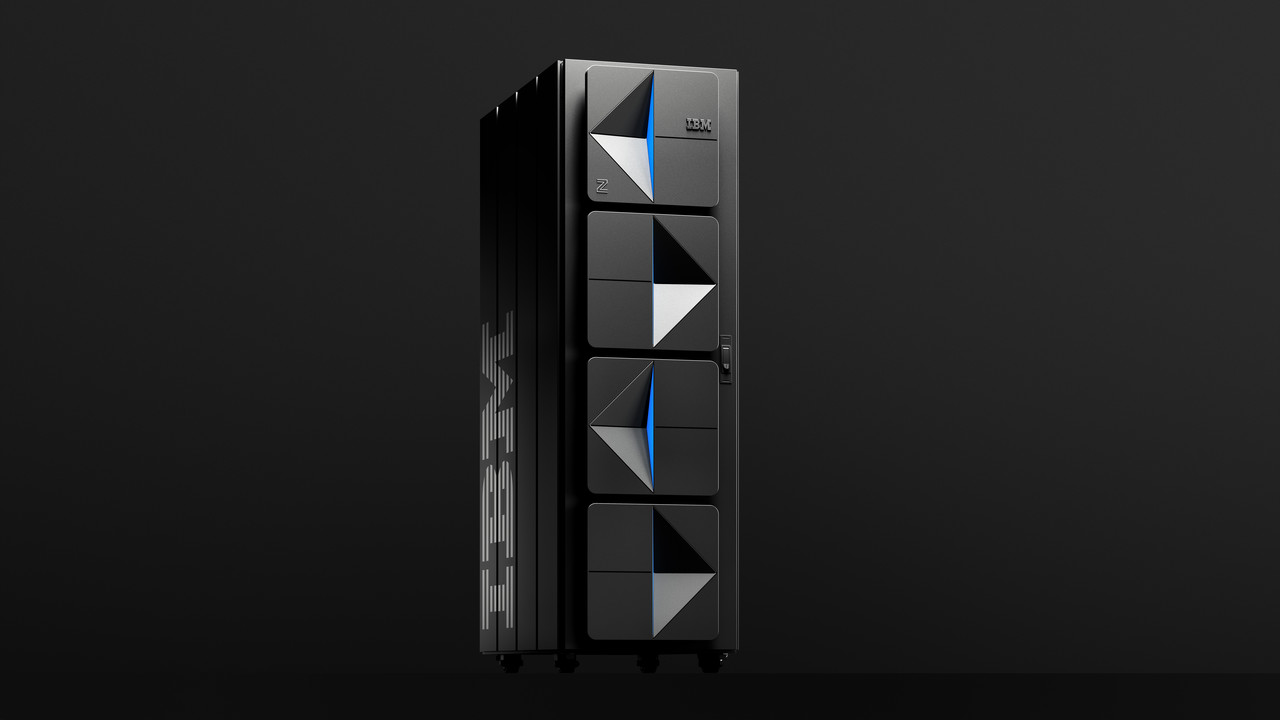
The background to this was attributed to the technical illusion that AI could automatically convert decades-old, complex legacy code. Another factor cited was a disregard for the integrity of mainframe-specific infrastructure. IBM z17 was presented as an example of a mainframe system.
Gartner released a report on this issue, "Too Big to Fail: Why Mainframe Exit Projects Are Likely to Fail in the Age of Generative AI." Based on this, Gartner projected that more than 70% of mainframe exit projects starting in 2026 would fall short of the expected business outcomes because of overestimating generative AI tooling capabilities.
Gartner also forecast that by 2030, 75% of companies specializing in mainframe exit market solutions would pivot their business models or be forced out of the market. Gartner said overconfidence in AI-based automated conversion and underestimating the characteristics of mainframe infrastructure would lead to poor project results and a restructuring of market players.
Gartner said generative AI has tangible benefits in code search for identifying the complex dependencies of existing systems and in automating system operations to fill staffing gaps. However, it said generative AI has clear limits in fully automatically converting COBOL code entangled with complex business logic, and also faces limits in ensuring mainframe-level transactional integrity and large-scale processing performance after conversion.
In contrast to these limits, mainframes remain resilient on the strength of above-"five nines" (99.999%) high availability and unmatched resilience that are difficult to provide natively in distributed cloud environments. Mainframe assets can also run code written 50 years ago without modification, and this backward compatibility is helping significantly reduce system failure risk and total cost of ownership (TCO).
As in the case of large-scale transaction records in the financial sector, vast amounts of core data accumulated over decades are creating strong Data and AI Gravity, and because of this Data and AI Gravity, moving data to an external cloud is becoming physically and financially impossible. As a result, enterprise trends are shifting from data migration to In-place Modernization, a method that brings Generative AI and analytics tools directly inside the mainframe where the data resides. The solution being proposed in this context is not a reckless infrastructure removal, but a Platform-smart strategy.
The Platform-smart strategy is based on applying the right approach to the characteristics of each workload, and it assumes that a full migration is effectively impossible in large environments above 25,000 MIPS. Recommended measures include maintaining direct business relationships with IBM and related ISVs without going through intermediaries such as resellers and MFaaS (Mainframe-as-a-Service) providers, along with an approach that selects the optimal platform for each workload and continuously optimizes it.
The midrange environment is defined as 5,000 to 25,000 MIPS, and in such environments, decision-making is more complex than in large environments, making the options less straightforward. Accordingly, the main responses proposed are MIPS optimization and Predatory ISV exit, meaning the replacement of expensive third-party software; these measures quickly improve cost efficiency. The budget secured this way is then used to build a DevOps framework, integrate APIs, and introduce in-house AI, and is reinvested in mainframe modernization.
Gartner projected that, among midrange sites, 70% would be divided into 40% that maintain the status quo and 30% that follow the optimization methods of larger companies. The remaining 30% were expected to attempt active exit, with 15% pursuing cloud redesign and 15% shifting to replatforming/MFaaS.
Source: IT DAILY · Kwon Young-seok
Original: https://www.itdaily.kr/news/articleView.html?idxno=241821
References
This article was produced with the help of an automated content generation algorithm.
Source: IT DAILY
View originalThis article was summarized and organized by BizCrush based on the original article from IT DAILY. For exact quotations and full details, please refer to the original article.