Can AI Be Entrusted With Card Payments? Accountability Gaps in the Age of Proxy Checkout
IT DAILY ·
✦ AI Summary
Mastercard disclosed a real-world AI agent vehicle booking transaction in Korea in March. Shinhan Card carried out a real-world test of 'AI Agent Pay' in the same month. Overseas, Meta's Muse was linked to payment functions so it could search for and buy products on websites.
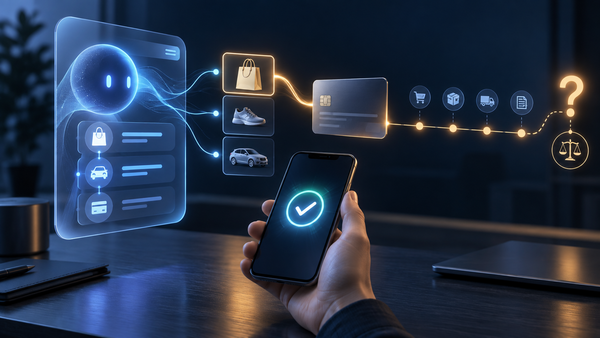
An emerging trend is seeing AI agents move beyond recommendations and into executing card payments. AI agents have been searching for transportation, booking vehicles, and making payments, advancing from recommendation-centered AI to direct participation in card transactions.
In this regard, Mastercard disclosed a real-world AI agent vehicle booking transaction in Korea in March. The transaction involved searching for transportation from Incheon International Airport to a hotel in Seoul's Gwanghwamun and booking and paying for a hoppa vehicle, with CardInfoLink participating in the transaction.
In the same month, Shinhan Card carried out a real-world test of 'AI Agent Pay' separately from Mastercard. The test was structured around AI searching for and booking transportation through integration with a global mobility service, after which the user gave one-time approval and the payment was processed.
Shinhan Card said Mastercard was the target with which it jointly designed authentication and authorization management, payment procedures, and merchant integration. Both the Mastercard case and the Shinhan Card case were based on actual merchant transactions.
The two cases both confirmed the possibility of AI carrying out payments. However, their limitation is that they did not prove performance as a service provided to ordinary users.
Overseas, consumer-facing AI assistants are being linked to payment functions so they can directly handle product discovery and purchases. Meta launched Muse in the U.S. this month, enabling Muse to search for and buy products on websites.
For payment, it uses Stripe's Link. At merchants that support Link, it uses the payment methods saved by the user, while at unsupported merchants it issues a one-time virtual card that allows only approved purchases. Stripe explained that the user approves the total amount for each transaction in the chat window, and that Muse does not view actual card information.
However, having payment functionality does not mean purchases are possible at every online store. Amazon has blocked Muse from accessing its storefront. Amazon's position is that when an external AI agent makes purchases on a user's behalf, it must disclose its identity and respect whether the selling platform participates. A user's permission for AI purchases is separate from a seller's permission for AI access.
Payment networks and AI services are participating in transactions in different ways. Visa is developing a payment token dedicated to AI agents, and the token is linked to user-authenticated purchase instructions. The purpose of the function is to verify that the seller and amount match. OpenAI's Agentic Commerce Protocol can provide AI payment screens, allow sellers to charge through existing payment providers, and handle sellers' order processing. OpenAI has recently focused on product discovery and has also suggested offering sellers their own payment experiences. These service-specific differences appear in how deeply AI is involved in the purchasing process and in who actually handles payment processing.
Against this backdrop, the remaining issue is the scope of the user's approval. Questions raised in connection with Shinhan Card's vehicle booking case include whether the user's approval covered a specific vehicle and fare, and whether it covered selecting transportation that could reach the destination. In shopping, questions remain over whether agreeing to the total payment amount includes approval of the product specifications and whether it includes approval of the seller selection.
If a dispute arises, the user's initial request and the purchase details presented by the AI must be compared together as reference points.
The existing legal framework addresses liability for typical electronic financial incidents, such as card theft or accidents occurring during the transmission or processing of transaction instructions. Article 9 of the current Electronic Financial Transactions Act is being raised as an issue because it stipulates the liability of financial companies and electronic financial businesses when a user suffers damage from certain incidents.
However, if the payment is processed normally but the AI misunderstands the purchase conditions, it is necessary to review the scope of the original instruction and delegation, and to examine the AI's product selection and the seller's order processing as well. In such cases, the financial sector has pointed out a gap in that the mere fact of AI involvement cannot automatically establish the responsibility of a specific business. A report involving Bank of America, NatWest, and others also found that it was unclear who consumers should seek relief from in cases of mistaken or excessive purchases by AI. Accordingly, banks have proposed indicating whether AI is involved in a transaction and keeping a transparent record of the purchase decision process.
The scope of safeguards for AI proxy payments is not limited to protecting card numbers. The items the user allowed, such as products, sellers, amounts, and periods, together with what the AI actually selected, the final approval, and the payment result, must all be linked and verifiable. The domestic real-world vehicle booking case and Muse's online shopping case showed that AI can carry out payments as well.
An industry official said that the mere fact a payment was completed does not mean the purchase was made in line with the user's intent. The official explained that the scope of the user's delegation must be recorded, and the basis for the AI's product-selection judgment must also be recorded. The official added that only with such records can responsibility be assigned and consumer losses be resolved when problems arise.
Source: IT DAILY · Lee Jae-young
Original: https://www.itdaily.kr/news/articleView.html?idxno=241809
References
This article was produced with the help of an automated content generation algorithm.
Source: IT DAILY
View originalThis article was summarized and organized by BizCrush based on the original article from IT DAILY. For exact quotations and full details, please refer to the original article.