[Interview] Lee Byeong-gak, Executive Director at KTNF: “Korean-Made Servers Can’t Grow If They’re Built but Never Used”
IT DAILY ·
✦ AI Summary
Lee Byeong-gak, an executive director at KTNF’s overseas business team in the server business division, said the biggest hurdle to localizing AIDC is the lack of large-scale real-world references.
He said equipment must be installed in data centers and operated long term to prove performance and stability, but the absence of verification cases leads customers to avoid such products, repeating the cycle.
He said Korean hardware needs demonstration and adoption opportunities in government-built AIDCs, and that BOM submission as well as integrity checks for parts, firmware, and BMC should be carried out in parallel.
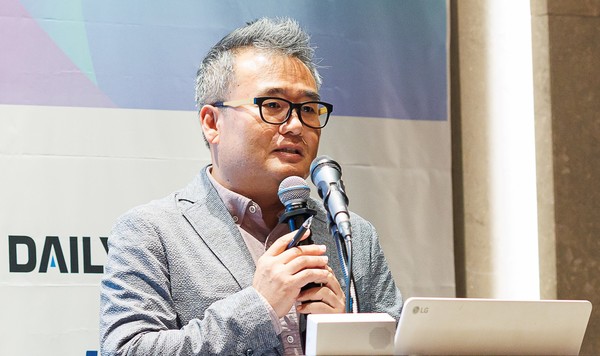
In an interview with IT Daily, Lee Byeong-gak, executive director of KTNF’s overseas business team in the server business division, said the biggest hurdle to localizing artificial intelligence data centers (AIDC) is the lack of large-scale real-world references. He pointed out that securing real-world usage history is a higher barrier than equipment manufacturing technology.
Lee said that, to prove performance and stability, equipment must be deployed in data centers and operated over the long term. However, he said a structure has formed in which customers turn away because there are no verification cases, and as a result, domestic companies are struggling to create their first references.
Accordingly, Lee said the government needs to provide demonstration and adoption opportunities in the AIDCs it builds so Korean hardware can enter the market. He emphasized that industry growth is difficult with R&D support alone, and that experience gained through actual purchase and operation must feed back into product improvement and investment.
KTNF is a domestic server company that has secured direct design and development capabilities for server motherboards, BIOS, BMC, and more. KTNF recently unveiled the AI server KH597S4, which can be equipped with up to 8 FuriosaAI NPU 'RNGD' chips, and is pushing ahead with building infrastructure that combines Korean AI semiconductors and servers.
Lee explained that localization does not mean replacing every server component with a domestic product. He said it is realistically difficult to fully replace core components such as CPU, GPU, and memory with domestic technology at present, and argued that Korean companies need greater control over technology. As elements of expanded control, he cited motherboard and firmware design, understanding of the equipment’s internals, and direct response when failures occur.
Because AIDCs are infrastructure in which thousands to tens of thousands of servers operate simultaneously, operators do not look only at the benchmark performance of individual devices. They also check long-term stability, software compatibility, failure response, parts supply, and maintenance capabilities.
For that reason, in AIDCs, global equipment with extensive operating history is chosen first. By contrast, domestic vendors are not selected because they lack deployment cases, and when they fail to be selected, the lack of deployment cases continues, creating a vicious cycle.
Lee proposed assigning a certain share of opportunities for Korean hardware in AIDCs funded by the government budget. His point was not to protect Korean products regardless of performance, but to secure at least a minimum market where they can compete with global products and be verified in actual operating environments.
However, if the use of Korean-made equipment is uniformly mandated, disputes could arise over international procurement, trade rules, and operators’ freedom to choose equipment. Accordingly, policy should focus less on guaranteeing the market share of specific companies and more on providing demonstration zones, testbeds, and initial public references, while follow-on purchases should be decided based on performance, power efficiency, and total cost of ownership (TCO).
Lee expanded the discussion of AIDC hardware localization into a supply chain security issue, linking it to questions of internal equipment composition and distribution history. He said servers consist of many components, including CPU, GPU, NPU, memory, storage devices, network interfaces, motherboards, and various controllers, so identifying the finished-product manufacturer alone makes it difficult to determine the parts used and the supply route.
Accordingly, Lee argued that manufacturers should be required to submit a BOM when key AIDC equipment is introduced. He also said a system for managing the country of origin, manufacturer, and supply route of parts needs to be reviewed. While making clear that he was not claiming spy chips actually exist inside foreign servers, he said users should be able to verify whether malicious hardware risks exist in national critical infrastructure. He said a BOM is a way to increase visibility into equipment internals.
He added, however, that a BOM alone does not automatically guarantee the safety of each component. For a practical supply chain security framework, Lee said firmware integrity verification and BMC integrity verification must be carried out in parallel, along with tracking of manufacturing and distribution processes. He also said domestic maintenance capability assessments and domestic security response capability assessments should be conducted in parallel.
Lee Byeong-gak, executive director of KTNF’s overseas business team in the server business division, argued that the standard for AIDC localization should shift away from the 'share of Korean-made components' and toward placing greater importance on who can explain and control the internals of the equipment. In the Q&A, he said the criterion for determining localization should move from the proportion of component origins to the capability to understand and control the equipment’s internals.
He explained that discussions on industrial policy deal with creating the first market for Korean-made equipment. He also said discussions on security policy deal with requiring supply chain information regardless of whether equipment is domestic or foreign.
Lee said it is necessary to distinguish between industrial policy discussions and security policy discussions, but added that both discussions are connected to the common question of how much domestic users can understand and control AI infrastructure.
Lee Byeong-gak said KTNF was founded in 2001. He went on to explain that KTNF has focused on the server sector within domestic IT infrastructure for more than 20 years.
He cited KTNF’s differentiation as developing and producing general-purpose servers and AI servers based on its own motherboards. He also said KTNF’s distinction lies in designing motherboards directly.
Regarding the topic of the interview, the standards for Korean-made servers, Lee explained that major server components such as CPU and memory are not significantly different from those in foreign-made servers. He also said that thousands of components are mounted on the motherboard.
He said it is realistically difficult to configure every component as 100% Korean-made. He added that the standard for judging a Korean-made server should not focus only on component origins, but on whether a domestic company can directly develop and operate the motherboard, BIOS, and BMC.
One factor discouraging domestic data centers from adopting Korean-made servers is the burden that the person in charge must take responsibility if a failure occurs. According to the gist of his remarks, if a failure occurs while using a foreign product, it can be explained by citing its strong reputation, but if a problem arises after using a Korean product, questions may be raised about why a Korean-made device was chosen. The tendency to keep choosing familiar products also plays a role.
However, according to the gist of his remarks, results from KTNF’s proof-of-concept (PoC) projects with customers did not show Korean-made servers to be inferior in performance to foreign-made servers. He said that before evaluating Korean-made servers as unverified, one should first look at whether they have actually been used.
As a way to build references for Korean-made equipment, some say large-scale government-led projects need to provide a certain level of adoption opportunity for Korean servers and network equipment. According to the gist of his remarks, only by participating in actual projects can performance be verified and references accumulated.
Conversely, if Korean-made equipment is excluded on the grounds that it has not been verified, references cannot continue to accumulate. Accordingly, the gist of his remarks was that national policy should create opportunities to adopt and verify Korean infrastructure equipment.
In response to a question about the difficulties domestic companies face in developing AI servers based on Nvidia GPUs, the speaker said existing GPUs can be mounted on KTNF’s development boards. However, he explained that some of the latest products must be developed on boards supplied by Nvidia. He said some server makers in Taiwan and China are receiving those boards, but KTNF has not been supplied with them. He added that without access to those boards, it is difficult for domestic companies to develop their own servers.
The speaker said that if only foreign finished servers enter the market, separate from the government securing Nvidia GPUs, domestic server companies may have no room to participate. He said it is necessary to create conditions for domestic companies to develop servers alongside GPU adoption.
In response to a question about why management of a bill of materials for AIDC equipment is necessary, the speaker explained that a hardware BOM that can identify the components of the motherboard is needed. He also said it is necessary to manage the BOM transparently so that the absence of spy chips and other backdoor risk factors can be confirmed. He added that one option would be to place the BOM in trust with a reliable institution.
The speaker said the need to verify the internal configuration of servers is not unique to Korean-made servers. He emphasized that the elements inside servers must be identifiable regardless of whether they are domestic or foreign. He went on to explain that KTNF designs its own motherboards, can operate BIOS directly, and can also operate BMC firmware directly. He added that it can explain the internals of the equipment and respond when problems arise.
Source: IT DAILY · Lee Jae-young
Original: https://www.itdaily.kr/news/articleView.html?idxno=241796
References
This article was produced with the help of an automated content generation algorithm.
Source: IT DAILY
View originalThis article was summarized and organized by BizCrush based on the original article from IT DAILY. For exact quotations and full details, please refer to the original article.