The Trade Desk Pushes Ad Operations Further Into the Agentic Era With Kokai and MCP-Driven Omnichannel Expansion
TECHWORLD ·
✦ AI Summary
The Trade Desk is trying to broaden AI use from simple optimization to insight generation and execution.
The company presented an omnichannel strategy that connects CTV, OTT, audio, display, and DOOH around audiences and objectives.
At the event, The Trade Desk introduced the expansion of Koa's conversational AI assistant and the Open Agentic Kit for connecting external AI environments.
The Trade Desk (TTD) is expanding the scope of AI-powered ad operations. The company is moving beyond simple optimization to cover insights and execution as well. It said AI should support campaign operations and proposed a method that connects fragmented media around a single audience and a single objective.
The connected channels include CTV, OTT, audio, display, and digital out-of-home (DOOH). Based on this, The Trade Desk shared its AI-era omnichannel media strategy and the direction of its advertising platform development.
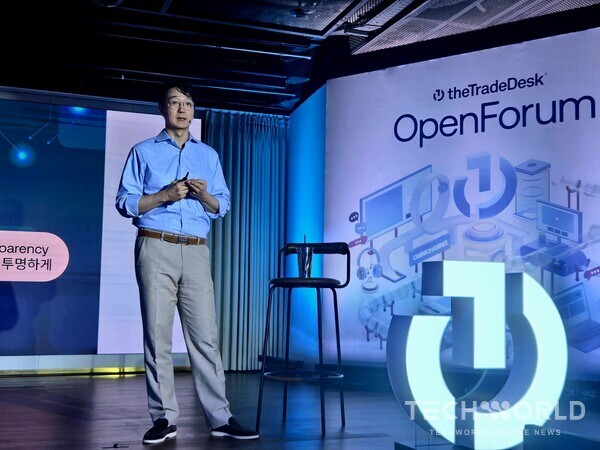
The Trade Desk held "Open Forum 2026" on the 17th at Mondrian Seoul Itaewon in Seoul. At the event, the company introduced its strategy for expanding Koa, the optimization engine, into a conversational AI assistant, as well as the Open Agentic Kit for linking with external AI environments.
Netflix also took part in the event. Netflix presented its approach to attention in CTV and OTT and its data-driven programmatic advertising strategy.
The opening keynote was delivered by Bang Jong-hwan, head of The Trade Desk Korea.
His speech followed a line of argument that contrasted how consumers move across multiple media and screens with the reality that advertising is operated separately by channel. Bang Jong-hwan pointed to the gap between how consumers use media and how advertising is managed.
He explained that consumers move naturally across multiple touchpoints such as smartphones, CTV, OTT, audio, and DOOH. He also said consumers move between multiple screens and media without distinguishing between channels.
By contrast, he pointed to the reality of ad operations, where planning, buying, and measurement are separated by channel. Bang Jong-hwan said many cases in advertising remain fragmented by channel across planning, buying, and measurement.
On that basis, The Trade Desk proposed an approach that starts by defining the audience first, rather than deciding on a specific platform and then executing. The company framed this concept as "Audience First" and described it as the starting point of an omnichannel strategy.
Bang Jong-hwan said the starting point should be the audience rather than the platform. He added that it is important to search for the most valuable opportunities in a broader media environment.
When ad touchpoints increase, advertisers should avoid treating every impression as equally valuable. Performance should be evaluated not by impression volume alone, but by who was reached, what content and environment the ad appeared in, and whether it led to purchase or actual outcomes.
In this process, AI's role in analyzing massive amounts of data is expanding. However, the marketer is the one who sets the objectives and decision criteria. The head of the Korea office said AI's role is not to make more decisions, but to support marketers in making better ones. He also said the key question is not how smart the algorithm is, but whose goals it serves.
The Trade Desk is a standalone advertising buying platform that does not own media. As a result, it aims to align with advertiser objectives rather than optimize within a specific media ecosystem. The company said this allows comparison across multiple media and advertising opportunities.
As AI becomes more powerful, the importance of differences increases, the head of the Korea office said. He explained that the key criterion going forward is not whether AI is available, but whether AI is used wisely.
Kim Yu-jin, managing director at The Trade Desk, then connected this perspective to marketing execution and explained the difference between multichannel and omnichannel. She defined the difference between the two approaches as fragmentation versus connection.
According to Kim Yu-jin, multichannel means separately operating multiple platforms and media. Optimization and measurement are also carried out for each channel individually.
Omnichannel, by contrast, is a way of operating dispersed campaigns in connection around a single customer journey. Operations, optimization, and measurement are also integrated.
Kim Yu-jin said the biggest difference between multichannel and omnichannel campaigns lies in whether the channels are connected. She said omnichannel builds the next strategy based on connected operations, optimization, and measurement.
The Trade Desk also presented the elements needed to implement omnichannel. Those elements include premium inventory, cross-device and cross-media audiences, AI optimization, and integrated measurement and reporting.
As an integrated buying environment for CTV, OTT, audio, and DOOH has been established, it has become possible to connect touchpoints across devices such as mobile phones, TVs, and PCs. This reduces duplicate ad exposure to the same user and allows frequency management, which had been separated by channel, to be adjusted based on a single audience.
The company then introduced a way to use AI and connected data to find the next ad touchpoint for each customer. Kim explained a case in which a customer had been exposed to TV and display ads but not to other channels, saying advertisers can analyze the likelihood of conversion and the cost of additional exposure before choosing the next touchpoint.
Kim referred to the many moments and multiple-screen experiences in customers' daily lives. She also described omnichannel campaigns as the next step in connecting important moments and opportunities.
In the Netflix section, the emphasis was placed on "attention" rather than "reach." Along with this, the expansion of programmatic buying was mentioned, and the new metric for CTV and OTT was presented as content and ad engagement rather than simple reach.
This trend was presented as a shift in CTV and OTT toward using user attention level as a more important criterion than simply how many people were reached.
Park Young-seon, Netflix Industry Lead, said media consumption has become distributed across multiple platforms, making it difficult to judge ad effectiveness using reach alone. He said the key in this environment is securing attention rather than simply reaching more people.
Park said users turn to Netflix not just to pass the time, but to watch stories they genuinely want to see. As a result, natural attention is formed, he said.
Netflix said more than 80% of users on its ad-supported plan watch Netflix content every week. It also said it secures content and viewing-behavior data and uses that data for ad targeting and campaign design.
Netflix said its ad products include video ads, pause ads, and interactive ads. It also said it operates "single title sponsorships," which link a specific title with a brand.
Netflix said programmatic buying allows campaign operations, targeting, reach, and frequency management through DSPs. It also said these programmatic operations can run alongside other media and be combined with Netflix audiences and performance measurement capabilities.
Park said the ad inventory is the same whether Netflix ads are bought programmatically or through direct buying.
He said the same inventory, content, audience, ad technology, and data infrastructure can also be used through programmatic buying.
Stella Leung, SVP and head of business development for North Asia at The Trade Desk, then pointed to a common misconception about omnichannel: that it requires a larger budget.
She explained that if CTV, audio, display, and DOOH are operated separately by channel, the same user may be targeted with repeated ads. She added that consolidating frequency management across channels can reduce duplication.
Stella Leung said this approach allows remaining budget to be directed toward audiences that have not yet been reached, and that omnichannel does not necessarily mean spending more but rather allocating existing budgets more effectively.
The presentation distinguished omnichannel from simply repeating the same message across all channels, describing it not as mere channel expansion but as an approach that changes messaging and evaluation methods according to customer status and touchpoint characteristics. It viewed a brand's first-touch customer, a product-awareness customer, and a purchase-consideration customer as being in different situations.
Accordingly, it said messaging needs to be differentiated by customer journey and channel. The point was that omnichannel cannot be explained by repeating the same message across all channels, since each customer's stage and each channel's characteristics are different.
The presentation also argued that in performance measurement, it is inappropriate to evaluate all media solely by last click or a single conversion, because each channel plays a different role in the customer journey.
The vice president likened applying the same last-click metric to every channel to asking every player on a sports team to score points regardless of position. He then said it is necessary to measure each channel's role, individual contribution, and the combined effect of the entire campaign at the same time.
In the latter part of the event, the presentation showed in detail how this perspective applies to AI-based ad operations. Koa presented directions for support, inference, and execution in ad optimization.
Mitch Waters, SVP at The Trade Desk, pointed out that as the number of available ad channels, data sources, and optimization options in the advertising environment increases, the burden on marketers' decision-making is expanding rapidly. He explained that while channel, data, and optimization choices have multiplied, time and manpower have not expanded proportionally.
Waters said AI could play a major role as a way to reduce this complexity. He said AI is useful in lowering the decision-making burden created by the growing number of ad channels, data sources, and optimization options.
However, he cautioned against structures in which the basis for AI judgments and the way results are produced remain opaque. Waters said AI should not become another black box in which the way it works, its actions, and the insights it generates are unknown, emphasizing that maintaining user control is important as AI use expands.
The Trade Desk said AI should be used on the premise of aligning with advertiser goals, preserving human control, and using high-quality data. The company presented these three factors together as conditions for AI use.
The vice president said AI must be aligned with advertiser goals and should not operate for someone else's objectives. He also said users must be able to monitor progress and have the option to intervene directly when needed.
The Trade Desk said its platform handles about 20 million ad opportunities per second and about 1.5 trillion ad opportunities per day. It said each ad opportunity includes signals such as content, context, device, identity, and inventory quality.
The company said AI analyzes these signals to determine who should see an ad, when, and how often. It said this supports audience strategy, frequency management, and retargeting optimization.
The vice president emphasized data quality as a factor affecting AI judgments. He said the quantity of data alone is not an advantage and that what matters is providing better context for better AI decision-making.
Koa is the strategic centerpiece. Koa has been used for ad optimization since 2018. The Trade Desk is pursuing an expansion of Koa's capabilities.
The expanded scope is a conversational AI assistant that handles back-end optimization support, inference, and execution. The speaker expressed the intention to expand Koa beyond background optimization into support, inference, and execution. He also mentioned a direction in which Koa goes beyond describing what is happening and instead presents opportunities, next steps, cost-saving measures, and ways to improve performance.
Users enter campaign goals and audiences in natural language. Koa supports the search for relevant insights. Koa supports campaign setup. Koa supports problem solving. Koa supports the next action.
At the back end of the conversational interface, role-specific agents are linked together. Their functions are insight generation, prediction, and problem solving.
The Trade Desk introduced the Open Agentic Kit. The purpose of the Open Agentic Kit is to connect Koa with AI environments outside the company's own platform. MCP is the notation used for external AI connection.
The Open Agentic Kit is MCP-based and includes functionality that connects The Trade Desk's agents with external AI systems. The kit is focused on enabling media planning, campaign activation, and measurement to be carried out continuously in the AI environments of companies and agencies. It is currently in a private beta phase with some partners.
On this point, the vice president likened MCP to an API connection in the agent world. He explained that proprietary agentic systems can be connected to The Trade Desk's agents, enabling planning, activation, and measurement to be run in a more automated way.
He also said MCP connectivity is possible when using a proprietary agency interface and also when using Claude or ChatGPT. This pointed to a direction in which external AI services can interact with the advertising platform through natural language.
The company is focusing on AI not as a replacement for advertising strategy but as a tool for handling repetitive execution and data analysis while supporting marketers' judgment. The speaker said expanding AI use is not the goal in itself. He added that it is important to reduce complexity, broaden the scope for faster information gathering, and extend human expertise and judgment.
As AI spreads across ad buying and campaign operations, the center of competition is shifting from individual functions to data connectivity and integrated optimization. With media and touchpoints increasing through CTV, OTT, and DOOH, the key competitive variable for ad platforms was presented as the sophistication of audience data and performance data connections. In response, The Trade Desk is expanding Koa's agentic AI capabilities based on Kokai, the platform built on The Trade Desk, while also broadening external AI integration through the Open Agentic Kit.
The key to future business expansion lies in extending AI's role from campaign setup and analysis to execution. However, this requires maintaining advertiser control, along with transparency and proof of actual results.
Source: TECHWORLD · Kim Seung-gi
Original: https://www.epnc.co.kr/news/articleView.html?idxno=407158
References
This article was produced with the help of an automated content generation algorithm.
Source: TECHWORLD
View originalThis article was summarized and organized by BizCrush based on the original article from TECHWORLD. For exact quotations and full details, please refer to the original article.