Appier Presents 'SCALE,' 5 Key Conditions for Expanding Agentic AI Outcomes
TECHWORLD ·
✦ AI Summary
Appier has presented 'SCALE' as the 5 key conditions for the sustained expansion of agentic AI business outcomes.
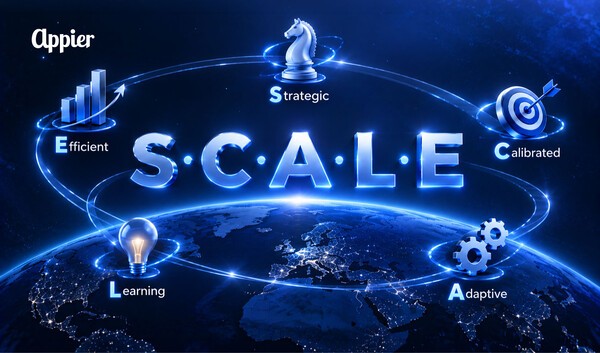
SCALE stands for Strategic, Calibrated, Adaptive, Learning and Efficient, meaning goal clarification, reliability checks, model and agent coordination, learning from execution results and efficient resource use.
Appier said that actual work operations and outcome expansion have become more important than AI adoption itself, and that it supports companies in turning AI into tangible ROI.
Appier has presented 'SCALE' as the 5 key conditions for the sustained expansion of agentic AI business outcomes. Appier said what companies need goes beyond adopting individual AI technologies and instead requires the ability to operate effectively and improve results.
This sense of urgency is tied to a situation in which operational capability and outcome expansion have become more important than AI adoption itself. In particular, as the use of AI agents spreads, companies are being asked to prove real business results and keep expanding them.
According to McKinsey's 'State of AI in 2026' survey, the share of respondents at large companies with annual revenue of more than USD 1 billion saying they use AI agents at the scaling stage rose from 27% last year to 40% this year. The result shows that the use of AI agents is expanding, especially among large companies.
By contrast, the share of respondents saying AI contributes to improved corporate profitability was 37%, roughly in line with last year. Separate from broader adoption, there was little change in how much companies feel profitability has improved.
As a result, it has become clear that companies need operating systems and capabilities that can verify real business outcomes from AI technologies beyond individual adoption and continuously scale them. In this context, Appier presented 'SCALE' as the 5 key conditions for the sustained expansion of agentic AI business outcomes.
Appier judged that corporate AI use has entered a full-scale expansion phase. Accordingly, it argued that the focus of the discussion needs to shift from adoption itself to actual operations and outcome expansion.
To that end, Appier systematized the company's core conditions as SCALE. SCALE is made up of Strategic, Calibrated, Adaptive, Learning and Efficient.
First, Strategic means clarifying the goals to be achieved with AI. To do this, companies must set measurable business goals such as revenue growth, customer conversion, cost reduction and productivity improvement, and they must also establish evaluation standards. This allows them to determine the actual standards for AI performance.
The premise after setting such goals is that companies need to judge whether AI can reliably carry out tasks. Calibrated refers to AI's ability to assess its own capabilities and level of confidence, consider potential risks and decide whether to act.
Because enterprise AI can have a major business impact even from small errors, verifying only the final result is not enough. It is important to check AI's judgments at each major step in the workflow, and it is also important to apply the necessary guardrails at those same stages. In addition, it is important to determine whether AI can perform the task and to decide which model or agent should be assigned the work.
In this process, Adaptive means not applying the same model to every task. The meaning of Adaptive is selecting and coordinating the right model or agent according to the purpose and difficulty of the task. This is described as an approach that assigns different models and agents in line with the characteristics of each task.
Representative ways to implement this include Model Routing and Agent Orchestration. Model Routing is a method of connecting the model best suited to the task. Agent Orchestration is a method designed to enable multiple agents with different roles and expertise to collaborate.
Appier also stressed that Learning is necessary in real work environments. Companies need to use context accumulated during work processes, use user feedback and apply previous execution results to later judgments and actions. For agentic AI to create value continuously, it must not stop at one-time automation and should be able to improve judgment and execution based on previous execution information.
As corporate AI use expands, the importance of Efficient is also growing. In particular, in environments involving multi-step reasoning, model calls and interactions between agents, the need for LLM efficiency and token optimization becomes even greater.
In such an environment, there is a growing need to use models and computing resources at levels appropriate to task requirements. The key is to produce stable outcomes at the desired level without excessive resource input.
Appier is continuing agentic AI research aligned with this SCALE direction and is also applying related technologies to its products. The company said it is conducting research into AI's capabilities, level of confidence and assessment of potential risks, as well as self-awareness in information-poor situations.
Appier also said it is expanding its research into selecting the right reasoning language for tasks and contexts. On the basis of these research and technology capabilities, Appier said it is supporting companies in converting AI into tangible ROI and in continuously expanding AI results.
Chihan Yu, CEO and co-founder of Appier, said companies are already focusing on the performance of the AI they have adopted and on ways to keep expanding that performance. He said that as agentic AI takes on more judgment and execution, what matters more than autonomy itself is how reliably and efficiently it is operated, and that as AI becomes more autonomous, the companies operating it must also make sharper judgments.
Source: TECHWORLD · Lee Kwang-jae
Original: https://www.epnc.co.kr/news/articleView.html?idxno=407202
References
This article was produced with the help of an automated content generation algorithm.
Source: TECHWORLD
View originalThis article was summarized and organized by BizCrush based on the original article from TECHWORLD. For exact quotations and full details, please refer to the original article.