Kaspersky Bolsters Security Modules in 'Kaspersky Next Optimum' for SMBs
IT DAILY ·
✦ AI Summary
Kaspersky said on the 21st that it had strengthened the security modules of its security solution for small and mid-sized businesses, "Kaspersky Next Optimum."
The enhancement was focused on allowing needed functions to be added sequentially without changing the existing environment.
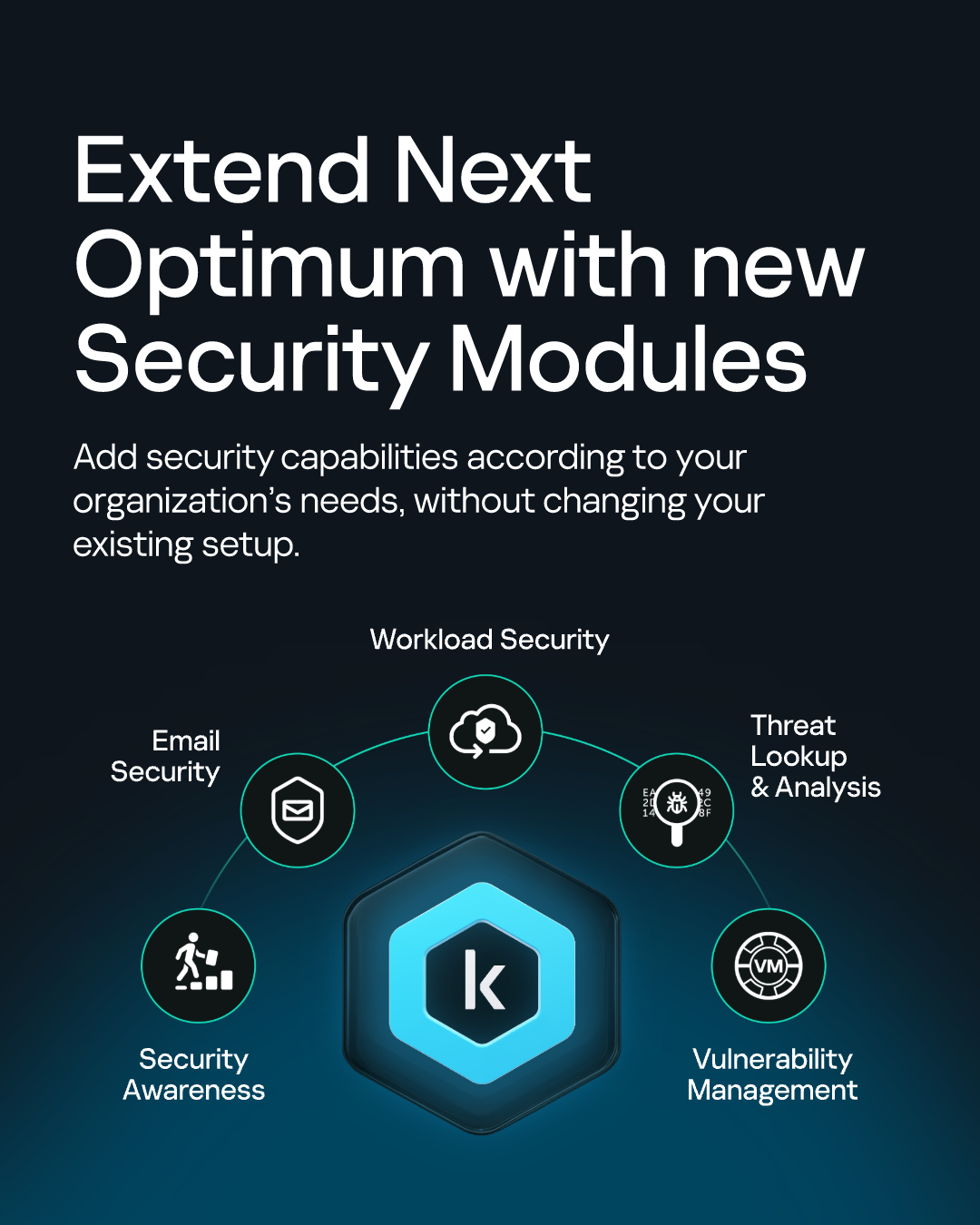
The solution provides five modules: security awareness, email security, workload security, threat investigation and analysis, and vulnerability management.
Kaspersky announced on the 21st that it had strengthened the security modules of its security solution for small and mid-sized businesses, "Kaspersky Next Optimum." The enhancement was focused on adding the functions needed without changing the existing environment.
Kaspersky said demand is growing for solutions that can simplify processes while responding to new security requirements in the market. A survey by Kaspersky's internal research center found that the main reasons for switching security vendors were compatibility and integration issues with existing solutions, at 26%, and the need to consolidate multiple products into a single platform, at 23%.
In line with this, "Kaspersky Next Optimum" is designed to support businesses by adding the functions they need now, one by one. The solution provides five modules: security awareness, email security, workload security, threat investigation and analysis, and vulnerability management.
The security awareness and email security modules support functions that reduce risks caused by phishing and user mistakes, and block threats that enter through email. Functions related to workload security and vulnerability management protect workloads in hybrid cloud environments and protect vulnerabilities in distributed IT assets. A threat investigation and analysis module is also provided.
Each module integrates with EDR and XDR, allowing functions to be introduced step by step while maintaining the existing security environment. It is also structured so that the scope of protection can be expanded in line with changes in business size and environment.
Kaspersky has expanded the scope of support for phishing response functions. The phishing simulation training feature in the existing solution is provided in "Next EDR Foundation," and administrators can conduct realistic training using preconfigured templates. Administrators can also identify employees' response levels and areas where additional training is needed.
Management functions have been improved for optimization on smartphones and tablets, and Telegram incident alerts are also provided. Telegram incident alerts allow users to check incident priority, affected assets, and response recommendations. Companies can start operations with the simplified "Pro View Console," and switch to the "Expert View Console," which provides more detailed functions, if needed.
Ilya Markelov, director of Kaspersky's unified platform product group, said that in SMB environments the speed at which the attack surface is expanding is outpacing the growth in security budgets and personnel.
He said Kaspersky aims to support companies in strengthening the security areas they need without redesigning the existing environment or technology environment, or interrupting work.
Lee Hyo-eun, head of Kaspersky Korea, said that adoption of cloud services and remote work environments is accelerating among domestic small and mid-sized businesses, and that many such companies do not have dedicated security teams. She added that Kaspersky's new modular security capabilities would allow them to add the functions they need in line with their growth, and expand their security framework based on these modular security capabilities.
Source: IT DAILY · Kim Ho-jun
Original: https://www.itdaily.kr/news/articleView.html?idxno=241743
References
This article was produced with the help of an automated content generation algorithm.
Source: IT DAILY
View originalThis article was summarized and organized by BizCrush based on the original article from IT DAILY. For exact quotations and full details, please refer to the original article.