Lee Woon-jin: In Auto Semiconductors, System Optimization Now Matters More Than Component Competition
TECHWORLD ·
✦ AI Summary
Onsemi is strengthening its competitiveness in SiC power semiconductors and automotive networking technologies in response to the auto industry's electrification and transition to SDV.
Based on its SiC development and production line in Bucheon, Korea, the company provides real-time technical support and stable supply to Korean customers, and aims to develop Korea into a key hub for SiC manufacturing and innovation.
Onsemi expects demand for SiC to increase as 800V EV platforms spread, and plans to expand its automotive semiconductor business in Korea around electrification, SDV and energy efficiency.
Onsemi is strengthening its competitiveness in SiC power semiconductors and automotive networking technologies in response to the auto industry's electrification and shift to SDV. The company expects 800V EV platforms to spread, and says that will also expand demand for SiC.
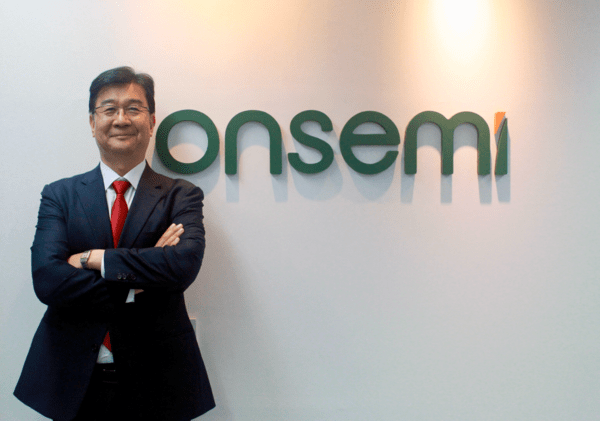
Against this backdrop, Onsemi is pursuing a strategy to develop Korea into a key hub for SiC manufacturing and innovation. Lee Woon-jin, head of Onsemi Korea, said Onsemi operates a world-class SiC development and production line in Bucheon, Korea.
Lee Woon-jin, head of Onsemi Korea, said the company is ensuring real-time technical support and stable supply for Korean customers based on this accessibility and supply chain. He added that Onsemi's SiC portfolio is designed to meet the performance, efficiency and reliability requirements of major global automakers.
Onsemi said the SiC power semiconductor market will accelerate its growth as 800V EV platforms become more widespread. Lee cited support for faster charging speeds, improved power efficiency and lower power loss as advantages of the 800V platform.
Lee said the importance of the 800V platform's advantages is becoming even greater as consumer expectations for EV performance rise. Onsemi believes this trend is gaining momentum in the EV market.
At the same time, SiC was presented as a key technology well suited to implementing 800V systems. Lee described SiC's high efficiency and high-voltage handling capability as its defining characteristics.
Lee said demand for advanced power semiconductor solutions, including SiC, is expected to rise as OEMs expand development of high-performance EV platforms. Onsemi therefore expects the spread of 800V EV platforms to accelerate growth in the SiC power semiconductor market.
As market changes and the shift to SDV progress, Onsemi emphasized that Korea plays a key hub role for SiC manufacturing and innovation within its global business base. Onsemi also expects the importance of zone architecture to grow during the SDV transition, along with the importance of automotive networking technologies.
Lee explained that zone architecture simplifies complex in-vehicle wiring and helps reduce vehicle weight. He added that it also provides a foundation for supporting a variety of software-based functions and future upgrades.
Lee said these changes are driving rising demand for intelligent power management, automotive networking and high-speed connectivity. Onsemi identified automotive Ethernet as a key technology supporting the SDV transition.
Lee explained that as vehicle intelligence and connectivity expand, semiconductors' role in enabling vehicle connectivity will strengthen, and their roles in enabling vehicle intelligence, efficiency and safety will also become more important.
He also pointed to the growing importance of industrial standard technologies such as automotive Ethernet in the networking field. Accordingly, the role of automotive Ethernet and semiconductors in supporting SDV implementation was also emphasized.
Lee explained that, from a vehicle-network perspective, 10BASE-T1S Ethernet supports the simplification of in-vehicle networks. He said 10BASE-T1S Ethernet supports the implementation of an efficient zone architecture and underpins the auto industry's transition to SDV.
He also said that in next-generation vehicle platforms, the importance of optimizing the entire system is growing, rather than focusing on the performance of individual components. He stressed that the industry must adapt to this shift.
Lee said Onsemi has continued investing in technologies that simplify vehicle networks. He also explained that the company has continued to invest in efficiency, scalability and technologies that improve system performance.
Along with this, Onsemi is pursuing a system-level vehicle solutions strategy that combines image sensors for ADAS with power semiconductors. Lee said ADAS image sensor and power semiconductor technologies meet the key requirements of next-generation vehicles: safety and energy efficiency.
He also explained that Onsemi's strategy does not stop at supplying individual components. He said the strategy is to support customers at the system level.
As the convergence of EV and SDV technologies accelerates, the importance of a system-level approach is expected to grow. Accordingly, the article says there is an increasing need to look at the vehicle as a whole rather than by component.
He said a system-level approach that considers the vehicle's safety, efficiency and performance at the same time is important. He identified technologies for building safer, more efficient and more intelligent vehicles as Onsemi's future focus areas.
With that recognition, Onsemi is planning to expand its business in Korea's automotive semiconductor market. The three pillars of that expansion are electrification, SDV and energy efficiency.
Lee identified electrification, SDV and energy efficiency as the three core areas of focus in Korea's automotive semiconductor market. Onsemi plans to expand its business in the Korean market around these areas.
In electrification, the targets are traction inverters, onboard chargers (OBC) and DC-DC converters. These targets are key systems in EVs.
He said the company will continue to focus on power semiconductor technologies that support traction inverters, onboard chargers (OBC) and DC-DC converters in electrification. This was presented as one pillar of the strategy to expand in Korea's automotive semiconductor market.
The company identified automotive Ethernet, zone architecture and intelligent power distribution technology as major areas for SDV.
Lee said the importance of automotive Ethernet, zone architecture and intelligent power distribution technology in SDV will continue to grow. He explained that as vehicles evolve around software, technologies that can manage in-vehicle networks and power more efficiently will play a central role.
Lee said the company is focusing on solutions that improve overall vehicle energy efficiency and system performance. He added that based on these technologies, it plans to support the transition to next-generation vehicle architectures.
He also said the company plans to continue contributing to the electrification and SDV development of Korea's auto industry.
The core business in the Korean market is automobiles. As Hyundai Motor accounts for a large share of Onsemi Korea's revenue, Lee said the Korean business is centered on Hyundai and that the company is focusing on the automotive sector.
Onsemi supplies Hyundai with SiC products for electrification, as well as a range of power semiconductors and sensing products. Onsemi's main product categories are image sensors, power semiconductors and ultrasonic sensors. Lee said Korea's focus is on automobiles rather than AI.
Lee said Onsemi is working on SiC collaboration with Hyundai in electrification. However, he explained that the company is focusing on the broader power semiconductor business rather than concentrating on a single SiC product. He also mentioned the importance of system-level optimization.
Lee said Hyundai's vehicle architecture changes are expected to create new collaboration opportunities. He said platform changes are scheduled at Hyundai and explained that vehicle structures are shifting from the past component-by-component approach to zone architecture.
He added that the share of Onsemi products in Hyundai's future solutions is significant. He expected there will be many areas for future collaboration with Hyundai. He also noted that the competitiveness of Chinese EVs is strengthening.
As the technological competitiveness of Chinese EV makers rises, the speed of innovation across the auto industry is drawing attention. The strengthening competitiveness of Chinese EV manufacturers was cited as an example showing that innovation across the auto industry is accelerating.
Lee said the strengthening competitiveness of Chinese EV manufacturers proves that auto industry innovation is accelerating. He added that Onsemi sees this as an opportunity to strengthen cooperation with customers in response to change, and as an opportunity to improve its pace of innovation.
Lee said the basis for judging competitiveness in the future is shifting away from looking only at the performance of individual components and toward greater importance of system-level optimization that considers the whole vehicle. He explained that the focus of competition is moving from individual components to system optimization that encompasses the entire vehicle.
Onsemi is focusing on developing technologies that comprehensively consider vehicle energy efficiency, driving range, charging speed and vehicle architecture. Lee said the company is continuing to focus on improving vehicle energy efficiency, extending driving range, enabling faster charging and implementing intelligent vehicle architectures.
Lee said Onsemi continues to invest in SiC, intelligent power technologies and automotive networking technologies. The company is responding by continuing to invest in these areas.
Onsemi Korea is expanding into AI and robotics based on its Bucheon SiC fab. Onsemi Korea plans to broaden the application of its power semiconductors beyond automobiles into AI and robotics.
To that end, Onsemi Korea is pursuing the development of various modules, including SiC and IGBT, based on its Bucheon fab in Korea. Lee said the company will pursue the successful development of various modules, including SiC and IGBT, tailored to customer requirements based on the Bucheon fab.
Lee said the goal is to contribute to improving product performance through this development. He also said the company plans to provide strong technical support.
He also said the company plans to strengthen customer relationships. He added that it will pursue its goals through technical support and closer customer relationships.
Lee said innovative technologies and solutions developed through close collaboration with leading customers are contributing to strengthening Onsemi's global competitiveness. He added that Onsemi's goal is to make a major contribution in Korea not only to achievements in the existing auto industry, but also to revenue growth from AI-era and industrial customers.
Lee identified high-performance power semiconductors and robotics solutions as key growth areas for the AI era. He said the company plans to develop high-performance power semiconductors suited to the AI era. He also explained that it plans to develop a variety of motor drivers for the robotics industry and image sensors for the robotics industry. The robotics industry is expected to grow rapidly in the future.
Onsemi is including AI data centers and robotics in the expansion targets for its SiC power semiconductor business, which it has previously expanded with EVs as the central axis. The company is pursuing a strategy of leveraging the power semiconductor and sensing technologies accumulated in the auto market. It also sees the surging power demand of the AI era as a new growth opportunity.
Lee said Onsemi's investment in the SiC market is being made globally. He explained that the company has been investing mainly around the EV market. He added that as the market expands into AI data centers, demand for related products has increased sharply.
Onsemi expects data center revenue to double this year. It also forecasts growth of 20% to 25% over the next four to five years.
Onsemi is expanding its SiC business with EVs as a major market, and has secured a foothold in the auto market by supplying SiC products to Tesla and others.
Amid this trend, Chinese companies are growing rapidly, while Onsemi is strengthening its competitiveness in the global SiC market. Lee said demand for SiC and power semiconductors, which originated in automobiles, is spreading and increasing into AI data centers, and added that growth is expected in EVs, AI data centers and robotics in the future.
Source: TECHWORLD · Park Kyu-chan
Original: https://www.epnc.co.kr/news/articleView.html?idxno=407204
References
This article was produced with the help of an automated content generation algorithm.
Source: TECHWORLD
View originalThis article was summarized and organized by BizCrush based on the original article from TECHWORLD. For exact quotations and full details, please refer to the original article.