Naver Cloud Proposes Military-Controlled Defense AI Collaboration Model
AI TIMES ·
✦ AI Summary
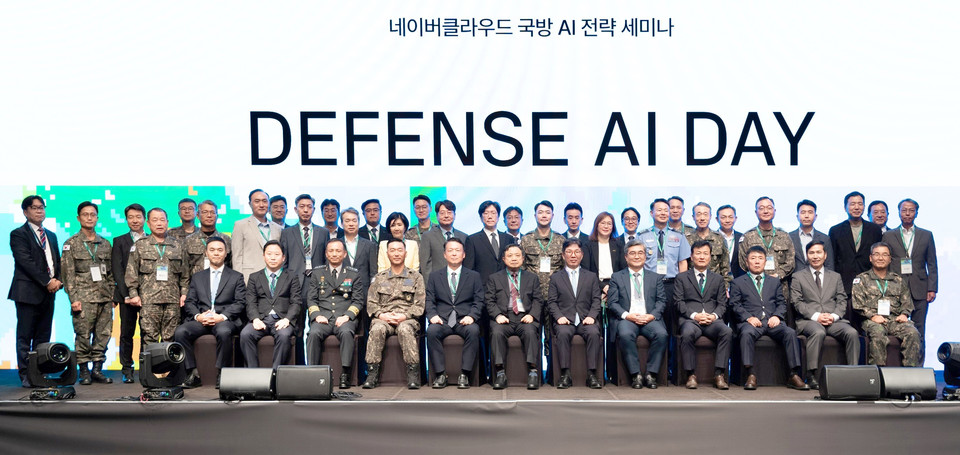
According to AI TIMES, Naver Cloud unveiled a defense sovereign AI strategy on September 18 before 550 officials from the Ministry of Nation…
According to AI TIMES, Naver Cloud unveiled a defense sovereign AI strategy on September 18 before 550 officials from the Ministry of National Defense and the armed services, under which the military retains control over data and models while rapidly putting private-sector technology into operational use. The core of the strategy is a collaboration model that does not stop at simply supplying private-sector technology, but jointly designs the military's problem definition, field validation, and actual mission deployment. The company outlined a plan to support a structure that integrates infrastructure, AI models, and services so the military can operate them safely even on closed networks. It also said it would gradually verify the system starting with missions whose effects can be confirmed, reflect operational requirements through engineers deployed in the field, and continuously improve performance. On the technology side, it presented a framework that allows information from different sensors and platforms to be understood as the same situation, along with an approach that predicts outcomes by reflecting battlefield variables. The center of the announcement was the idea of directly controlling the intelligence the military wants, rather than simply demonstrating technology, and linking it to real-world operations.
Perspective
The significance of this proposal lies in putting front and center a structure in which the military, not the private sector, holds the initiative in defense AI. Because the focus is on both deployment speed and field suitability rather than technology adoption alone, future competition is likely to hinge less on who claims higher performance and more on who can quickly reflect requirements in a closed environment and carry them through to actual operations. For the industry, the role of long-term verification and improvement alongside delivery is becoming more important, which could change collaboration methods and business structures.
This perspective is BizCrush's own commentary and is not part of the reporting by AI TIMES.
This article was produced with the help of an automated content generation algorithm.
Source: AI TIMES
View originalThis article was summarized and organized by BizCrush based on the original article from AI TIMES. For exact quotations and full details, please refer to the original article.