Mobile Carriers Move to Stabilize Network Quality Ahead of Chuseok Holiday
TECHWORLD ·
✦ AI Summary
Korea's three major mobile carriers activated a special communication response system ahead of the Chuseok holiday.
SKT and LG Uplus prepared AI-based network stability operations, advance inspections, and on-site response measures.
KT also carried out quality inspections, base station optimization, and strengthened security monitoring at major transport hubs and tourist areas.
Korea's three major mobile carriers have begun efforts to stabilize network quality ahead of the Chuseok holiday. The goal is to ensure smooth communications, and they plan to activate a special communication response system. On the 18th, all three carriers announced the launch of the special communication response system.
In this response trend, SKT and LG Uplus emphasized AI-based network stability operations. The three carriers plan to activate the special communication response system to support smooth communications.
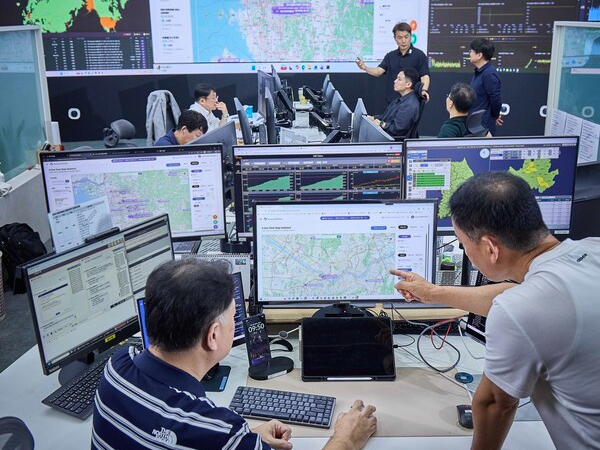
SKT will operate special communication measures for 5 days from the 23rd to the 27th, centered on its integrated situation room. SKT will also link and operate regional situation rooms. In addition, SKT plans to run a parallel monitoring system for 16 days from the 19th to the 4th of next month during the 2026 Aichi-Nagoya Asian Games.
During the holiday period, affiliates and operation and maintenance partners including SKT, SK Broadband, SK O&S, and Home&Service will take part. A total of 3,625 personnel will be deployed. They will monitor the national communications network around the clock.
Plans to improve the efficiency of the response system focus on actively using AI-based network operation solutions centered on the Network Control Center (NMC). The self-developed wireless network AI operation system "A-One" analyzes nationwide network traffic and equipment status in real time and detects early signs of quality deterioration. The core network AI integrated monitoring system "Spider" continuously monitors anomalies and supports rapid response.
Preliminary inspections have been completed for traffic-heavy areas such as highways, national roads, grave sites, tourist sites, and leisure facilities, and capacity expansions at 5G and LTE base stations in those areas have also been finished. From the 24th to the 27th, the company plans to operate situation rooms for major services such as Tmap, A.dot, and PASS, as a measure to respond to traffic changes.
LG Uplus will enter an emergency operations system during the same period. LG Uplus carried out advance inspections of 5G and LTE base stations located on highways, at rest areas, at KTX and SRT stations, at bus terminals, and at airports nationwide, and completed quality measurements and optimization work for those base stations. It also expanded cache server capacity in preparation for increased use of Uplus TV and OTT services and completed preparations for expected traffic growth during the holiday period.
The carriers are strengthening on-site response and monitoring in anticipation of higher communications demand and unexpected incidents at transport hubs and crowded areas during the holiday. Field personnel are expected to be deployed to key hub areas, including major highway toll gates and frequently congested sections at rest areas. They also plan to establish a standing dispatch-ready posture. These measures are intended to enable rapid responses to unexpected incidents during the holiday and provide stable communications services.
LG Uplus is pursuing real-time responses to traffic changes and stable quality delivery by using its AI-based autonomous network platform "AION." LG Uplus plans to operate an integrated situation room centered on "AION" at its Magok office in Seoul, and will also conduct intensive real-time monitoring during the holiday period.
KT conducted quality inspections to support stable communications. The inspection targets included major highways, KTX and SRT rail stations, airports, and bus terminals, all key transport hubs. KT also completed work to optimize base station capacity.
KT plans to conduct 24-hour intensive monitoring of 5G and LTE base stations in major tourist destinations and areas with large family visitor traffic during the same period. It also plans to strengthen security control monitoring to block the distribution of phishing text messages disguised as holiday gifts and to respond to cyberattacks.
KT said it has completed checks on the operating status of emergency power equipment in preparation for emergency situations in which power supply is cut off. The inspection covered mobile generator trucks and portable generators, and it said verification of the operating condition of those devices has also been completed.
Source: TECHWORLD · Kim Hye-jin
Original: https://www.epnc.co.kr/news/articleView.html?idxno=407131
References
This article was produced with the help of an automated content generation algorithm.
Source: TECHWORLD
View originalThis article was summarized and organized by BizCrush based on the original article from TECHWORLD. For exact quotations and full details, please refer to the original article.