Mondrian AI CEO Hongdae: In AI Competition, Utilization Matters More Than Securing Models
TECHWORLD ·
✦ AI Summary
Mondrian AI is targeting the enterprise and regional industry AX markets around AI agents and neoclouds.
Hong said that even as AI infrastructure and model supply increases, the ability to connect those resources to actual use is important, and that a structure for managing multiple models in one environment is needed.
The company is expanding AI cloud, agentic AI, and enterprise and institutional AX, and is aiming to surpass KRW 10 billion in revenue in 2025.
Mondrian AI is targeting the enterprise and regional industry AX markets, with a focus on AI agents and neoclouds. Rather than competing to secure GPUs and AI models directly, the company is centering its business on connecting existing infrastructure and models with the real-world work of enterprises and developers.
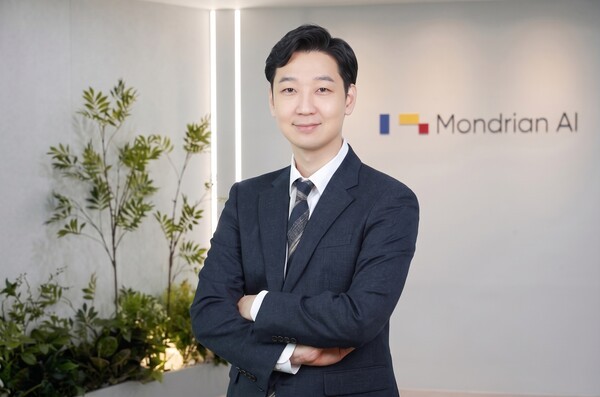
In an on-site interview on the 12th at the "Agent Field Trip: Incheon" event held around the Dongincheon area, Hongdae, CEO of Mondrian AI, reviewed changes in the AI agent market and explained the company’s neocloud and regional AX business strategy. Hongdae said that as AI infrastructure and model supply expands, the ability to connect those resources to practical use becomes more important.
The event was hosted by GDG Incheon and took place around Dongincheon. Participants toured the area, identified local problems, and took part by building services using AI agents.
At the event, Mondrian AI supported "Runyour Agent," which can use multiple generative AI models. The service is an example of the company’s strategy to connect existing infrastructure and models to actual service development.
Hong has served as a GDG Incheon and Songdo founder-organizer. He saw the event as an opportunity to gauge how much AI agents lower the barrier to software development.
Hong said the era in which software development was dominated by developers has ended. He also said the intention was to see whether even nondevelopers could turn the problems they identify and their ideas into actual services within a few hours.
Meanwhile, AI use is expanding at the organizational level. As a result, the challenge of managing multiple AI models at once has come into sharper focus.
For enterprises, the issues raised for integrated management include model selection, token usage, costs, access rights, and outputs. Hong viewed dependence on a specific AI model or provider as a problem enterprises must address.
As new models appear rapidly, the need to choose the right model for each task is growing. At the same time, the need for operations that are not tied to a single provider is also being raised.
The speaker emphasized a structure that avoids dependence on a particular model provider and allows models to be selected as needed by situation. He also stressed that users should focus on their work while models are chosen according to necessity.
In line with this, Runyour Agent was introduced as a multi-model agent platform that lets users work with several LLMs in a single environment. The platform is designed to support organizational token usage management, as well as cost control and project-specific access management.
Hong said personal AI use is becoming easier. However, he explained that management complexity changes when many people use multiple models at the same time.
Accordingly, Hong said the importance of managing costs, outputs, performance, and efficiency across the organization is growing. He projected that roles similar to human resource management, but for AI models and usage, will be needed in the future. He also said the company is building an environment in which multiple users can use multiple models while still being managed at the organizational level.
Mondrian AI has enterprise agents and neocloud as its main growth pillars. Hong said he views the existing cloud and AI data center markets as Asset-Heavy businesses.
He pointed out that Asset-Heavy businesses require large capital investment to secure data centers and GPUs. In that context, he said investment in AI data centers is expanding and supply of GPUs and AI models is also surging.
Hong said competition for GPU resources and AI models is unfolding rapidly. However, rather than joining the race to secure assets, Mondrian AI is focusing on linking existing infrastructure and models to actual demand.
He explained that instead of jumping directly into competition, the company is focusing on how to deliver resources and models to users. He added that neocloud is a business being pursued in that direction.
Neocloud is a structure that combines GPUs, AI development and operations platforms, and agent services. Its purpose is to help ensure that the resources and models enterprises need are connected to actual work usage.
Hong pointed to the distribution problem as a factor that hinders AI adoption. He said that expanding supply alone is not enough for AI achievements to lead to broader service adoption.
He explained that increasing infrastructure and model supply alone cannot guarantee easy use by enterprises and developers. His view is that if enterprises and developers do not use AI effectively, it becomes difficult for actual services to spread as well.
Hong said this challenge also applies to domestic AI models. He explained that although many domestic models have emerged, there is a lack of a receptor that can deliver them to ordinary users.
Hong said that beyond model development, there is a need for a role that opens distribution channels so developers and citizens can use them in practice. He said the government is also pushing to expand services that people can directly feel, beyond simply developing AI models, and that in this process the platform role that connects models and users is important.
Mondrian AI is expanding its neocloud strategy into regional AX. The company, whose headquarters are in Incheon Metropolitan City, is pursuing a business that links local data centers with manufacturing, bio, and logistics industry sites centered on Incheon Metropolitan City.
Hong predicted that as the cost of adopting generative AI and agents falls, AX demand will move beyond a large-corporate-centered structure and spread to mid-sized and small businesses. He said that in the past, AX for mid-sized companies and smaller firms often had a heavy cost burden relative to the investment return, but that this is now changing toward delivering greater effects with less investment.
Hong diagnosed that in this process, it is difficult for regional companies to directly secure both AI resources and cloud expertise at the same time. He then explained that Mondrian AI can support these areas and help regional companies with AX.
Hong stressed that the role of regional data centers should not remain limited to building servers and GPUs. He said that for real-world use to happen in industrial settings, corporate data needs to be converted into a form that AI can use.
He also said software capabilities are needed to connect data with models and services. Beyond building data centers and infrastructure, he said software and specialized technology are needed to turn ordinary data into a state usable by AI, and that the company can provide that role locally as well.
Incheon has an industrial base that includes bio, manufacturing, logistics, and airport and port industries. Mondrian AI plans to link this industrial demand with regional data centers and expand regional AX business, including in Incheon.
The company presented three future expansion pillars: AI cloud, agentic AI, and enterprise and institutional AX. Among them, AI cloud focuses on making local data centers and GPU servers easy for enterprises and developers to use.
Hong said that in relation to AI cloud, the company is expanding ordinary users’ access to multiple regional data centers and GPU servers. The goal is to make regional data centers and GPU servers easier to use.
Agentic AI focuses on improving work efficiency in industrial settings such as manufacturing. Hong explained that agentic AI is linked to efficiency gains for manufacturing companies and others.
Enterprise and institutional AX is being pursued as a customized application of the company’s cloud and platform to sector-specific demand. Hong said AX refers to expanding its own cloud and platform into industry-specific areas.
Mondrian AI surpassed KRW 5 billion in revenue in 2025 and also turned profitable in operating income in 2025. As of the second quarter of this year, the company has secured about KRW 5 billion in contract achievements, and based on that, it is aiming to surpass KRW 10 billion in annual revenue this year.
Until last year, the company mainly operated in regional markets, but this year it is expanding its customer base to the greater Seoul area, including Seoul. It has also set overseas expansion as a mid- to long-term growth direction, but has not yet decided on target countries or timing. Hong also said the countries and timing for overseas expansion remain undecided.
Its business structure combines Asset-Heavy businesses such as GPUs and data centers with platform- and software-centered businesses. The company is pursuing expansion in its infrastructure business while also seeking recurring revenue from agents and platforms. Through this, it aims to improve business stability based on recurring revenue.
Hong said that for AI companies to grow, they need to combine capital-intensive businesses with relatively light businesses. He also explained that the company plans to continue expanding its cloud- and platform-based business areas.
In addition to "Runyour Agent," Mondrian AI is expanding its business around "Runyour AI" and "Runyour Cloud." The expansion areas are AI infrastructure and platforms, and the company also operates specialized solutions aimed at AX use cases by industry, including manufacturing.
As increasing supply of GPUs and AI models could shift the center of market competition from securing resources to actual use and operations, Mondrian AI is pursuing its neocloud and agent businesses in connection with enterprise and regional AX demand. The company is aiming to surpass KRW 10 billion in revenue this year, and the key to future growth will be whether it can connect enterprise and regional AX demand and achieve that KRW 10 billion revenue target.
Source: TECHWORLD · Kim Seung-gi
Original: https://www.epnc.co.kr/news/articleView.html?idxno=406857
References
This article was produced with the help of an automated content generation algorithm.
Source: TECHWORLD
View originalThis article was summarized and organized by BizCrush based on the original article from TECHWORLD. For exact quotations and full details, please refer to the original article.