Gabia's 27-Year Infrastructure Assets Draw Attention Amid Management Control Dispute
TECHWORLD ·
✦ AI Summary
As the tender offer surrounding Gabia proceeds, discussions over management control are continuing, and market attention is focused on the tender offer price, the ownership structure, and the future composition of the board.
Gabia has accumulated 27 years of data center and cloud operations experience, and after the construction of the Gwacheon data center, it changed its infrastructure management method to one centered on zero-downtime migration and integrated operations.
Gabia is pursuing AI infrastructure, security monitoring, and MSP businesses in parallel, viewing long-term investment and operational experience as its competitiveness, and an expansion of the board and the appointment of new directors are scheduled at the extraordinary shareholders' meeting.
As the tender offer surrounding Gabia proceeds, discussions over Gabia's management control are continuing as well. Market attention is focused on the tender offer price, the ownership structure, and the future composition of the board.
At the same time, Gabia's 27 years of accumulated data center and cloud operations experience is drawing attention. Long-term technology investment is emerging as the company's core competitiveness.
Gabia has expanded its business from domains to hosting, IDC, cloud, and AI infrastructure. The technology and operational capabilities accumulated in that process are regarded as key assets.
An engineer at Gabia said that the key is the long-term operational experience accumulated over time, rather than just data center facilities and server equipment. He also explained that a service system in which all departments collaborate supports the company's competitiveness.
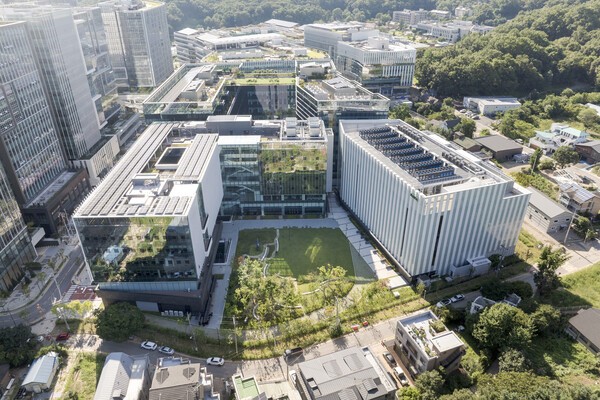
Recent changes in Gabia's infrastructure have become more apparent since the construction of the Gwacheon data center. Gabia integrated its infrastructure into a single operating system by connecting its existing hosting and IDC businesses with its self-developed 'gcloud.' Accordingly, its infrastructure management method also shifted from one centered on physical expansion to one centered on zero-downtime migration and integrated operations.
In the past, data center expansion was largely characterized by increasing equipment and space. More recently, it has shifted toward maintaining existing customer systems with zero downtime and increasing the share of transitions to new architectures.
In this process, the sales and business teams are responsible for identifying the range of downtime customers can tolerate. Planning, design, development, security, and infrastructure teams work through collaboration to support system transitions.
As a change felt in the field, he pointed to the zero-downtime execution of large-scale infrastructure overhauls based on collaboration across all departments, rather than hardware specification upgrades. He explained that as the center of data center operations has moved from simple expansion to zero-downtime transitions, a flow has formed in which multiple teams work together to support transitions based on what customers can tolerate.
The focus of service stability is on the overall response system rather than on specific equipment or a single monitoring solution. Inspection covers the entire infrastructure range, including servers, networks, storage, and customer applications, and operations are checked 24 hours a day, 365 days a year. If signs of abnormalities or network bottlenecks occur, traffic is rerouted through other paths. If a failure occurs, the technology team begins recovery while the customer support team shares the situation at the same time.
After recovery, the company reviews the issue based on the system structure and response procedures rather than on the responsibility of individual personnel. The purpose after recovery is to improve and prevent the same problem from recurring. Stability is also emphasized through constant monitoring across the entire range and a failure response system rather than through individual equipment, and after an incident, structures and procedures are adjusted to prevent recurrence.
Gabia's competitive strength lies in an integrated execution structure carried out by its own workforce. The scope includes infrastructure, cloud operations and management, and security monitoring. Through gcloud, Gabia has secured CSAP for IaaS, SaaS, and DaaS, and it is also operating a multi-cloud support MSP business and a security monitoring business in parallel.
If infrastructure, management, and security providers are separated, identifying the cause of a failure and responding to it may take longer. Regarding this, Gabia explained that it has a joint response structure involving security monitoring and infrastructure engineers. This joint response structure shortens the time required for root-cause analysis and recovery, and Gabia said that the time for root-cause analysis and recovery decreases through this structure.
One differentiating factor on site is that issues can be coordinated directly with the technology team without going through multiple vendors. Companies and institutions lacking in-house infrastructure staff can discuss failure response, system migration, and security issues with a single provider. This single-provider coordination structure is described as improving customer response efficiency.
Gabia has accumulated long-term operational experience in domains, DNS, and web hosting, and that accumulated experience served as the foundation for internalizing core cloud technologies such as virtual networks, distributed storage, and load balancing. The company has directly operated internet service-based areas, and the technology and operational experience accumulated in that process has been used in designing and advancing cloud infrastructure.
It also has experience directly developing and operating in-house software such as the groupware 'Hiworks,' and has reflected its software operations experience in infrastructure upgrades. Along with this, the internal development team has operated actual services.
During the internal development team's operation of real services, requirements for stability and usability were raised, and these have been reflected in the infrastructure. The results of these reflections have also been applied to external customer environments.
Meanwhile, as generative AI and AI agents spread, data center design standards are changing. As demand grows for high-density computing for large-scale data processing and model execution compared with general web services, the importance of power density, networks, and operating environments is rising, and maximum 20kW per rack and the combination of GPU and NPU are being cited as related factors.
The key change in the data center field is the increase in power density. In the past, the power required per rack was at the 2 to 3kW level, but the Gwacheon data center completed last year was designed as a high-power environment with a maximum of 20kW per rack. This provides the foundation for densely accommodating high-performance computing resources such as GPU and NPU.
Gabia is responding by moving its AI infrastructure business away from competition centered on securing GPUs and toward providing separated resources by use case. Gabia applies a distinction that provides resources by training, inference, and service operations.
Gabia believes that GPUs are needed for model training. However, it sees that relying on expensive GPUs even for real-time inference would increase customer costs and worsen resource supply issues. Accordingly, in April Gabia launched NPUaaS equipped with Rebellions' NPU ATOM-Max, to broaden the options for AI inference infrastructure.
Then, in July, Gabia launched GPU server hosting and linked it with Gabia Cloud. This setup separates resources for training, inference, and service operations by use, and is a hybrid approach aimed at reducing initial investment and operating costs.
It can be said that the factors determining the quality of AI services include not only compute resources but also networks and operating environments. In particular, when delivering real-time responses from LLMs, the streaming latency of server-sent events (SSE) is important, and customer-specific resource isolation and security environments are also considered important factors.
Regarding this, the speaker explained that the essence of AI infrastructure is not simply the purchase of expensive hardware. He also emphasized that operational capabilities that allow customer services to run continuously in actual operations on top of those resources are important.
Gabia has accumulated 27 years of operational and failure-response experience. Such experience qualifies as a technology asset that is difficult to secure in a short period of time.
The latest servers and data center facilities can be secured through investment. However, the experience gained by responding to actual failures and traffic changes is difficult to replace in the same way.
The scope of field experience accumulated by Gabia extends to diverse customer traffic patterns, hardware failures, DDoS attacks, and responses to network outages. In addition, its own personnel have directly handled work from the lowest layers of the system, and this direct experience has formed the background for strengthening operational capabilities.
In the data center and cloud business, field judgment holds that not only the scale of investment but also its timing and continuity matter. Capital injection can secure the latest servers, high-performance storage, and data center facilities, but direct experience in responding to unpredictable traffic and various failures is difficult to accumulate in a short time, the explanation said. An internal member said a long-term roadmap must be maintained to expand networks and systems in advance based on future demand forecasts.
In this kind of industry, it takes years from securing a site and power to building facilities and training specialized personnel. For that reason, it is pointed out that if investment begins only after demand arises, response delays are inevitable. The same judgment applies to data center and cloud infrastructure: if investment begins only after a failure occurs or after traffic capacity is reached, response delays are inevitable.
Repeated short-term cost-cutting can reduce costs in the short run. However, if this continues, there is a possibility that securing reserve infrastructure will be pushed down the priority list, and replacement of aging equipment may be delayed. On top of that, delays in R&D investment and workforce investment may also be added.
There are concerns that if such conditions accumulate, they could lead to technical debt that causes a decline in system stability. Ultimately, the judgment on site is that data center and cloud competitiveness cannot be solved by financial resources alone, and must be supported by accumulated operational experience and continuous, proactive investment.
Inside Gabia, the sense of urgency that long-term investment and business continuity must be preserved even amid the management control dispute was reflected in a joint statement by employees. Gabia has a joint employee statement, and 334 of 411 employees excluding registered directors participated, for a participation rate of 81.3%. They expressed the position that long-term R&D and infrastructure investment must be maintained and that business continuity must be preserved.
Internally, it was also judged that if the management structure changes in the future, a communication structure is needed that allows on-site technical and operational judgments to be reflected in management decisions. In addition, the company presented a direction that service quality, infrastructure stability, and long-term technology investment should also be considered, beyond short-term financial indicators.
According to the gist of the speaker's comments, Gabia's competitiveness cannot be explained by server hardware and data center buildings alone. It was also explained that the organic combination of the sales, business, planning, design, development, security, and infrastructure teams, along with a stable customer service operating system, are core assets.
Against this backdrop, the management control dispute at Gabia is unfolding. Macquarie Asset Management's tender offer is under way, and the tender offer subscription deadline is the 17th. Align Partners has raised demands for board restructuring. An extraordinary general meeting of shareholders is scheduled for October 8, and agenda items will include a change to the articles of incorporation to expand the number of directors from 5 to 7 and the election of new directors.
A special committee under Gabia's board concluded that independent corporate valuation and other measures for determining the fairness of the tender offer price were insufficient, and recommended that the board express a neutral opinion. Align Partners, by contrast, argues that the tender offer price does not adequately reflect Gabia's corporate value and is pushing to expand the board and appoint additional directors at the extraordinary shareholders' meeting.
Source: TECHWORLD · Kim Seung-gi
Original: https://www.epnc.co.kr/news/articleView.html?idxno=406856
References
This article was produced with the help of an automated content generation algorithm.
Source: TECHWORLD
View originalThis article was summarized and organized by BizCrush based on the original article from TECHWORLD. For exact quotations and full details, please refer to the original article.