ETRI Launches Effort to Build South Korea's AI Glass Ecosystem
TECHWORLD ·
✦ AI Summary
ETRI has begun in earnest to build a domestic AI glass technology and industry collaboration ecosystem.
ETRI held the "AI-In-Glass Forum 2026" on the 15th and discussed directions for domestic industry collaboration with industry, academia, research, and government stakeholders.
ETRI said AI glasses should be combined with AI agents, and that the co-development of core components, displays, devices, spatial intelligence, and AI services is necessary.
The Electronics and Telecommunications Research Institute (ETRI) has begun in earnest to build a domestic AI glass technology and industry collaboration ecosystem. AI glasses are drawing attention as the next-generation personal AI interface.
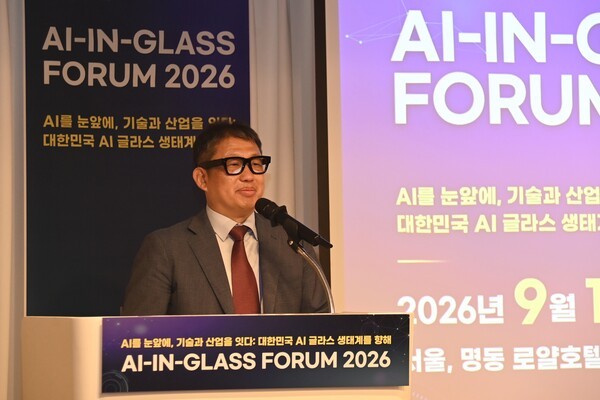
ETRI held the "AI-In-Glass Forum 2026" on the 15th. The event was themed "AI at Eye Level, Connecting Technology and Industry: Toward South Korea's AI Glass Ecosystem."
The event was attended by industry, academia, research, and government stakeholders from the AI glass core components, display, device, spatial intelligence, AI agent, and application services sectors. Participants discussed directions for domestic industry collaboration.
AI glasses are next-generation wearable, glasses-type devices. They are equipped with the ability to perceive the surrounding environment and deliver needed information and services in front of the user's eyes. They also take the user's location, gaze, surrounding objects, and space into account.
ETRI suggested that if AI glasses and AI agents are combined, they could evolve into an intelligent platform that delivers context-appropriate information and services in a timely manner without separate commands.
ETRI has set "AI-In-Glass" as a core direction and is pushing ahead with related technology development. At the forum, the institute shared cooperation measures to vitalize a South Korea-led AI glass industry ecosystem, including introductions to technologies ETRI is developing.
At the forum, Professor Woo Woon-taek of KAIST delivered the keynote speech. Under the theme "The Future of AI Glasses: Symbiotic Augmented Intelligence," he introduced directions for AI glass technology development and what the future may look like.
Next, DeepFine CEO Kim Hyun-bae took the stage. He gave a presentation on "AI Glass Services and Spatial Intelligence."
Sapiens Semiconductor CEO Lee Myung-hee also gave a presentation. She introduced related topics under the theme "AI Glass Display Technology and the Future."
Jung Il-kwon, head of ETRI's AI-In-Glass Strategic Research Center, also presented. He explained ETRI's R&D direction under the theme "ETRI's AI Glass R&D Strategy."
ETRI has proposed spatial intelligence, user and environment understanding, collaborative spatial information, AI agents, and display technology as areas for development. Based on this, ETRI presented directions for technology development tied to industrial sites and demonstration efforts linked to industrial sites.
ETRI judged that the growth of AI glasses as a new industry has limits if only a single company or technology is involved. Accordingly, it said that for the AI glass industry to grow, multiple stakeholders must be connected together, rather than relying on individual companies or a single technology.
ETRI proposed that core components and display companies provide lightweight, low-power technologies, while device companies turn those technologies into wearable products. It also cited the role of spatial intelligence and AI companies as combining understanding of real-world spaces with software services that meet user needs.
It also said demand-side organizations need to present requirements and link with demonstration environments, while universities and research institutes need to connect foundational technologies. ETRI said that connecting these stakeholders can create new markets and secure industrial competitiveness.
With this view in mind, a panel discussion was held under the theme "Building South Korea's AI Glass Ecosystem." The panel discussion covered securing domestic technology, commercialization, links to demand industries, field demonstrations, and expansion measures.
Jung Ik, head of ETRI's Spatial Media Research Laboratory, said that the industrial platform growth of AI glasses requires the co-development of core components, displays, devices, spatial intelligence, and AI services. He also said the forum would be developed into a venue for practical technology and business collaboration centered on companies, and that ETRI would work with industry, academia, research, and government stakeholders to enhance the competitiveness of South Korea's AI glass ecosystem.
Source: TECHWORLD · Lee Gwang-jae
Original: https://www.epnc.co.kr/news/articleView.html?idxno=407071
References
This article was produced with the help of an automated content generation algorithm.
Source: TECHWORLD
View originalThis article was summarized and organized by BizCrush based on the original article from TECHWORLD. For exact quotations and full details, please refer to the original article.