British Army Tests Battlefield Potential of Swarm Drone Experiment
AI TIMES ·
✦ AI Summary
According to AI TIMES, the British Army has completed a swarm-flight experiment with 8 unmanned aerial vehicles in a real military environme…
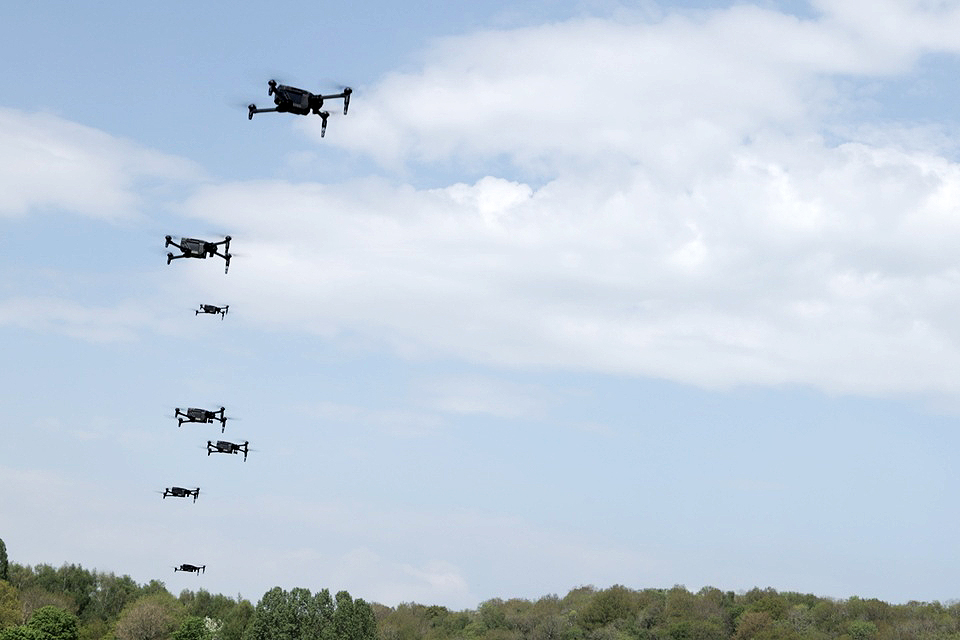
According to AI TIMES, the British Army has completed a swarm-flight experiment with 8 unmanned aerial vehicles in a real military environment, confirming the battlefield potential of autonomy technology that operates multiple drones as a single cooperative group. The Defense Science and Technology Laboratory under the U.K. Ministry of Defence said on September 16 that the test was part of a software-defined swarm concept demonstration project and that it assessed swarm control performance over 8 weeks of operations. The core of this proof of concept is to move away from the method of separately controlling individual aircraft and instead integrate and operate multiple unmanned systems by mission. Different swarm systems built by British defense companies took part in the test, and the test infrastructure supporting them has been handed over to an Army operating unit and is being used for hands-on flight verification. In particular, the structure was designed with an open architecture so it can be extended beyond unmanned aerial vehicles to ground and surface unmanned systems. The British Army plans to conduct additional tests and field validation to determine which operations this technology is suited for, and then reflect that in force development and unmanned systems introduction plans.
Perspective
The significance of this demonstration is that competitiveness is emerging not from simply having more unmanned systems, but from how quickly different systems can be linked and repurposed. If open architecture and swarm autonomy work together, software-centric force operations tailored to battlefield changes will become easier, and technology at the test stage will be more likely to feed into actual procurement and operational concepts. Ultimately, this can be read as a signal to the industry that proving interoperability and update speed matters more than the performance of a single platform.
This perspective is BizCrush's own commentary and is not part of the reporting by AI TIMES.
This article was produced with the help of an automated content generation algorithm.
Source: AI TIMES
View originalThis article was summarized and organized by BizCrush based on the original article from AI TIMES. For exact quotations and full details, please refer to the original article.