Bebrest Files Patents for AI Technologies to Judge Sleep Data, Assess Reliability, and Estimate Effects
TECHWORLD · · 1 views
✦ AI Summary
Bebrest said on the 15th that it had filed patents for 3 core AI technologies.
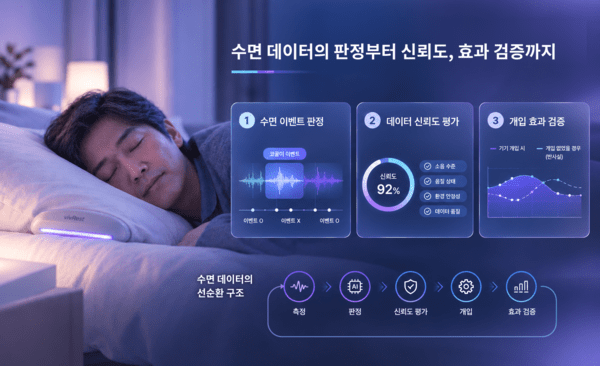
The filings cover sleep data judgment technology, sleep data reliability assessment technology, and technology for estimating the effects of physical intervention.
The technology filed domestically is the 'Method and system for deriving environmental quality metrics for acoustic event detection,' and a simultaneous filing is also under way in the United States.
AI sleep tech company Bebrest Co., Ltd. said on the 15th, through CEO Ha Sang-woo, that it had filed patents for 3 core AI technologies. The filings bundle 3 technologies that cover the entire process of using sleep data, including sleep data judgment technology, sleep data reliability assessment technology, and technology for estimating the effects of physical intervention.
The patent portfolio first focuses on correcting measurement deviations during the sleep data collection stage. It also includes evaluating the quality of secured data. Among these, the technology for assessing the reliability of measurement results was filed simultaneously in South Korea and the United States. The technologies in question are the 'Method and system for determining session-level detection thresholds based on classifier output distributions with no-event judgment guard' and the 'Method and system for deriving environmental quality metrics for acoustic event detection.'
Finally, the portfolio also covers estimating how physical intervention affects sleep status. The corresponding filing is the 'Method and system for generating counterfactuals within a session and estimating physical intervention effects.' The 3 core AI technologies filed by Bebrest are organized into sleep data judgment technology, sleep data reliability assessment technology, and technology for estimating the effects of physical intervention.
Bebrest's first technical focus is correcting device-by-device measurement deviations, the second is assessing the reliability of individual measurement results, and the third is estimating the impact of a device's physical intervention on sleep status. Together, these 3 technologies address inter-device variation, the reliability of individual results, and device intervention effects as part of a single management framework. Bebrest plans to build a system for managing data quality and reliability alongside the accumulation of sleep data. This structure does not stop at analysis after data collection, but instead links measurement environments, data quality, and intervention results by checking each stage in sequence.
Behind this trend is the need to secure the reliability of sleep data, one of the key challenges in sleep tech. The test used to diagnose sleep disorders is polysomnography (PSG), which is conducted at a medical institution while the equipment and sensors are worn. However, polysomnography (PSG) has the limitation of differing from everyday sleep environments. By contrast, home wearable and sleep-measurement devices have the advantage of collecting data over long periods in everyday settings.
However, home wearable and sleep-measurement devices may show variations depending on device type and measurement environment, making it necessary to maintain consistent data quality. In addition, even when large amounts of sleep data are accumulated, it may be difficult to assess the reliability of individual data points. As a result, limitations may arise in the process of advancing AI training and services.
Bebrest developed the 'Method and system for deriving environmental quality metrics for acoustic event detection' technology, which quantitatively evaluates the detection environment and quality of acoustic data collected during sleep. The technology is intended to assess the measurement environment by quantifying the environment in which sleep acoustic data were collected and the quality of the data, and to ensure that only data meeting a certain level of reliability are used for AI analysis and training.
Bebrest completed the domestic filing for the technology on the 9th. The domestic application number is 10-2026-0171797. Bebrest is also pursuing a simultaneous filing in the United States.
The company said it is seeking to secure intellectual property rights both at home and abroad in consideration of overseas market expansion and the possibility of collaboration with global manufacturers. The filed technologies are scheduled to be applied sequentially to Bebrest's AI smart pillow, 'S-Pillow,' and its sleep-care vertical AI platform, 'TranSleep.'
Bebrest plans to apply quality and reliability assessment technologies to its accumulated 190 million sleep data records. The company intends to use this as a foundation for joint research with medical institutions and for advancing AI models.
Kim Seol-gi, CAIO, said the 3 patent filings are meaningful because they secure a technical foundation that goes beyond sleep data collection and analysis to enable data judgment, quality and reliability management, and estimation of physical intervention effects. She added that the company will advance its AI sleep technologies not only by accumulating more data, but also by improving data quality and reliability at the same time.
Bebrest already holds 17 registered patents and has expanded its intellectual property related to sleep AI through this filing. It also plans to build a technology system that leads from sleep measurement and analysis to effect verification, and to apply related research results to products and services.
Source: TECHWORLD · Kim Gyeong-ju
Original: https://www.epnc.co.kr/news/articleView.html?idxno=407031
References
This article was produced with the help of an automated content generation algorithm.
Source: TECHWORLD
View originalThis article was summarized and organized by BizCrush based on the original article from TECHWORLD. For exact quotations and full details, please refer to the original article.