AI Data Centers Cut Costs by Combining Power, Cooling, and Carbon Capture
AI TIMES ·
✦ AI Summary
According to AI TIMES, a UNIST research team said on September 15 that an integrated energy system that uses fuel cells for AI data centers…
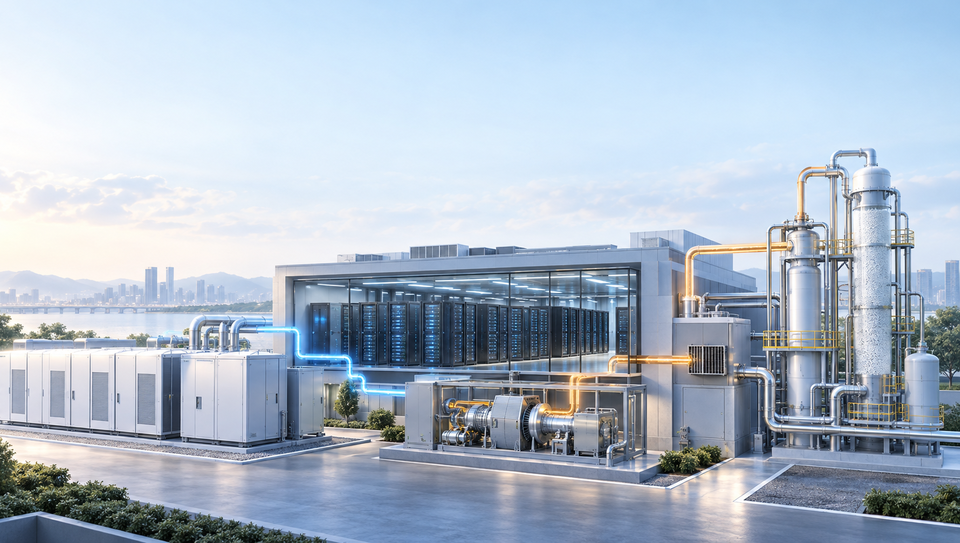
According to AI TIMES, a UNIST research team said on September 15 that an integrated energy system that uses fuel cells for AI data centers and routes waste heat to carbon capture and additional power generation could cut total costs by about 48% and greenhouse gas emissions by up to 72% compared with conventional methods. The key is that power supply, cooling, and carbon capture are not treated separately, but designed as a single system. Heat generated by the fuel cells is reused in the capture process, while heat produced while cooling servers is linked to electricity generation. The research team compared multiple combinations of power sources and cooling methods based on local conditions and found this configuration to be generally advantageous. However, it said the more economical power supply method can vary depending on local energy prices and the structure of electricity generation. The analysis presented design criteria that address both the rising power burden and the carbon problem created by the expansion of data centers.
Perspective
The significance of this issue is that data center competitiveness is shifting beyond server performance or site acquisition to energy system design. In particular, the finding that costs and emissions can be reduced together signals that it is becoming difficult to separate operational strategy from ESG judgment. It is also important that local optimal solutions can differ when power supply, cooling, and carbon capture are viewed as a single package. Ultimately, it shows that the profitability and sustainability of the same data center can vary greatly depending on where it is built and how it is operated.
This perspective is BizCrush's own commentary and is not part of the reporting by AI TIMES.
This article was produced with the help of an automated content generation algorithm.
Source: AI TIMES
View originalThis article was summarized and organized by BizCrush based on the original article from AI TIMES. For exact quotations and full details, please refer to the original article.