ABB: Rising Power Demand Will Expand DC's Role ... Common Standards and Specialized Talent Must Be Strengthened
TECHWORLD ·
✦ AI Summary
ABB and BCG said in a joint report that AC/DC hybrid power has strategic value and projected that future power distribution systems will shift to AC/DC hybrids.
The report described the expanding role of DC technology alongside the growth of solar power generation, batteries, electric vehicles, AI data centers, and industrial automation systems.
It also highlighted 800VDC distribution, fragmented standards, and a shortage of DC specialists as key issues.
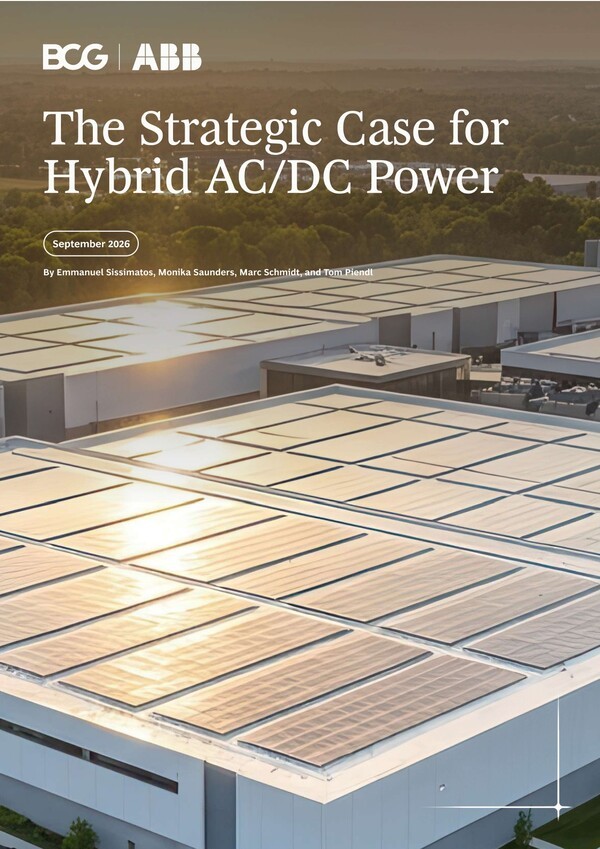
ABB and Boston Consulting Group (BCG) have published a joint report, "The Strategic Value of AC/DC Hybrid Power: Transitioning to the Next-Generation Power Architecture." ABB said the role of DC technology is expanding across industrial, commercial, and digital infrastructure. ABB and BCG projected that future power distribution systems will shift to AC/DC hybrid systems.
The hybrid system is characterized by combining the strengths of AC and DC. AC will continue to serve as the backbone of transmission and local distribution networks.
The expanded use of DC stands out in facilities where major energy sources and loads already operate on DC. As a result, the role of DC technology is continuing to grow across industrial, commercial, and digital infrastructure.
The report said solar power generation, batteries, electric vehicles, AI data centers, and industrial automation systems are growing rapidly. It also explained that many of these technologies operate on DC.
As technology adoption increases, cutting the number of power conversion stages across generation, storage, and consumption was presented as an alternative for improving energy efficiency and making better use of existing grid connection capacity. The report said reducing power conversion stages can improve energy efficiency and also raise the utilization efficiency of existing grid connection capacity.
AI data centers (AIDC), in particular, were singled out as a key area for accelerating DC adoption. The background was rising data center power density driven by growing AI workloads, and the report said the situation is worsening as it becomes difficult for existing power supply structures alone to meet increasing demand.
The report said the 800VDC distribution method is emerging as the main power supply structure for next-generation AI infrastructure. It also said the 800VDC distribution method can maximize computing capacity within limited grid connection capacity while improving energy efficiency.
The report also forecast that DC use will expand from data centers to other industrial sectors. The expansion targets were identified as manufacturing facilities with a high share of automation equipment and commercial buildings, and it explained that applying DC systems or subsystems to these sites can reduce power conversion losses and improve the efficiency of linking on-site renewable energy and energy storage systems (ESS).
In the long term, DC technology is expected to see greater use in a wide range of buildings. The ABB-BCG report outlined misconceptions about DC technology and challenges that hinder adoption.
The concerns in the past were scale, safety, and economics. ABB-BCG said concerns about scale, safety, and economics reflect outdated perceptions that do not reflect the current level of technology.
By contrast, the factors currently slowing DC expansion were identified as fragmented standards and a shortage of DC specialists. ABB-BCG stressed that these issues must be addressed urgently to enable full-scale adoption.
Morten Wierod, ABB CEO, said power demand continues to rise while the capacity of existing power infrastructure to absorb it remains limited. He said closer cooperation among companies, policymakers, and the technology industry is needed to expand the adoption of DC systems, and that greater attention should be paid to the role of DC. He added that ABB has been providing DC solutions for more than 25 years, and that ABB's DC solutions reduce customers' power conversion losses and improve power delivery efficiency.
He also said that building power systems requires common technologies and consistent standards, as well as the ability to deploy them at scale and a workforce of specialists who can apply them broadly. He added that when AC and DC each play their respective roles and are used in parallel, it is possible to build a system with high efficiency, stability, and the ability to meet future power demand.
Source: TECHWORLD · Lee Gwang-jae
Original: https://www.epnc.co.kr/news/articleView.html?idxno=406949
References
This article was produced with the help of an automated content generation algorithm.
Source: TECHWORLD
View originalThis article was summarized and organized by BizCrush based on the original article from TECHWORLD. For exact quotations and full details, please refer to the original article.