Yurak Launches AI-Based Data Classification Solution 'DFAS Arc'
IT DAILY ·
✦ AI Summary
Yurak announced the launch of 'DFAS Arc(DFAS Arc),' an AI-based automatic data classification solution.
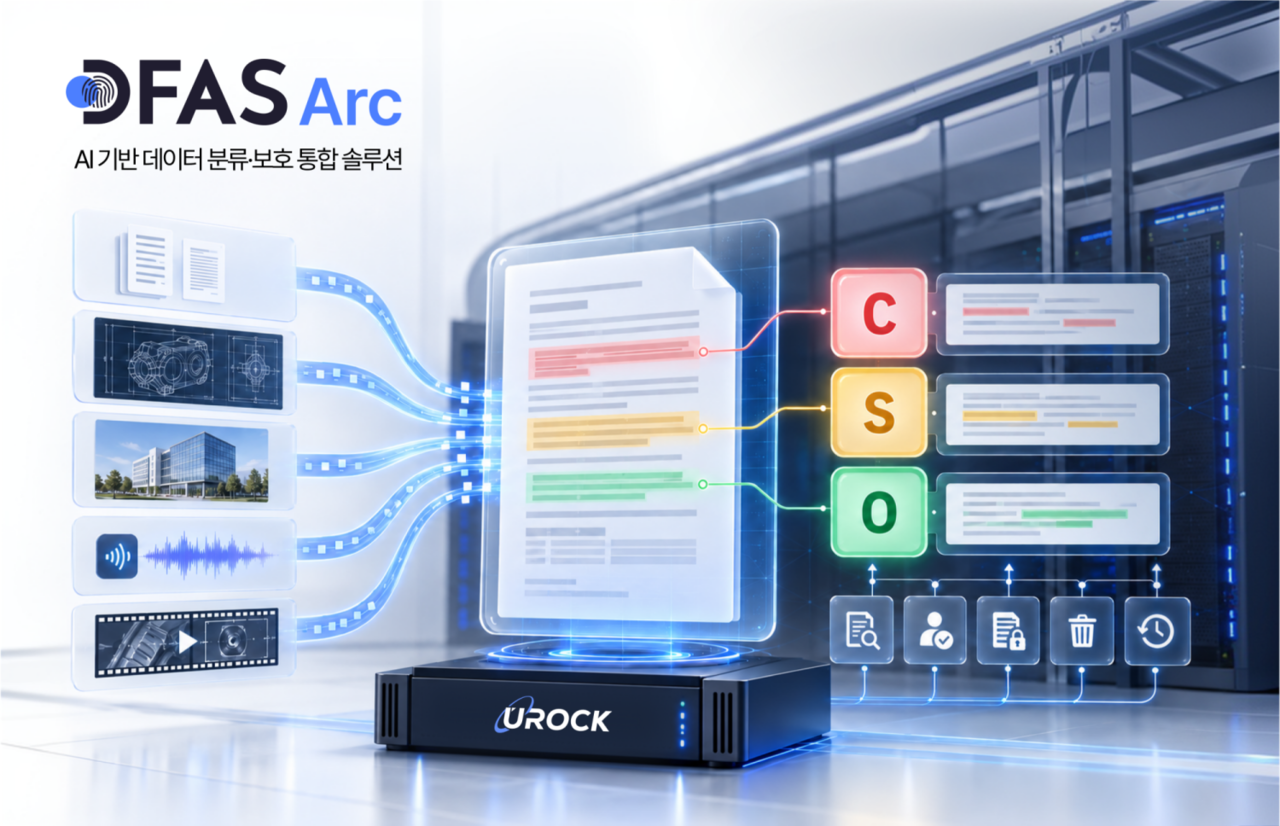
The solution classifies data into confidential (C), sensitive (S), and open (O) grades based on analysis of data meaning and context and the standards set by the National Network Security System regulations.
After classification, it supports encryption, deletion, and audit logs, and audit history is retained for 5 years by default.
Yurak announced on the 15th that it had launched 'DFAS Arc(DFAS Arc),' an AI-based automatic data classification solution. Yurak focused on the on-the-ground difficulties involved in the transition to N2SF.
The issue was the need for a consistent classification standard for data. If an institution manually reviews tens of thousands of documents it holds, it takes a significant amount of time, and different interpretations of laws and different judgment criteria can lead to the same data receiving different grades. If sensitive information is misclassified as public material, there is also a risk of information leakage.
Accordingly, 'DFAS Arc' supports AI-based classification using analysis of data meaning and context. The classification grades follow the standards set by the National Network Security System regulations, and the grade categories are confidential (C), sensitive (S), and open (O).
'DFAS Arc' supports the basis for determinations and approval history. It also supports encryption, deletion, and audit logs, as well as the entire data management process.
DFAS Arc operates by providing classification guidance based on relevant legal provisions and internal regulations through its document interpretation function. The person in charge reviews the reasons behind the AI's judgment and then makes the final classification decision. This is expected to shorten data classification time, reduce judgment variance, lower the likelihood of erroneous decisions, and improve the consistency of classification standards.
After classification, confidential and sensitive data are encrypted. In addition, data whose retention period has expired or that is no longer needed is deleted in an unrecoverable form after approval procedures by the person in charge. Audit history across the entire process, from classification to action, is recorded, and the audit history is retained for 5 years by default. These records can be used as evidence for an institution's N2SF security review, internal audit, and compliance response.
Yurak is pursuing business expansion centered on the public sector based on these capabilities. In the public sector, demand for N2SF transition stands out. Yurak plans to expand its scope to manufacturing companies in the future, and the manufacturing companies targeted for expansion hold national core technologies and industrial secrets. It also plans to expand its application to the financial and healthcare sectors in the future.
Yoon Bong-seok, CEO of Yurak, said the company possesses technologies accumulated in the digital forensics field, and that it has applied these technologies to data classification through closed-network AI, integrity, and traceability technologies. He added that the company will begin with the public N2SF transition market, expand into the critical information management sector, and position itself as a standard classification engine for a data-centric security environment.
Source: IT DAILY · Kim Ho-jun
Original: https://www.itdaily.kr/news/articleView.html?idxno=241605
References
This article was produced with the help of an automated content generation algorithm.
Source: IT DAILY
View originalThis article was summarized and organized by BizCrush based on the original article from IT DAILY. For exact quotations and full details, please refer to the original article.