Bosch Targets Doubling Heavy Commercial Vehicle Revenue, With High-Performance Powertrains and SW-Centric Truck Solutions at the Core
TECHWORLD ·
✦ AI Summary
Bosch said it sees its heavy commercial vehicle business as a key growth area at 'IAA Transportation 2026' in Hannover.
Bosch aims to double revenue in the segment by the mid-2030s, and said heavy commercial vehicle technology revenue currently exceeds EUR 4 billion.
Bosch is seeking to improve commercial vehicle safety and operational efficiency through multiple technologies, including battery electric, hydrogen, diesel improvements, synthetic fuels, ADAS, central E/E architectures, and OTA updates.
The commercial vehicle industry is facing both major opportunities and challenges at the same time. Transport demand is rising as global trade grows, but stricter regulatory requirements and a deepening driver shortage are also increasing pressure on the sector.
This rising burden is also driving up TCO. In response, Bosch is pointing to expanded technologies that open new economic possibilities as the solution.
Bosch will take part in 'IAA Transportation 2026' in Hannover. At the event, Bosch said it sees its heavy commercial vehicle business as a key growth area.
Bosch is aiming to double revenue in the segment by the mid-2030s. The heavy commercial vehicle segment here is based on vehicles weighing more than 6 tons.
Global vehicle production is expected to decline overall in 2026. However, the solid commercial vehicle market is having a positive impact on Bosch's business, and the heavy commercial vehicle segment is showing greater resilience than the broader vehicle production decline outlook, supporting this revenue growth target.
Bosch forecast that global truck production will rise by about 1% to around 3.3 million units. It also expects global truck production to expand to 4 million units in the mid-2030s. Based on these forecasts and the spread of related technologies in the market, Bosch sees potential for revenue growth in heavy commercial vehicle technologies. Revenue from heavy commercial vehicle technologies currently exceeds EUR 4 billion, and Bosch said it sees the potential for that figure to double by 2035.
Assuming the fourth quarter ends strongly, Bosch said its mobility business segment should be able to maintain its 2026 sales level despite the current challenging and difficult market environment.
Against this business outlook, Bosch is leveraging its strengths as a global systems supplier. At the same time, Bosch is accelerating the transition to alternative powertrains and also accelerating the shift to new vehicle architectures.
Bosch's portfolio consists of hardware, software, AI, and cloud-based services. This portfolio is helping support safer commercial vehicles and more economical operations.
Bosch is strengthening growth by entering new business areas. Bosch, TSF Group subsidiaries Brakes India and Wheels India have established a new joint venture. The joint venture plans to develop technologies for compressed air generation and compressed air treatment, air suspension, and smart actuators for parking brakes.
A key pillar of Bosch's growth strategy is its broad portfolio of alternative powertrain technologies. On that basis, Bosch is strengthening its market position in battery-electric mobility. In 2026, one in every three newly registered battery-electric trucks in Europe is expected to be equipped with Bosch electric motors and inverters.
Daimler Truck is a longtime Bosch partner. Bosch has secured a large new order from Daimler Truck for the eActros electric truck. The contract includes supply of electric powertrain components produced in Europe.
The pace of transition in the commercial vehicle market varies by region. E-mobility is growing rapidly, and China is at the center of that expansion. E-mobility is gaining momentum quickly and is spreading particularly fast in China.
By contrast, the dominant powertrain in the North American commercial vehicle market is the traditional diesel engine. Hybridized diesel engines also form part of the mainstream in the North American commercial vehicle market.
Even with these differences, Bosch expects that by 2030 about 1 in 4 newly registered heavy trucks worldwide will be battery-powered or fuel cell-powered climate-friendly vehicles. Bosch forecasts that this share will rise to about half by 2035.
However, achieving global climate goals in the transport sector requires the use of multiple technologies, not a single solution. To support the transition away from fossil fuels, all technologies need to be deployed.
Batteries are the leading technology in the commercial vehicle sector. But hydrogen and alternative fuels will continue to play a complementary role in long-haul transport and global markets.
Bosch is not focusing on just one power source, but on technological diversity. Bosch supplies fuel cell power modules and key components for hydrogen internal combustion engines.
Bosch is seeking to expand its leading position in diesel engines. It is also continuously optimizing existing injection systems so vehicle manufacturers can meet Euro 7.
Renewable synthetic fuels for the global vehicle fleet can help accelerate the achievement of climate goals. In this way, Bosch is addressing multiple technology paths together, including fuel cells, hydrogen internal combustion engines, diesel improvements, and synthetic fuels.
The commercial vehicle industry is in transition. This transformation in the commercial vehicle industry is not limited to powertrain technology.
The EU has expanded the mandatory adoption of driver assistance features over the past few years to improve road safety. The EU's latest regulation will take effect in July 2026. Accordingly, emergency braking assist systems must reliably detect pedestrians and cyclists, while driver monitoring systems must detect not only drowsiness but also distraction.
Bosch provides related sensors and functions, and plans to launch next-generation multifunction cameras and radar sensors in 2027. These upcoming products are based on the latest AI technology and significantly improved computing performance, and their next-generation sensor functions will support precise detection of people and vehicles.
Digital rearview mirrors are equipped with built-in cameras, and the device can analyze driver behavior and issue warnings when distraction is detected. This digital rearview mirror is scheduled to enter mass production at two well-known European manufacturers in 2026.
Outside Europe, safety standards are tightening in major markets, with India and China cited as examples. In India, new regulatory requirements are being introduced, demand for the latest driver assistance systems is also rising, and demand for emergency braking assist and blind-spot detection is increasing.
Accordingly, Bosch is working with major local commercial vehicle manufacturers to help support the introduction of new safety standards. The collaboration involves applying suitable advanced driver assistance systems (ADAS) solutions.
Bosch provides a system and sensor portfolio that enables a complete view of the area around the truck and improves driving safety and convenience. To do this, it applies intelligent software algorithms and combines and analyzes diverse in-vehicle sensor data in real time. Camera and radar systems are suitable for highly automated driving.
Bosch is aiming for Level 4 autonomous driving as a response to the driver shortage in logistics. Software is increasingly able to handle more complex driving tasks, which can help reduce the burden on logistics systems.
The amount of data collected and processed by the latest commercial vehicles continues to increase. As powertrain, driver assistance, and automation functions expand, the complexity of electrical and electronic systems is also rising significantly.
Competitive pressure in the industry is driving system integration. Integrating multiple components into a complete system can reduce complexity. The result of system integration is also lower costs.
There is a trend toward integrating truck functions from the vehicle's previously distributed functions into a cockpit or central vehicle-domain computing platform. At the same time, the separation of software and hardware continues.
This separation of software and hardware is presented as a prerequisite for delivering new features across the entire vehicle portfolio and throughout the vehicle lifecycle through OTA updates. The emphasis is on a structure that provides new features across the fleet and over the vehicle's lifetime based on OTA updates.
Bosch and its subsidiary ETAS are developing a central E/E architecture based on high-performance, scalable vehicle computers and related software platforms in line with these changes. Customers can leverage Bosch's system expertise in both hardware and software.
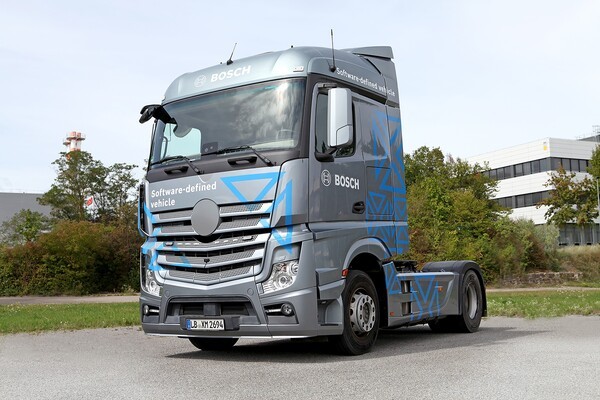
Against this backdrop, the software-defined vehicle is gradually becoming a reality in the truck industry. Software-defined mobility in the truck business is focused on solving TCO.
For fleet operators, the software-defined truck is presented as a way to significantly reduce the complexity of day-to-day operations. The development of central computing-based architectures and central E/E architectures is advancing in step with these operational improvements.
Source: TECHWORLD · Marcus Heyn
Original: https://www.epnc.co.kr/news/articleView.html?idxno=406931
References
This article was produced with the help of an automated content generation algorithm.
Source: TECHWORLD
View originalThis article was summarized and organized by BizCrush based on the original article from TECHWORLD. For exact quotations and full details, please refer to the original article.