Samsung, Verizon Verify 6G Sensing With Existing Equipment
AI TIMES ·
✦ AI Summary
According to AI TIMES, Samsung Electronics succeeded on September 15 in demonstrating AI-based ISAC with Verizon at the site of a major U.S.…
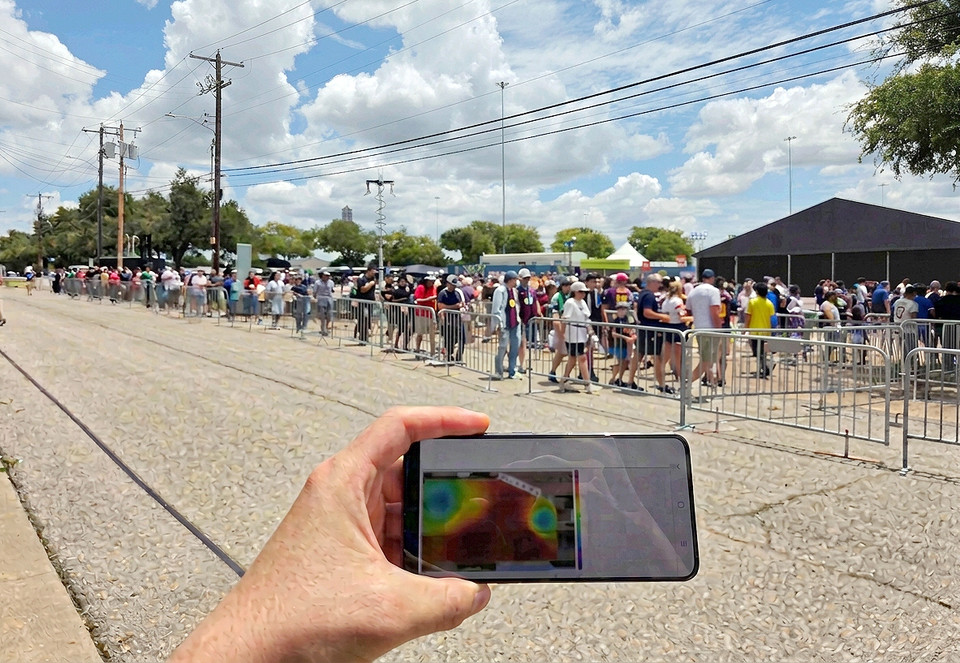
According to AI TIMES, Samsung Electronics succeeded on September 15 in demonstrating AI-based ISAC with Verizon at the site of a major U.S. sports event. The key point of the verification was that it was implemented in software at an event in July without replacing existing network equipment or adding separate sensors. By analyzing information gathered from the telecommunications network in real time with AI, it showed that it could identify people’s movements and crowd density and use that information for on-site operations. In particular, because it uses communications equipment like a sensor, it broadened the potential for application even in blind spots or dark environments. It also confirmed that, because it is based on a virtualized network, it has a structure that can add and expand new functions relatively quickly. The companies said this verification could extend beyond large-event management to areas such as transportation, industry, and safety and security.
Perspective
The significance of this case lies in the fact that next-generation technology is not remaining a distant future research topic, but is shifting toward solving real-world problems by layering software and AI on top of existing telecommunications infrastructure. Demonstrating performance and utility without adding separate equipment lowers the barrier to adoption, and it can be read as a signal that the role of telecom networks is expanding from a means of connection to a foundation that supports on-site awareness and operational decision-making. Ultimately, in the industry, competitiveness is likely to hinge less on who sells more equipment and more on who can implement and scale intelligent functions faster on the same infrastructure.
This perspective is BizCrush's own commentary and is not part of the reporting by AI TIMES.
This article was produced with the help of an automated content generation algorithm.
Source: AI TIMES
View originalThis article was summarized and organized by BizCrush based on the original article from AI TIMES. For exact quotations and full details, please refer to the original article.