GIST Launches Core Medical AI Technology Development and Young Researcher Training Initiative
AI TIMES ·
✦ AI Summary
According to AI TIMES, GIST announced on September 15 that it had been selected for an interdisciplinary project under the AI top-tier young…
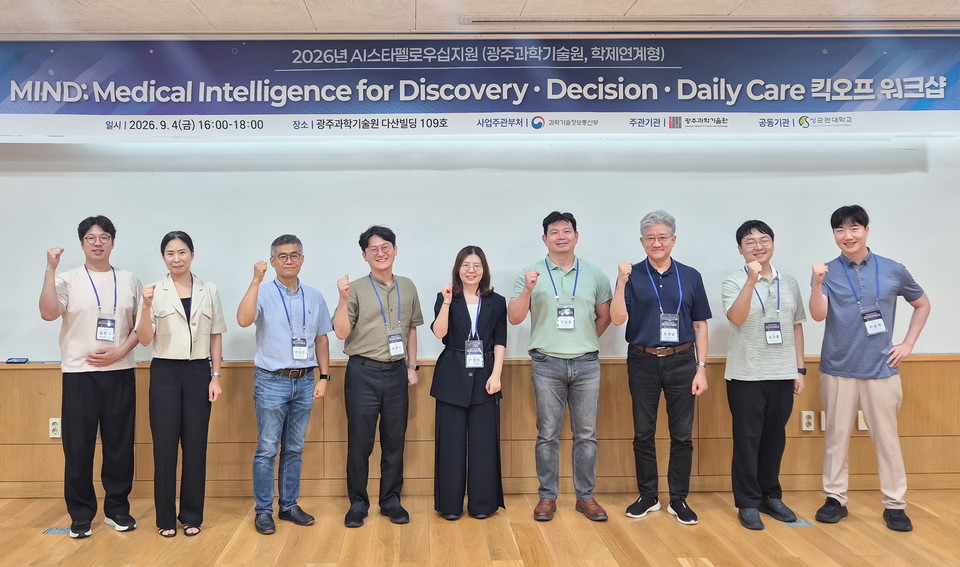
According to AI TIMES, GIST announced on September 15 that it had been selected for an interdisciplinary project under the AI top-tier young researcher support program run by the Ministry of Science and ICT and the Institute for Information & Communications Technology Planning & Evaluation, and will begin developing next-generation medical AI core technologies and training researchers with a project worth about KRW 11 billion. The project will run through 2031, with Sungkyunkwan University participating as a cooperator. At the center of the research is a plan to build an integrated medical AI system that covers disease detection, clinical decision-making, and everyday health management. The research team plans to identify disease mechanisms and markers based on multimodal medical data, while also developing functions that can make stable judgments even when the medical environment changes and that can detect abnormal signals early from lifestyle data. The team aims to connect the technologies it develops to validation in medical settings and prototyping to confirm their practical usability. At the same time, another pillar of the project is creating a structure in which young researchers independently lead tasks so they can gain experience in R&D, demonstration, and commercialization.
Perspective
This selection is significant in that it shows a trend in medical AI moving beyond individual diagnostic tools toward a single system that links research, clinical practice, and daily care. In particular, by combining core technology development and talent cultivation within one project, it can create a foundation for results to extend beyond short-term demonstrations and into the next round of research and real-world deployment. If the model of placing young researchers in the role of independent principal investigators takes hold, it could also change research culture and commercialization approaches in the field.
This perspective is BizCrush's own commentary and is not part of the reporting by AI TIMES.
This article was produced with the help of an automated content generation algorithm.
Source: AI TIMES
View originalThis article was summarized and organized by BizCrush based on the original article from AI TIMES. For exact quotations and full details, please refer to the original article.