LG AI Research Institute Targets Industrial Pain Points with “Expert AI,” Expanding Into Manufacturing, Finance, and Science
TECHWORLD ·
✦ AI Summary
LG AI Research Institute held the “LG AI Talk Concert 2026” on the 14th and unveiled its “Expert AI” strategy and future direction for solving industrial pain points in manufacturing, finance, and science.
It also said it plans to combine industry-specific expertise and on-site data with foundation models, and to expand its scope of application through agentic AI and robot foundation models (RFM).
LG AI Research Institute introduced achievements including more than 100 industrial pain-point solutions, 368 papers, 1,080 patents, and use cases such as Exaone Tabular, Exaone BI, and the AI autonomous laboratory.
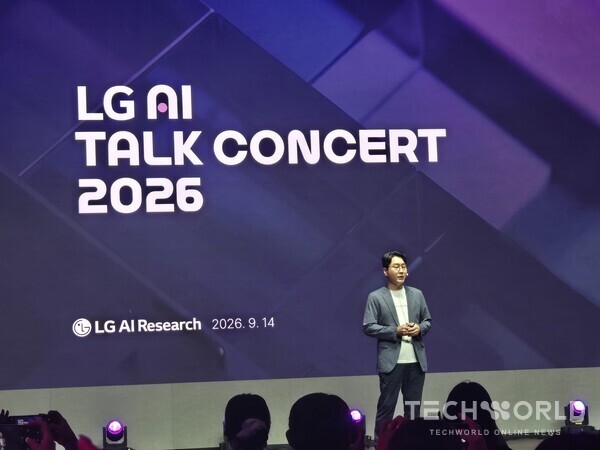
LG AI Research Institute has moved beyond competing on the performance of general-purpose AI models and fully launched its “Expert AI” strategy, which aims to directly solve pain points in manufacturing, finance, and science. On the 14th, LG AI Research Institute held the “LG AI Talk Concert 2026” at LG Sciencepark in Magok, Gangseo-gu, Seoul, and unveiled AI technologies applied to industrial sites over the past 6 years as well as its future strategy.
LG AI Research Institute laid out a plan to combine industry-specific expertise and on-site data with foundation models. It also said it plans to broaden its scope of application by expanding into agentic AI, which makes its own decisions and executes tasks, and robot foundation models (RFM).
The strategy was unveiled based on the institute’s industrial application achievements accumulated since its founding in 2020. LG AI Research Institute said it has delivered more than 100 successes in solving industrial pain points, citing cases such as predicting battery life and capacity, screening defective products, optimizing production and materials management, and discovering drug candidates.
Research and intellectual property achievements were also announced. LG AI Research Institute said it has published 368 papers at top-tier global AI conferences and filed 1,080 patents in South Korea and overseas.
AI used in industrial settings requires an approach different from general-purpose models centered on generating answers, said Im Woo-hyung, co-head of LG AI Research Institute. Im said the conditions for AI to be recognized for its value in industrial settings include linking it to work efficiency, cost reduction, productivity, and quality improvements.
In line with that, LG AI Research Institute is advancing Expert AI based on specialized documents, on-site data, and accumulated know-how from problem-solving processes. The institute has developed general-purpose Exaone, along with “Exaone Tabular” for structured data, “Exaone Discovery” for materials development, “Exaone Forecast” for time-series prediction, and “Exaone Omni Inspect” for manufacturing inspection.
LG AI Research Institute also has “Exaone Data Foundry,” which supports the development of industry-specific models. “Exaone Data Foundry” has been expanded into an “AI Foundry,” in which AI handles data generation, model training, and evaluation.
This “Exaone Data Foundry” was used in the Ministry of Food and Drug Safety’s development of an AI for drug review. The review AI is expected to be applied to future pharmaceutical approval reviews.
Im said in industrial settings, plausible answers alone are not enough. He stressed the need for AI that can understand and judge countless variables and even 1% anomalies.
Im said the AI competition is no longer just a matter of comparing model performance. He stressed that the key competitive benchmark is how much real-world change AI can create.
Against that backdrop, LG AI Research Institute is expanding Expert AI into K-Exaone and robot foundation models. K-Exaone is strengthening its ability to perform agents, reason, understand Korean, and comprehend specialized knowledge, while aiming for a global frontier-level model.
The robot foundation model is responsible for connecting AI judgments to actual actions. LG AI Research Institute is positioning K-Exaone and the robot foundation model as the two expansion pillars of Expert AI.
George Cameron, co-founder of Artificial Analysis, said that the standards of competition in the global AI market are expanding from model intelligence to agent performance, cost, and speed. This aligns with the previously outlined shift in the criteria for AI competition.
Artificial Analysis evaluates models through the “Artificial Analysis Intelligence Index (AAII).” AAII combines 10 evaluation categories, including agent performance, coding, scientific reasoning, and knowledge. The comparison set also includes agents, image models, video models, and voice models, in addition to models themselves. The comparison scope covers the entire AI stack, including hardware and inference performance.
Cameron predicted that the point of contact for AI use will shift to agents. He also said the importance of foundation models will continue. He added that the highest-performing frontier model is not the only option for companies. He said companies choose models based on cost, speed, and business purpose, explaining that efficient model selection is needed depending on the task.
Under this evaluation framework, South Korea ranked 3rd in Artificial Analysis’s country-by-country frontier model assessment. South Korea placed behind the United States and China. Cameron highly rated the pace of growth in Korean AI. He also said model development by domestic companies has supported recent performance gains, and that support for sovereign AI has also supported recent performance gains.
Open-weight models lag top-tier closed models by about 3 to 9 months, but their use will continue because of cost efficiency and flexibility, he said. The gap in task costs between models exceeds 100 times, and there were also concerns that applying the most expensive model across all tasks is inefficient.
Cameron said companies are beginning to think about the cost efficiency of AI use. He went on to predict that cost efficiency will become as important a priority as AI intelligence, and that the development direction of models will shift from simple reactive systems to systems that ask questions in advance and suggest needed actions.
After the presentation, a dialogue was held under the theme of the current state of global AI and the future of the Republic of Korea. The dialogue featured Lee Hong-rak, co-head of LG AI Research Institute, and Cameron, co-founder of Artificial Analysis. Lee asked about AI intelligence evaluation criteria, the competitiveness of Korean models, and changes in benchmarks in the agent era.
Cameron said that to prevent AI evaluations from being over-optimized for a single benchmark, it is necessary to combine diverse evaluation items with private datasets. He explained that evaluation methods should be diversified so they do not lean toward a specific standard.
Cameron predicted that future major AI evaluation targets will go beyond knowledge, reasoning, and coding to whether AI can fully carry out real knowledge work, such as writing emails, producing documents and presentations, and analyzing data. He said that the ability to complete real work end to end will become more important going forward.
He also predicted that AI will evolve beyond responding to user instructions to continuously checking situations and determining needed actions in advance. He said this is also possible in manufacturing sites, describing a form in which AI detects and responds to abnormal situations before a person asks.
In the first deep-dive session that followed, LG Innotek’s manufacturing process application of Exaone Tabular was introduced. In relation to manufacturing AX, retraining time was cut from 300 hours to 50 hours, and response time was shortened by 85%.
Manufacturing sites are characterized by the continuous addition of new products and new processes. In the early stage of mass production, it is difficult to secure sufficient data. In addition, when product and equipment conditions change, the data distribution can shift every few hours or every few days, which meant traditional machine learning models had the limitation of requiring repeated retraining.
Exaone Tabular was designed to respond to changing environments based on small-data context input. Even in real manufacturing data situations, it can make predictions when values are missing, and it can still make predictions when the data distribution changes. It can also make predictions without rebuilding a separate model.
In the LG Innotek deployment, the data that previously required retraining involved at least 14 days and about 300 hours of production process data, but the retraining process was reduced to a maximum of 50 hours. As a result, model response lead time was shortened by about 85%.
Yoo Jeong-seon, head of LG Innotek AX, said that prediction can be used even with only a small amount of initial data, and that after production process data has accumulated, richer context can be used. He also stressed as a major advantage the fact that the model does not need to be redeveloped from scratch every time a process changes.
Lee Sun-young, head of LG AI Research Institute’s Data Intelligence Lab, said real manufacturing data is an environment in which distribution and characteristics change every time a product or process changes, and missing values also occur. Under those conditions, she said Exaone Tabular showed stable prediction performance even in environments with missing values at up to 20%.
LG AI Research Institute then said it plans to apply multi-column simultaneous prediction functionality in the second half of this year. It also said it plans to apply a CoT structure in the second half of this year.
LG AI Research Institute said it plans to expand the model scale next year. It also plans to support multimodal input next year and expand model capabilities.
The second deep dive discussed the domestic and overseas applicability of Exaone Business Intelligence (BI), a financial-sector solution. The session introduced Exaone BI as performing data analysis, reasoning, prediction, and explanation through multiple AI agents dividing roles among themselves.
Exaone BI was presented as a tool for analyzing future trends of listed companies in South Korea and the United States. It also emphasized providing the grounds for judgment rather than simple predictive values, and highlighted explainability as a core feature.
To remain competitive in supporting investment decisions in the Korean market, deep understanding of uniquely domestic information such as corporate governance, industry regulations, disclosures, and local news is essential. Lee Dong-hyun, head of the Data Convergence Business TF at KOSCOM, said the Korean market requires deep understanding and reflection of diverse data, including corporate governance, industry regulations, local news, and disclosures.
There are limits to humans individually reviewing the finances, funding flows, and news of all listed stocks. Accordingly, AI was presented as being used to integrate fragmented data, analyze it quickly, and convert it into a form that can support investment decisions. Lee said that in both global and domestic markets, there is a shared expectation for supporting investment decisions through the rapid synthesis of complex market data.
It was also emphasized that AI must be provided together with the grounds for its judgments. Lee said that in finance, evidence and explainability are essential, and added that the rapid synthesis and analysis of fragmented domestic financial data, and converting it into a form that enables investment decisions, are the key values.
It was pointed out that, from the perspective of institutional investors, the bottleneck in AI use lies not in the data itself but in processing time and manpower. Choi Kwang-il, a former fund information AI team portfolio manager at the National Pension Service, said the on-site problem is not a lack of data.
Choi said the time and manpower available to digest vast amounts of information are limited, and that the final bottleneck is human processing capacity. He added that even if AI is accurate, it is difficult to apply in actual work if it cannot explain the reason for its conclusion.
Accordingly, a way forward was presented that begins with research support and improved work efficiency at the current stage. Choi said the sequence should be to build data, experience, and verification systems first, and then expand the scope of use.
The third deep dive focused on the AI autonomous laboratory, in which AI independently decides the next experimental conditions. This was introduced as the next topic after the discussion on AI adoption by institutional investors.
Whereas traditional experiment automation simply repeated the researcher’s design work with equipment, the AI autonomous laboratory selects the next conditions based on experimental results. It has a structure in which AI prediction, experiment design, robot experiments, results analysis, and retraining are repeated.
The AI autonomous laboratory has the characteristic of a closed structure. It operates 24 hours a day.
In materials development sites, synthesis, mixing, and analysis are repeated, consuming large amounts of time and resources. In response, LG AI Research Institute is pursuing a plan in which AI first searches for candidates with high information value and robots conduct experiments around the clock. The goal of this plan is to reduce the search range and shorten development time.
This approach led to a collaboration with LG Household & Health Care, using Exaone Discovery. Exaone Discovery reviewed more than 420,000 candidate materials and identified “Rhamsydil” as a hair-loss treatment candidate in one day.
It is also working with GS Caltex to develop a next-generation AI data center immersion cooling oil material.
Park Jae-seop, head of the R&D AX Promotion Team at LG Chem, explained that the nature of automation is improving efficiency, while the nature of autonomous experimentation is changing the speed of exploration and discovery itself. He said autonomous experimentation is a structure in which AI self-proposes and selects the next experimental conditions based on the results. He added that high model accuracy alone does not make it immediately usable, and that reproducible experimental data, equipment and system integration, safe operation standards, and data standards are all required.
When the AI autonomous laboratory is introduced, the center of the researcher’s role will shift from direct experimentation to judging whether results match expectations, said Lim Jong-gu, head of the Base Technology Team at GS Caltex. Lim also predicted that the number of experiments that can be carried out will increase significantly thanks to 24-hour operation.
Han Se-hee, head of the Materials Intelligence Lab at LG AI Research Institute, said the AI autonomous laboratory is the institute’s first laboratory that combines real-world chemistry and AI. She added that as AI autonomously experiments and learns, it is expected to broaden the range of chemistry that humans can understand.
LG AI Research Institute plans to begin full-scale operation of the AI autonomous laboratory by the end of this year.
LG AI Research Institute plans to expand the scope of Expert AI applications, including this one, from internal group use to external companies. The institute said Expert AI could also be provided to competitors.
LG AI Research Institute explained in a Q&A session that, in the process of applying manufacturing quality inspection, demand forecasting, and raw material price forecasting to its affiliates, there were cases in which project-by-project cost savings or revenue improvements amounted to tens of billions of KRW.
LG AI Research Institute has established a strategy to transfer these internally validated technologies to other industries such as finance, healthcare, pharmaceuticals, and energy, and commercialize them. Based on the cases applied to affiliates, the institute is seeking to broaden the use of Expert AI across other industries and external companies.
LG AI Research Institute is pushing to supply Exaone Tabular externally. For domestic companies, it is preparing an on-premises deployment model in light of security needs, while for overseas companies it is preparing a cloud API-based offering. There is also demand from hospitals, pharmaceutical companies, energy companies, and others.
Lee Hwa-young, head of the AI Business Development Division at LG AI Research Institute, said the institute is willing to provide the technology if competing companies want it. He said that in the AI era, the combination of national industrial competitiveness and AI is a national agenda. He added that the institute aims for a virtuous cycle in which LG technology is used by other companies and the domain knowledge accumulated in the process is then used to further upgrade AI technology.
LG AI Research Institute is emphasizing lightweight design to expand into industrial settings. Accordingly, it has adopted a policy of avoiding large models aimed solely at the top benchmark score.
LG AI Research Institute takes GPU usage, response speed, and on-premises environments into account as model design criteria. It has presented a design policy that values lightness and operational fit over competition in performance numbers.
Im said regarding LG’s AI development trajectory that LG has spent the past 6 years strengthening its ability to understand industrial problems in AI, and that it is now preparing the stage for AI’s autonomous judgment and action based on robot foundation models. He added that the company aims to expand automation from individual robots to the entire factory, envisioning a future autonomous factory in which the whole plant operates as a single intelligence.
Source: TECHWORLD · Kim Seung-gi
Original: https://www.epnc.co.kr/news/articleView.html?idxno=406881
References
This article was produced with the help of an automated content generation algorithm.
Source: TECHWORLD
View originalThis article was summarized and organized by BizCrush based on the original article from TECHWORLD. For exact quotations and full details, please refer to the original article.