Hyundai Motor Group Accelerates Autonomous Driving Development With Real-World Data
AI TIMES ·
✦ AI Summary
According to AI TIMES, Hyundai Motor Group on September 11 began fully operating a "data flywheel" that connects real-world driving data bac…
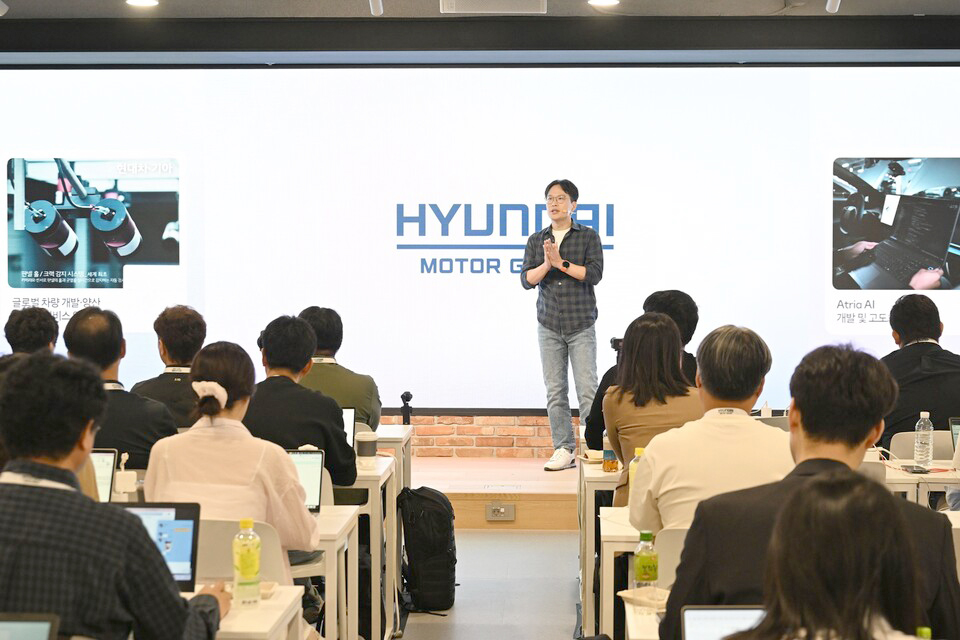
According to AI TIMES, Hyundai Motor Group on September 11 began fully operating a "data flywheel" that connects real-world driving data back into AI training, validation, and vehicle deployment, and for the first time released footage of a vehicle equipped with Atria AI driving autonomously in downtown Seoul. The company aims to use the foundation of more than 7 million vehicles sold annually across more than 190 countries and regions as a springboard for securing and advancing autonomous driving data. The key is not just collecting more data, but building a system that quickly links challenging real-road situations to training and validation. To that end, the group is combining a method that feeds weaknesses revealed during actual driving back into training with repeated validation in virtual environments for dangerous or hard-to-reproduce scenarios. Under a two-track strategy that runs cooperation with NVIDIA alongside in-house development, it is also pushing standardization work to align the sensor and data structures used by its internal organizations. Along with plans to expand the data utilization framework inside and outside the group and to develop next-generation VLA, the move signals an intent to shift the focus in autonomous driving competition from feature demonstrations to learning speed and a virtuous development cycle.
Perspective
The significance of this issue is that it shows autonomous driving competition is shifting from the completeness of individual features to how quickly data can be cycled through training, validation, and deployment to repeatedly improve performance. If the direction of linking the sales base, development system, and standardization strategy into one flow takes hold, it could change not only technology development but also the speed and method of mass-production deployment. In the end, competitiveness is likely to be determined less by a single demonstration than by how stably a virtuous cycle can be maintained.
This perspective is BizCrush's own commentary and is not part of the reporting by AI TIMES.
This article was produced with the help of an automated content generation algorithm.
Source: AI TIMES
View originalThis article was summarized and organized by BizCrush based on the original article from AI TIMES. For exact quotations and full details, please refer to the original article.