[On Site] AI-RAN Alliance: “ISAC and NTN Will Become More Important in the 6G Era”
IT DAILY ·
✦ AI Summary
Amid saturation in the communications services market and weakening profitability, telecom operators need network automation and cost structure improvements using AI, said Choi Jin-sung, chairman of the AI-RAN Alliance.
He emphasized that network automation must evolve from preset rules to an Intent-based approach, and said Closed Automation is important for that shift.
He also said ISAC and NTN will become key technologies in the 6G era, adding that strategic development of these technologies is already under way worldwide.
As the communications services market becomes saturated, an expert has suggested that telecom operators need to turn to AI-powered network automation to respond to weakening profitability. The article said telecom operators need to respond amid market saturation and declining profitability.
Against the backdrop of growing global geopolitical uncertainty, an analysis was introduced saying that ISAC and NTN will become more important as core elements of networks in the upcoming 6G era. ISAC is a converged technology that performs data transmission and reception on mobile networks while also detecting and identifying surrounding environments, and it includes radar-like functions. NTN is a technology that uses satellites and HAPS to provide communications services to areas where terrestrial base stations have difficulty reaching.
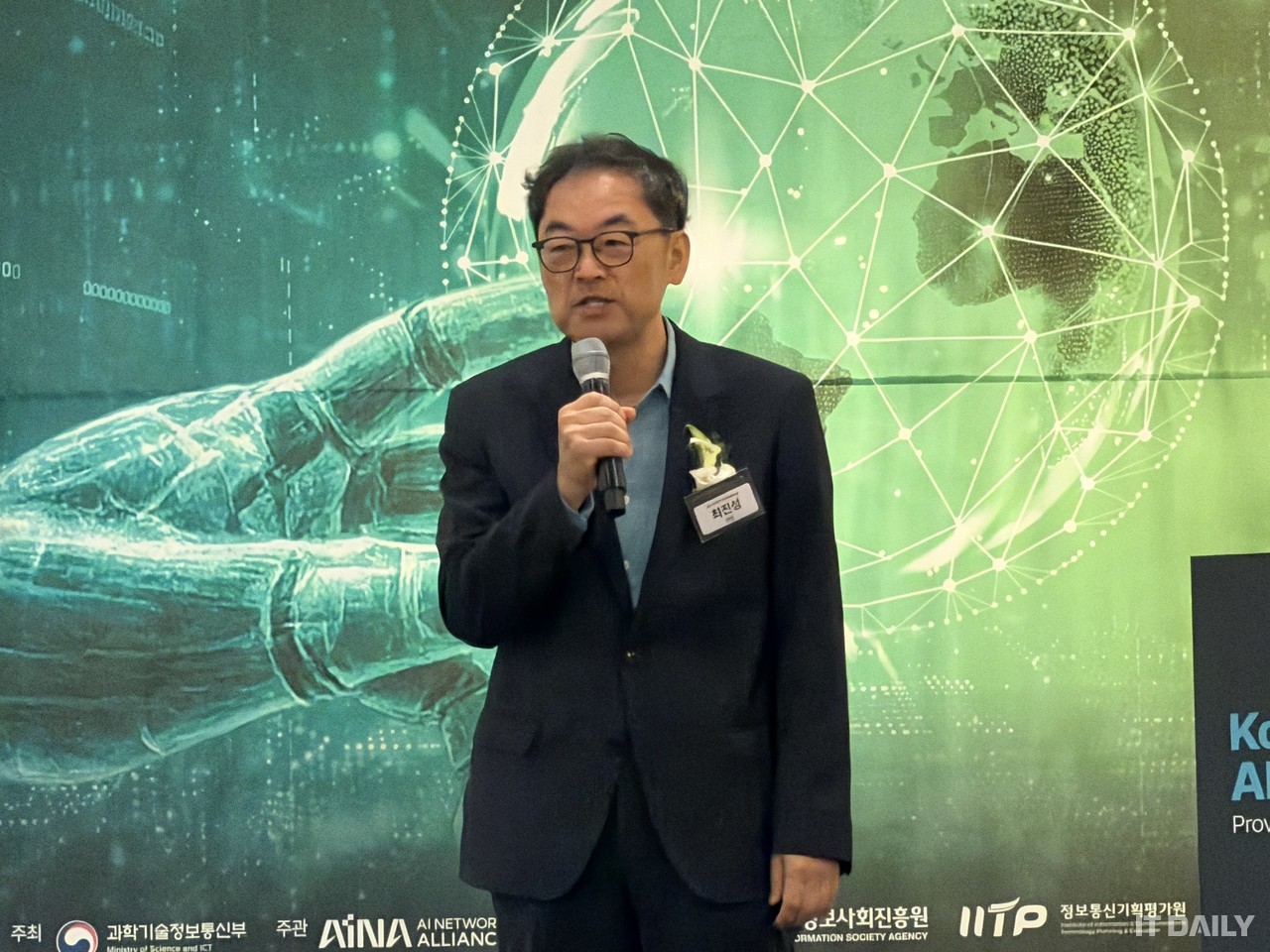
These remarks were delivered in a keynote speech by Choi Jin-sung, chairman of the AI-RAN Alliance and senior fellow at SoftBank, at Korea Real-World AI Network 2026 (KRAIN 2026). Choi delivered the keynote on the theme of "AI-RAN and Intelligent Platform." Photo by Seong Won-young.
Choi Jin-sung, chairman of the AI-RAN Alliance and senior fellow at SoftBank, delivered a keynote speech on the 11th at "Korea Real-World AI Network 2026 (KRAIN 2026)." The keynote theme was "AI-RAN and Intelligent Platform."
The AI-RAN Alliance is a global coalition aiming to research 6G technologies and build an ecosystem based on the convergence of AI and wireless communications technologies. Participating companies include NVIDIA, Microsoft, Ericsson, Nokia, SoftBank, Samsung Electronics, SK, KT, and LG.
"Korea Real-World AI Network 2026 (KRAIN 2026)" was hosted by the Ministry of Science and ICT. The event was organized by the AI Network Alliance (AINA), the Physical AI Alliance, the National Information Society Agency (NIA), the Institute for Information & Communications Technology Planning & Evaluation (IITP), and the Electronics and Telecommunications Research Institute (ETRI), among others.
Choi identified slowing revenue growth and deteriorating profitability as challenges for telecom operators. He said that as the communications services market has entered a saturated phase, it has become difficult to significantly expand Top Line revenue through new innovation alone. He also said that the burden of network construction and operating costs remains, putting continued pressure on Bottom Line operating margins.
In this situation, Choi said the practical solution for telecom operators is not short-term revenue expansion but network operation automation and cost structure improvement through AI. He said that, as the constraints on revenue growth have increased while cost burdens continue, the focus of response should be on operational efficiency.
Choi explained that telecom networks are operated separately across multiple domains such as wireless, transport, and core. He added that automation limited to each individual area has its limits. Accordingly, he emphasized the importance of "Closed Automation."
"Closed Automation" is a cyclical structure that starts with network data analysis, identifies problems, automatically takes action, and then feeds the results back into the system. Choi pointed out that network automation had traditionally been based on preset rules. He then said network automation needs to evolve to an Intent-based approach.
As geopolitical uncertainty grows, there is also a forecast that the role of networks themselves will expand. In that trend, Choi pointed to ISAC and NTN as key next-generation communications technologies.
Choi said there is a sense worldwide that ISAC technology is being strategically developed. Accordingly, as rising geopolitical uncertainty could lead to expanded network functions, ISAC and NTN are emerging as key candidates.
Under the existing structure, spectrum for communications and spectrum for radar have been operated separately. However, in the 6G era, there is growing possibility that communications and sensing functions will be carried out simultaneously on a single network by using high-frequency bands and advanced wireless technologies.
Demonstrations of this kind of ISAC technology are being actively carried out in the market. Ericsson conducted an ISAC demonstration in Texas in March this year, focused on drone detection.
Nokia is developing early-detection technology based on ISAC in cooperation with NestAI, a European defense research institute. Samsung Electronics signed an MOU with LG Uplus earlier this year for cooperation on ISAC technology.
The NTN market is expected to grow rapidly. That is because communications can be maintained even in situations where normal operation of terrestrial communications infrastructure is difficult due to war or disasters. Because of this characteristic, market attention is also rising.
NTN is divided into low Earth orbit (LEO) satellites, geostationary orbit (GEO) satellites, and high-altitude platform systems (HAPS). LEO satellites are located at 300 to 2,000 km and are characterized by shorter latency than GEO. As a result, they can provide a communications environment close to terrestrial networks.
GEO satellites are located at an altitude of about 36,000 km. GEO can cover relatively large areas, and coverage is possible with a small number of satellites. HAPS operates in the stratosphere at an altitude of about 20 km, with solar-powered unmanned aircraft and airships staying aloft for long periods and serving as a technology that performs the role of a terrestrial base station.
In particular, HAPS has the advantage of providing rapid communications infrastructure to disaster areas and specific event venues. It can also respond to regions with concentrated temporary communications demand and areas where building terrestrial networks is difficult. Accordingly, SoftBank and NTT DOCOMO are expanding their business and technology development in the HAPS field.
Choi explained that as geopolitical uncertainty increases, a climate of demand for cooperation among countries overseas is taking shape for the purpose of securing global competitiveness and leadership. Citing Japan as an example, he said Japan is expanding cooperative relationships by concluding alliances with nearly all advanced countries at the government level.
Source: IT DAILY · Seong Won-young
Original: https://www.itdaily.kr/news/articleView.html?idxno=241544
References
This article was produced with the help of an automated content generation algorithm.
Source: IT DAILY
View originalThis article was summarized and organized by BizCrush based on the original article from IT DAILY. For exact quotations and full details, please refer to the original article.