OpenAI’s Hard-Problem Fix: Verification Comes Before Recognition
AI TIMES ·
✦ AI Summary
According to AI TIMES, OpenAI said on September 8 that it had unveiled a solution to the Navier-Stokes existence and smoothness problem, cla…
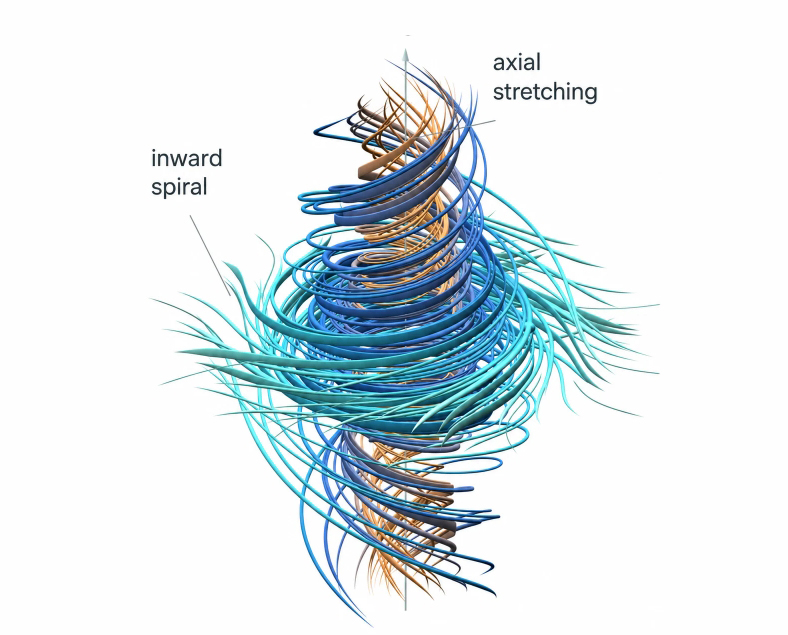
According to AI TIMES, OpenAI said on September 8 that it had unveiled a solution to the Navier-Stokes existence and smoothness problem, claiming that AI had proposed a new approach to an approximately 90-year-old challenge. However, the result has not been officially recognized as a solution to the Millennium Prize Problem, and is closer to a proposal moving into public verification. At its core, the work presents a framework in which a smoothly started fluid can create a singularity through its internal dynamics alone. The company said it also released not only the proof but also Lean formalization, making machine verification possible, but added that this does not mean immediate final approval from the mathematical community. What stood out even more in this announcement was that it highlighted a research system in which multiple AI agents carried out hypotheses, calculations, and code execution in parallel, rather than a single model’s answer. At the same time, disputes over the use of research data, priority, and authorship also surfaced, expanding into a broader debate over how AI itself conducts research.
Perspective
The significance of this issue lies less in whether one hard problem was solved than in the possibility that the basic unit of research could change. Regardless of whether the solution is formally recognized, if AI begins to systematically handle the process of producing publicly verifiable results, future competitiveness will likely depend more on how well such systems are combined to explore and verify than on the performance of any single model. At the same time, pressure is growing for verification procedures to become more important, and for the standards governing how research contributions are assigned to be rewritten.
This perspective is BizCrush's own commentary and is not part of the reporting by AI TIMES.
This article was produced with the help of an automated content generation algorithm.
Source: AI TIMES
View originalThis article was summarized and organized by BizCrush based on the original article from AI TIMES. For exact quotations and full details, please refer to the original article.