China's CXMT Jumps Into Global DRAM Top 4 in Q2 as Revenue Soars 99.3%; Samsung, SK, Micron Follow
TECHWORLD ·
✦ AI Summary
According to TrendForce, the global DRAM market reached USD 154.726 billion in the second quarter of 2026, up 59.5% from the previous quarter.
Samsung Electronics, SK Hynix, and Micron ranked No. 1 to No. 3, while CXMT took fourth place. Samsung Electronics posted revenue of USD 60.98 billion, SK Hynix USD 38.59 billion, and Micron USD 36 billion.
TrendForce forecast that third-quarter DRAM contract prices would rise 13% to 18% from the previous quarter, with consumer DRAM, which is in short supply, expected to see the biggest price increase.
The global DRAM market grew on the back of expanding demand for AI servers and a sharp rise in DRAM contract prices. According to TrendForce, which announced its findings on the 10th, the global DRAM market size in the second quarter of 2026 came to USD 154.726 billion. That works out to about KRW 207.0388 trillion, up 59.5% from the previous quarter.
The main driver of market growth was cited as the surge in DRAM contract prices amid rising demand for AI servers. In addition, growing demand for agent AI applications was analyzed as driving demand for a range of memory capacities.
On the supply side, however, DRAM supplier inventory levels remained at an all-time low. Additional supply was largely allocated to servers, and DRAM bit shipments in the second quarter of 2026 rose only slightly.
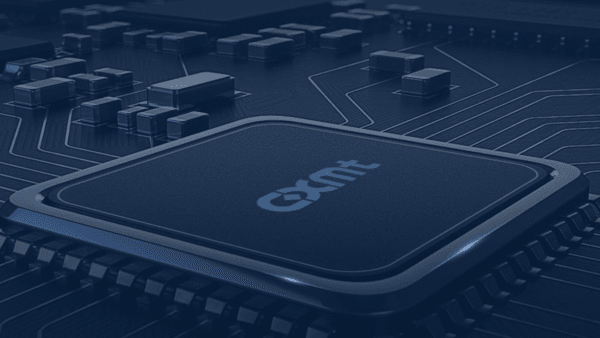
In this environment, Chinese DRAM maker CXMT (ChangXin Memory Technologies) climbed into fourth place in the global DRAM market on the back of strong growth. The ranking followed Samsung, SK, and Micron.
In the second-quarter DRAM market, the company rankings were Samsung Electronics, SK hynix, and Micron. Samsung Electronics held on to the No. 1 spot among the three.
Samsung Electronics posted the largest quarter-over-quarter increase in bit shipments among the top three companies, and its ASP also rose. As a result, Samsung Electronics' second-quarter DRAM revenue came to USD 60.98 billion, or about KRW 81.665 trillion, up 63.4% from the previous quarter.
SK hynix ranked second. Among the top three companies, SK hynix had the largest HBM share of total bit shipments, which kept the increase in ASP relatively limited.
SK hynix's revenue was USD 38.59 billion, or about KRW 51.6801 trillion, up 37.9% from the previous quarter. Micron ranked third.
Micron prioritized high-priced server DRAM even amid capacity constraints. Micron's revenue came to USD 36 billion, or about KRW 48.2115 trillion, up 65.5% from the previous quarter.
TrendForce forecast that the three companies would expand bit supply as they accelerated the shift to advanced process nodes toward 2027. However, TrendForce said the increase in wafer starts would remain limited.
Factors making it difficult to significantly increase wafer starts included process optimization, limits on cleanroom expansion, and the reallocation of cleanroom space from other product lines. Accordingly, even if major players seek to expand supply through transitions to advanced processes, there will be constraints on increasing wafer starts.
In the market rankings, CXMT rose to fourth place globally in DRAM. CXMT went public at the end of July, and its main products are DRAM for smartphones, PC DRAM, and server DRAM.
CXMT's revenue in the second quarter rose 99.3% from the previous quarter to USD 14.624 billion, or about KRW 19.5846 trillion. CXMT's revenue growth rate was higher than those of Samsung Electronics, SK hynix, and Micron.
There were also rumors that CXMT was preparing to produce HBM3 for Chinese AI chip suppliers and was seeking to enter the U.S. market. Against this backdrop, the key point to watch going forward appears to be the scope of CXMT's growth in the global DRAM market.
As the big three continue their transition to advanced processes and keep shifting toward server-centric product portfolios, Nanya, Winbond, and PSMC are maintaining their focus on mature-process products. As a result, Taiwanese companies are benefiting from rising market demand outside the big three.
Along with this trend, rising DDR4 and DDR3 contract prices helped drive a sharp increase in second-quarter revenue. Nanya's second-quarter revenue rose 68.3% from the previous quarter to USD 2.612 billion, or about KRW 3.498 trillion.
Winbond's second-quarter revenue rose 75.8% from the previous quarter to USD 998 million, or about KRW 1.35 trillion. PSMC's second-quarter revenue rose 167.8% from the previous quarter to USD 115 million, or about KRW 154 billion.
PSMC is expected to obtain process technology licenses from Micron in the future and plans to expand supply after securing the licenses.
TrendForce presented its outlook for the DRAM market in the third quarter, saying bit shipments would rise moderately while contract prices were expected to increase 13% to 18% from the previous quarter. The forecast was based on the fact that some demand is shifting from high-capacity RDIMM to lower-capacity products, and that PC and smartphone customers have limited room to absorb further price increases. Among these, consumer DRAM, which is in short supply, is expected to see the largest price increase.
Source: TECHWORLD · Park Gyu-chan
Original: https://www.epnc.co.kr/news/articleView.html?idxno=406784
References
This article was produced with the help of an automated content generation algorithm.
Source: TECHWORLD
View originalThis article was summarized and organized by BizCrush based on the original article from TECHWORLD. For exact quotations and full details, please refer to the original article.