AI as the Default: IFA Puts Electricity and Commercial Viability at the Center of Home Appliance Competition
IT DAILY ·
✦ AI Summary
At IFA 2026, the use of AI in connecting home appliances and multiple devices emerged as a more mainstream trend than AI itself.
Competition has also shifted toward electricity cost savings, reduced household labor, and practical commercialization potential.
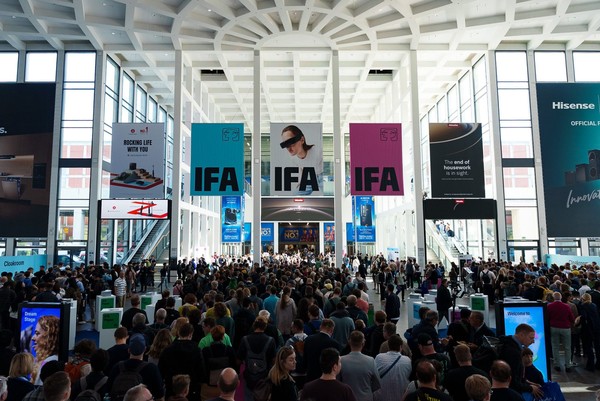
More than 2,000 companies and 240,000 visitors took part in the exhibition, and AI and robot technologies spread to almost every exhibition area.
At IFA 2026, the largest home appliance and IT trade show in Europe, held in Berlin, Germany, industry observers concluded that the center of gravity in the home appliance sector's transformation had shifted from AI itself to how it is used. The industry's common strategies were AI built into individual appliances and the linking of multiple devices, and at IFA 2026, AI integration and device connectivity already appeared to be a mainstream trend.
As a result, the basis of competition in the home appliance industry has also changed. How much connected devices can reduce electricity costs, how much they can ease household chores, and whether those results can be commercialized in practice have emerged as the new battlegrounds.
The event ran from the 4th to the 8th local time, with more than 2,000 participating companies, visitors from 155 countries, and 240,000 attendees. Both the number of exhibitors and visitors rose from a year earlier. IFA said AI and robots had spread to almost every exhibition area, and that the scale of related technology debuts was the largest ever.
This year's show made it clear that the term 'AI home appliances' alone can no longer explain the differences between companies. Major players such as Samsung Electronics, LG Electronics, TCL, Hisense, and Xiaomi all showed a trend toward linking multiple devices through a single platform, and commonly emphasized a structure that suggests and executes functions based on the user's situation.
As a result, the differences between companies were reflected in how they expanded connectivity structures into everyday problems and business models. At this year's exhibition, the home energy segment became more concrete, with solar panels, energy storage systems (ESS), and heat pumps appearing alongside refrigerators and washing machines.
This trend has gone beyond the development of energy-saving products and has evolved into an industry move to manage the entire process of generating, storing, and consuming electricity in the home. LG Electronics unveiled a home energy management system (HEMS) that connects its smart home platform, Homey, to AI home appliances, heating, ventilation and air conditioning (HVAC), solar power, and ESS, while TCL displayed an integrated structure linking solar panels, home batteries, and heat pumps.
TCL's structure had the ability to manage power demand across generation, storage, heating, and appliances in an integrated way. Samsung Electronics presented a structure that manages appliance power consumption based on SmartThings, and is also expanding its high-efficiency heat pump business in Europe.
In Europe, as the energy transition drives a continued increase in the share of renewable energy, the need to adjust the timing of power generation and consumption is growing. Combined with the rising adoption of home batteries and heat pumps, the area that home appliance makers can manage is also expanding.
Against this backdrop, IFA held a separate session on the 7th. The session focused on electrification and the future smart home, and the discussion included intelligent power management, batteries, and connected home energy solutions.
The session covered battery charging linked to real-time electricity prices and solar output, electric vehicle charging linked to real-time electricity prices and solar output, and timing control for washing machine and dishwasher operation. As a result, the axis of competition in smart homes is also shifting from the number of connected devices to sophisticated control of energy flows.
Meanwhile, visitors to IFA 2026 toured LG Electronics' exhibition hall and experienced its AI home solutions and built-in-style appliances. The photo is courtesy of LG Electronics. The following subheading is: Humanoid Robots Dominate the Stage, but Commercialization Still Far Away.
About 300 companies and organizations took part in IFA Next, where humanoid robots and home robots were widely exhibited, and demonstrations were also held on a separate stage. There, demonstrations of humanoid walking, dancing, and interacting with visitors drew strong attention. However, the gap between the level of technology seen on the show floor and actual business remained significant.
Many humanoids focused more on demonstrating motion than on performing tasks, and there were few cases in which they were confirmed to perform factory or home tasks reliably. There were also few examples where their economic feasibility compared with existing automation equipment had been proven. Cases of unstable operation depending on communication conditions and surrounding variables were also observed.
These limitations were reflected in the companies' moves. LG Electronics presented its home robot, Clroid, as one pillar of 'Zero Labor Home,' but said it plans to first apply it in industrial settings before expanding it to homes. LG Electronics is also in discussions with multiple global big tech companies over the supply of actuators, a core humanoid component. This is interpreted as an approach aimed at first proving business viability in components and industrial demand rather than in a fully finished home robot.
At this year's IFA, the rise in scale and strategy among Chinese companies stood out as a key factor in changing the market landscape. As of the opening, 932 Chinese companies were participating, and their share of all exhibitors was approaching half. TCL, Hisense, Haier, and Midea displayed TVs, home appliances, robots, and energy products, while Xiaomi also took part in IFA for the first time this year.
More fundamentally, however, the change lay in a strategic shift beyond simple numerical growth. Chinese companies' strategic focus has moved beyond price competitiveness to emphasize built-in products, design, and energy efficiency. They highlighted the purchasing factors of the European premium market from the front.
In the process, they also promoted collaborations that combine brands and technologies familiar to local consumers. TCL collaborated with Bang & Olufsen, and Hisense collaborated with Devialet. These moves also reflected a trend in which Chinese companies are trying to move away from a competition phase centered on the image of 'cheap Chinese products' in Europe.
As a result, pressure on Samsung Electronics and LG Electronics has expanded beyond simple low-price competition. Behind this is the rapid expansion of Chinese companies' product portfolios into premium home appliances, energy efficiency, and built-in products. Premium home appliances, energy efficiency, and built-in products are also areas where Samsung Electronics and LG Electronics have long held strengths. In the end, the significance of this year's IFA competition was to highlight the rise in entry price points and market level, rather than simply the number of Chinese exhibitors.
As connected devices increased, security emerged as a separate competitive factor. In response, Chinese companies Roborock, Ecovacs, and DJI emphasized security functions. These companies highlighted on-device data processing, physical camera blocking features, and internet disconnection features.
The targets of smart home processing have expanded to video, voice, and living patterns inside the home. Accordingly, purchase considerations are also shifting in a direction that includes data handling methods, not just performance and price. At the IFA 2026 'Robots on the Runway' event, humanoid robots demonstrated their movements.
Amid these changes, the way IFA is used has also changed. Samsung Electronics left Messe Berlin's main exhibition hall for the first time since its first participation in 1991. Instead, Samsung Electronics set up a separate space in central Berlin's Humboldt Carré.
Samsung Electronics said the move was intended to allow major clients and media to experience its products and solutions in greater depth. Samsung Electronics took visitor numbers into account. Samsung Electronics also considered the return on investment.
While maintaining a large booth at Messe Berlin, LG Electronics increased the emphasis on business discussions rather than general public viewing in its exhibition booth operations. About 46% of the total space was allocated to business partner-only consultation areas, and the share of meeting spaces for European distributors, construction companies, and business partners was expanded to a level similar to the space for general visitors. This reflects the changing role of major home appliance trade shows.
New products can be unveiled at any time through online events and in-house announcements, and there are many cases where the same products appear repeatedly at CES and IFA. By contrast, the function of meeting face-to-face in one place with distributors, construction companies, and energy businesses across Europe to discuss product supply and platform deployment is difficult to replace online. This is why LG Electronics strengthened its business discussion function at the exhibition booth.
Against this backdrop, AI home moved from the exhibition stage to the business validation stage. When integrating solar power, batteries, and heating and cooling systems, compatibility issues between devices from different manufacturers must be resolved, and data security as well as installation and maintenance systems must also be addressed. In addition, AI home has reached a stage where it must prove, with real figures, that it can deliver electricity cost and household labor savings that consumers can actually feel.
After IFA 2026, the key question for the home appliance industry has been simplified: the economic value of connectivity matters more than the number of connected devices, and that value applies to consumers and businesses alike. This year's IFA also left one issue more important than leading-edge technology, namely the practical applicability of the technology to homes and buildings in Europe and its potential to reduce costs and time.
Source: IT DAILY · Kim Byeong-ju
Original: https://www.itdaily.kr/news/articleView.html?idxno=241501
References
This article was produced with the help of an automated content generation algorithm.
Source: IT DAILY
View originalThis article was summarized and organized by BizCrush based on the original article from IT DAILY. For exact quotations and full details, please refer to the original article.