OpenAI Korea Chief Says AI Should Be Switched On, Delegated, and Measured by Results
TECHWORLD · · 1 views
✦ AI Summary
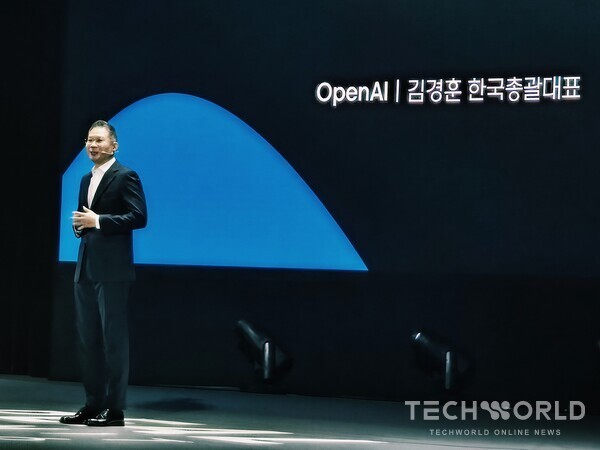
Kim Kyung-hoon, CEO of OpenAI Korea, presented three keywords for enterprise AI use at 'Real Summit 2026': 'switch it on, delegate it, and leave it behind.'
He said AI should be connected not just as a tool, but to organizational and work systems, and that core tasks should be redesigned around AI end to end so they can be measured by real outcomes such as customer response speed, orders, and sales.
He also stressed that actual outputs matter more than AI usage volume, and unveiled enterprise AX cooperation plans between Samsung SDS and OpenAI.
Kim Kyung-hoon, CEO of OpenAI Korea, outlined the direction for enterprise AI use in a speech at the 'Real Summit 2026' held at COEX in Seoul on the 8th, presenting three keywords: 'switch it on, delegate it, and leave it behind.' He stressed that corporate use of AI should not stop at simple adoption, but needs to be linked to organizational and work systems.
Kim also said companies should delegate real work to agents and then connect that work to customer and business outcomes. To explain his point, he compared the current spread of AI with the period when factories began adopting electricity more than 100 years ago.
He noted that some factories used electricity as a new source of power but kept their machine layouts and work sequences unchanged. In contrast, he said, factories that installed electric motors and redesigned their production flow began to realize productivity gains in earnest.
Kim added that it took about 40 years after factory adoption for electricity's productivity effects to fully emerge. He said he sees the current moment as being at a similar stage.
Kim Kyung-hoon stressed that the results of AI adoption should not be judged by the creation of AI accounts, employee training, or document summarization itself, but by concrete changes in the company's core operations and customer response methods.
Kim Kyung-hoon's first keyword was 'switch it on.' He explained that this does not simply mean some employees using an AI chatbot, but connecting corporate data, work systems, and internal guidelines.
Kim cited OpenAI's Enterprise Signals, released last August, to explain the gap between companies at different levels of AI use. The output gap per user between the top 10% of AI companies and mid-level companies widened from 2.6 times in January this year to 8.3 times in June. In manufacturing, the gap was 5.3 times.
He said there was also a gap in the share of work-system integration plugin use. Among leading companies, the share was 21%, while among general companies it was 9%.
Kim said that for AI to understand a company's context and improve performance, it needs to be connected to internal documents, customer information, work guidelines, and shared company records. He said AI also needs the data connections it requires, just as people are given the permissions they need.
Early in AI adoption, differences in usage by rank were also observed. Six months after AI training, junior employees sent 13 more messages per week on average than executives, and Kim said this showed that the front line was moving first.
Kim said this trend means management must set the direction. He explained that because AI use is spreading first from the front line, executives need to determine the path forward.
At the same time, he said companywide AI adoption alone is insufficient. If it is limited to partial productivity gains across multiple tasks, those individual efficiency improvements may not translate into overall corporate performance, a risk he described as the small productivity trap.
The solution for AI use was presented as 'focus and redesign.' Companies need to select core tasks, and the selected processes need to be redesigned around AI from start to finish. The criteria for confirming results were presented as real business outcomes such as customer response speed, orders, and sales.
Kim was the one who presented the example. Citing a manufacturing company's quotation work, he explained how the quotation process was redesigned using AI. As a result, the work time was reduced from as much as 6 hours to 20 minutes.
The second keyword was then presented as 'delegate it.' The shift in AI use should move from a question-and-answer tool to an entity that performs work such as searching materials, checking systems, and producing deliverables.
Kim explained that AI can search for materials, check systems, and generate outputs. He added that if a problem arises, AI can figure it out and try again on its own, and when an important judgment is needed, it asks a person.
Codex is rapidly expanding beyond developer roles. Over the six months since this February, its weekly active users increased 108-fold in legal, 41-fold in sales, 41-fold in recruiting, and 26-fold in marketing.
OpenAI's internal finance team built 'IRGPT' based on Codex. 'IRGPT' was used to handle repetitive tasks such as searching materials and checking figures for investor question responses, and work that previously took several hours was shifted to a format completed with AI.
Kim then referred to GPT-6 Astra, the latest model released last week. He said Astra's arrival has improved agents' ability to understand context and complete tasks.
Kim said that as execution capabilities become more advanced, a human approval system and verification process are needed. He explained that important actions should be carried out only after an agent receives human approval, and that generated results must allow the basis for them to be verified. He also said AI needs safety mechanisms like a circuit breaker for electricity.
Kim stressed that AI should be judged not by how much it is used or how much was paid for it, but by what actual results it leaves behind. He said that as an AI evaluation standard, actual output matters more than usage volume or model call costs. Just as a factory that consumes a lot of electricity is not necessarily a good factory, he said AI should also be evaluated by actual performance rather than usage volume. He presented 'leave it behind' as the final keyword.
Kim argued that the method of calculating costs needs to change. He said that when judging real economic efficiency, companies should not look only at model usage fees, but should also factor in the time employees spend reviewing results. He also said the cost of rework caused by work left unfinished or handled poorly should be included in the economic-efficiency calculation.
Kim said the way factories changed 100 years ago determined the future of companies and factories. He added that the way AI is used now will determine our future.
He stressed the need to connect AI to the organization. He also said AI needs to be entrusted with real work. In addition, he said AI use results should be accumulated as business outcomes.
At the event, plans for enterprise AX cooperation between Samsung SDS and OpenAI were unveiled. As the starting point, Samsung SDS was presented as the first Korean company to join OpenAI's Daybreak Partner Program as a pilot partner. Daybreak is OpenAI's program for using frontier models.
The program covers functions that find security vulnerabilities in enterprise systems, verify their real impact, set risk priorities, and then generate and test patches. Samsung SDS plans to send FDE and security experts to customer sites accordingly. The scope of support ranges from vulnerability detection to suggesting patching measures.
Samsung SDS also supports enterprise adoption and use of ChatGPT Enterprise. Based on this, the two companies plan to expand the scope of cooperation related to generative AI adoption to business process redesign, agent use, and security. They said they aim to extend this broader cooperation into enterprise AX business engagement.
Source: TECHWORLD · Kim Seung-ki
Original: https://www.epnc.co.kr/news/articleView.html?idxno=406694
References
This article was produced with the help of an automated content generation algorithm.
Source: TECHWORLD
View originalThis article was summarized and organized by BizCrush based on the original article from TECHWORLD. For exact quotations and full details, please refer to the original article.