KT, KAIST and Daim Research Push Factory Automation With Physical AI Collaboration
TECHWORLD ·
✦ AI Summary
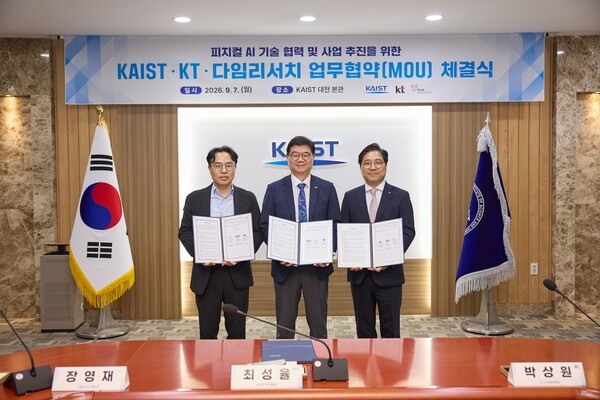
KT, KAIST and Daim Research have signed a memorandum of understanding.
The collaboration began with the Ministry of Science and ICT's second-phase activities under the "Physical AI Alliance."
The three organizations will promote the development, demonstration and commercialization of Physical AI technology and the development of a Dark Factory platform for unmanned factories.
KT, KAIST and Daim Research have signed a memorandum of understanding. The collaboration began with the Ministry of Science and ICT's second-phase activities under the "Physical AI Alliance." KT said it will promote the development, demonstration and commercialization of Physical AI technology.
The three organizations plan to develop a Dark Factory platform for unmanned factories by combining the AI, robotics and telecommunications technologies each of them holds. Based on this, they aim to jointly identify business opportunities in Korea and abroad. Their key task is to build a Dark Factory platform for autonomous manufacturing process operations.
The three organizations will participate for 5 years in the Ministry of Science and ICT's "2026 collaborative intelligence Physical AI-based SW platform research and development ecosystem creation project." Through participation in this project, they plan to develop and demonstrate an AI-based unmanned and automated platform. In the process, they will leverage KAIST and Daim Research's logistics and manufacturing robot control platforms and robotics technologies to develop technology for autonomous manufacturing processes.
The three organizations plan to verify the related technologies using testbeds similar to real industrial sites. After validation, they will assess the technologies' applicability across manufacturing sectors.
KT will build an integrated operating environment for multiple types of robots and AI systems based on a data platform. It will apply Edge AI data processing at points near manufacturing sites and support robots' real-time decision-making and control by using high-speed, low-latency networks. KT said it will combine these efforts to establish the foundation for real-time robot operations.
KT will also apply simulation technology for robot AI training and performance verification, and combine it with AI agent-based system integration technology. Through this, the company aims to create a Physical AI environment in which robots can recognize their surroundings, judge situations and carry out tasks.
The three organizations will cooperate on applying research and development and demonstration results to actual manufacturing sites and linking them to commercialization. They will also work together to continuously build operating and verification environments for Physical AI, as well as to train specialized personnel. In addition, they will pursue overseas expansion of technologies and business models developed in Korea.
Choi Seong-yul, KAIST vice president for research, said the key to Physical AI competitiveness is not the technology development itself, but whether it works in real manufacturing sites and is validated for performance. He also expressed his intention to build an industry-academia cooperation model that will demonstrate KAIST's research achievements in corporate manufacturing sites and connect them to new industries and businesses.
Jang Young-jae, CEO of Daim Research, said the company will combine KAIST's research capabilities, KT's AI and network infrastructure, and Daim Research's robot operations, control and Dark Factory technologies. Based on this, he said the company aims to create real success cases for Physical AI-based autonomous manufacturing and expand beyond domestic manufacturing sites into the global market.
Park Sang-won, executive vice president and head of KT AX, said the significance of the agreement is that it establishes a Physical AI cooperation framework spanning research and development, demonstration and commercialization. He added that the company aims to consolidate AX capabilities such as AI agents, Edge AI and networks to support the intelligence of manufacturing sites and contribute to strengthening Korea's Physical AI competitiveness.
Source: TECHWORLD · Kim Seung-gi
Original: https://www.epnc.co.kr/news/articleView.html?idxno=406665
References
This article was produced with the help of an automated content generation algorithm.
Source: TECHWORLD
View originalThis article was summarized and organized by BizCrush based on the original article from TECHWORLD. For exact quotations and full details, please refer to the original article.