Microchip and Marelli Unveil Open Display Connectivity for SDVs
TECHWORLD ·
✦ AI Summary
Microchip Technology and Marelli have unveiled a demo model of an ASA-ML-based in-vehicle display connectivity solution.
The solution processes graphics and video content from a central computer in real time using the VS7000 ASA-ML chipset and transmits it to a display, while also supporting link-layer authentication and encryption.
The two companies aim to simplify display architecture, optimize costs, and expand component sourcing flexibility through open-standard interoperability.
Microchip Technology and Marelli have unveiled an open in-vehicle display connectivity solution aimed at software-defined vehicles (SDVs). Marelli is a global automotive parts supplier.
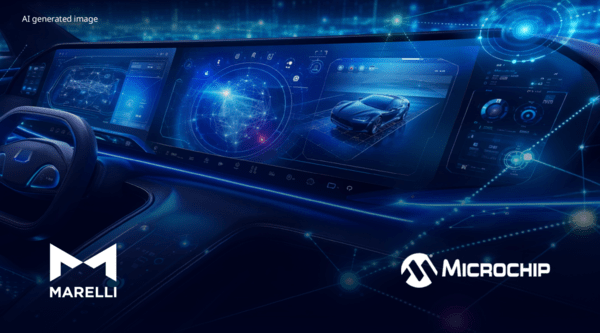
Microchip Technology said on the 8th that it had unveiled a new ASA-ML-based solution demo model with Marelli. The solution is a demonstration version of a display connectivity solution tailored for the SDV environment.
The solution is based on ASA-ML defined by the Automotive SerDes Alliance (ASA: Automotive SerDes Alliance). ASA-ML is an open standard for in-vehicle video connectivity and SerDes (Serializer-Deserializer) communications. The Automotive SerDes Alliance includes vehicle manufacturers, Tier 1 suppliers, semiconductor companies, and others.
The two companies said the solution can help automakers simplify display architectures, optimize system costs, and increase component sourcing flexibility.
A key feature of the technology is its support for secure, high-speed transmission of video and graphics between products from multiple technology vendors. Based on this, it is significant in that it improves product compatibility across the automotive ecosystem and provides a scalable open standard that can replace existing proprietary video transmission technologies.
Microchip is a founding member of ASA. It has supported the industry shift from proprietary connectivity technologies to open interoperability standards, and building on its existing track record of demonstrating interoperability through camera solutions, it has now expanded its solutions into display connectivity.
This expansion comes as vehicle electronic architectures evolve toward centralized computing and SDVs. As a result, the graphics and video content that must be processed inside vehicles has diversified, and automakers are demanding connectivity technologies that can reduce system complexity and cost while ensuring scalability.
Microchip and Marelli unveiled a demo model designed to address these needs. The demo model shows how graphics and video content generated by a vehicle central computer are processed in real time over a high-speed standard link using Microchip's "VS7000 ASA-ML" chipset and transmitted to a display.
Marelli configured and optimized an ASA-ML deserializer so that the display can directly decode standardized video streams. This simplifies the display-side electronic architecture and makes it possible to deliver a variety of content generated by the central computer to the display. The content includes camera footage, navigation maps, infotainment graphics, and vehicle control interfaces, and Marelli said it can accurately receive, synchronize, and deliver these to in-vehicle displays.
The core of the solution is interoperability based on open standards. On that basis, cockpit systems and displays can be built by combining products from multiple technology vendors. This expands automakers' choices of components.
It also integrates security features into the communication channel between the central computing system and the display. The supported security features are link-layer authentication and encryption. This makes it possible to implement secure communications between the central computing system and the display.
It also supports lossless communication and high electromagnetic noise immunity. It is designed to provide data transfer speeds of up to 16Gbps, enabling it to meet a wide range of automotive display requirements.
Power efficiency was also a consideration. It incorporates Time Division Duplex (TDD) and simplified forward error correction (FEC), helping reduce power consumption. It also supports the broader shift toward Ethernet-centric next-generation vehicle architectures.
Kelei Shen, president of Marelli's electronics business, said that demand for more open, flexible, and scalable electronic architectures is growing as the industry moves toward SDVs. He said Marelli plays the role of a systems integrator within the automotive ecosystem and provides integrated solutions to automakers by combining technologies from multiple partners.
Kelei Shen added that this collaboration shows open standards can accelerate innovation. He also said open standards can provide the interoperability needed for next-generation vehicle architectures.
Kevin So, vice president of Microchip's communications business unit, said in this context that open standards reduce dependence on proprietary technologies. He said reducing that dependence plays a critical role in accelerating innovation, and that the collaboration with Marelli demonstrates ASA-ML's potential to deliver connectivity solutions for automakers. He added that ASA-ML solutions are characterized by security, interoperability, and scalability.
Through this approach, Microchip and Marelli said they aim to simplify in-vehicle networking and electronic systems development, optimize system costs, and support the creation of a more open automotive ecosystem.
Source: TECHWORLD · Park Gyu-chan
Original: https://www.epnc.co.kr/news/articleView.html?idxno=406645
References
This article was produced with the help of an automated content generation algorithm.
Source: TECHWORLD
View originalThis article was summarized and organized by BizCrush based on the original article from TECHWORLD. For exact quotations and full details, please refer to the original article.