Freewheeling’s Pulicampus Aims to Close Gaps in College Basic Learning With AI-Driven Personalized Education
IT DAILY ·
✦ AI Summary
Freewheeling introduced the operating cases and direction of its college education-focused AI courseware, “Pulicampus,” at the university AI education conference “Arrived Future 27.”
Pulicampus was launched in 2024 and provides basic learning diagnostic assessments and analysis, customized curricula, and an AI teaching and learning support system.
Konkuk University operates “Dr.KU,” while Yonsei University, Ajou University, and Chungbuk National University have also adopted and are using Pulicampus.
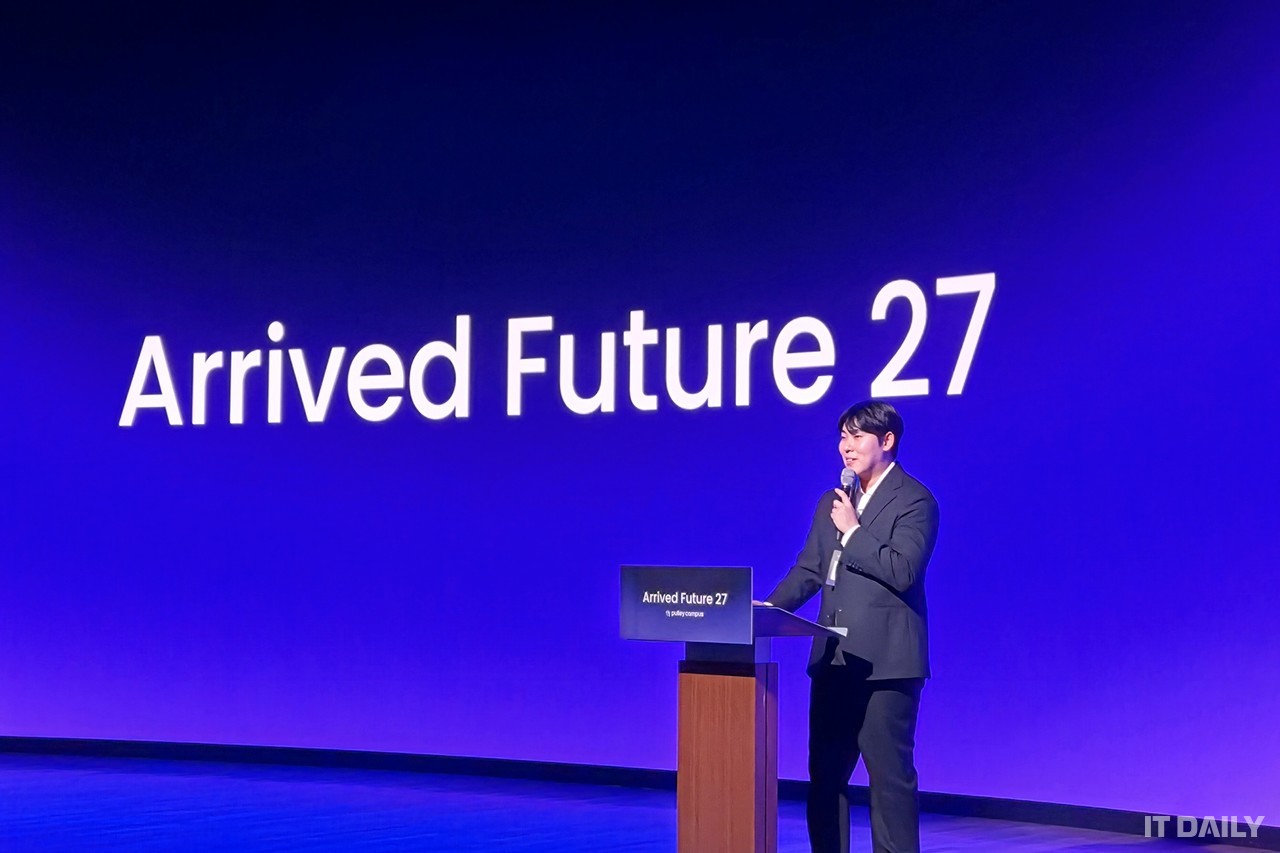
Freewheeling introduced the operating cases and direction of its college education-focused AI courseware, “Pulicampus,” under a strategy of closing gaps in college basic learning with AI-driven personalized education. In his welcome remarks at the university AI education conference “Arrived Future 27,” held on the 19th in the International Conference Hall of the Korea Chamber of Commerce and Industry in Jung-gu, Seoul, CEO Kwon Ki-seong explained the company’s direction. The person in the现场 photo is Freewheeling CEO Kwon Ki-seong, and the photo was taken by reporter Kim Ho-jun of IT Dailly.
In his welcome remarks, CEO Kwon said education is about opportunity and hope, and explained that the role of edtech is to realize the value of education through technology. He added that Freewheeling’s goal is to establish itself as a partner that helps create a better future in education settings.
The event was organized as a venue to share AI-based education operation cases accumulated by Pulicampus with representatives from universities nationwide in attendance. Pulicampus is an AI courseware for college education launched by Freewheeling in 2024.
At the event, Pulicampus’s functions and use cases were shared with university representatives from across the country. Pulicampus provides basic learning diagnostic assessments and analysis, customized curricula by student and department, and an AI teaching and learning support system. At “Arrived Future 27,” these operating cases, along with the direction Freewheeling pursues in university AI education, were introduced.
As the issue of first-year students’ lack of basic academic skills has recently emerged as a topic in universities, the Ministry of Education and the Korea Institute for Curriculum and Evaluation announced in June in the “2025 National Achievement Assessment Results” that the share of 11th-grade students at Level 1 in math stood at 11.6%. Level 1 means a lack of basic academic achievement far below curriculum attainment standards. The share of 11th-grade students at Level 1 in math has roughly doubled from 5.5% in 2015.
This basic learning problem is emerging as a major educational task for universities. According to University Information, the number of first-year students at 4-year universities in 2024 was 341,992, and among them, 33,430, or 9.8%, dropped out of school. About 28,000 of those who dropped out chose to withdraw.
Hwang Jae-cheol, head of Pulicampus’s general division, said the reduction in the high school math curriculum and learning losses during the COVID-19 pandemic widened gaps among students. He added that the problem is now extending into university education.
Hwang Jae-cheol, head of Pulicampus’s general division, attended the university artificial intelligence (AI) education conference “Arrived Future 27,” held at the International Conference Hall of the Korea Chamber of Commerce and Industry in Jung-gu, Seoul, and gave a presentation under the theme “Changes in Domestic University Education Driven by AI.” The photo was taken by reporter Kim Ho-jun.
Pulicampus provides customized educational programs aimed at improving students’ level of learning comprehension. In the process, it uses Computerized Adaptive Testing (CAT) to collect information and provides personalized curricula based on that data.
The evaluation method is structured so that the next question changes depending on the student’s answer, making it possible to identify strengths and weaknesses by area based on the assessment results. Pulicampus began in 2024 with 2 universities, secured 60 university clients in 2025, and its user base grew from around 2,000 to 400,000 as of last year.
Regarding how Pulicampus is being used at universities, Konkuk University operates an AI tutor system based on Pulicampus called “Dr.KU.” “Dr.KU” provides basic learning diagnostic assessments for freshmen and enrolled students, and has functions that guide students to their weak areas and recommend learning programs to address those weaknesses. Yonsei University, Ajou University, and Chungbuk National University have also adopted Pulicampus and are using it as a basic learning diagnostic assessment and AI learning support system.
Head Hwang said that even among students in the same department, there are differences in comprehension and knowledge levels, student backgrounds have become more diverse, and differences in age and nationality have also widened. He added that personalized processes by student are the direction of future education, and expressed the company’s commitment to helping universities maintain high-quality education in the AI era through Pulicampus.
At the same event, the Korea Education and Research Information Service (KERIS) and Pearson introduced changes in university education in Korea and abroad and what the future may hold. Kumoh National Institute of Technology, Pusan National University, and Sookmyung Women’s University shared cases of curriculum improvement based on Pulicampus.
Source: IT DAILY · Kim Ho-jun
Original: https://www.itdaily.kr/news/articleView.html?idxno=241084
References
This article was produced with the help of an automated content generation algorithm.
Source: IT DAILY
View originalThis article was summarized and organized by BizCrush based on the original article from IT DAILY. For exact quotations and full details, please refer to the original article.