Global Semiconductor Market Surges, Resetting Its Annual High in 7 Months
TECHWORLD ·
✦ AI Summary
Worldwide semiconductor monthly sales in July 2026 reached USD 146.8 billion, up 6.4% from the previous month and 135.1% from a year earlier.
Worldwide semiconductor cumulative sales for January to July 2026 totaled USD 848.6 billion, a record for the same period.
The SIA said sales growth in the Americas, Asia Pacific, and China drove the global market's growth momentum, and on the same day it announced Michael Robbins as John Neuffer's successor.
The global semiconductor market is gaining momentum. According to data compiled by the SIA, worldwide semiconductor monthly sales in July 2026 reached USD 146.8 billion, or about KRW 197.606 trillion.
Sales in July 2026 rose 6.4% from the previous month and 135.1% from the same month a year earlier. As a result, the global semiconductor market extended its month-over-month growth streak to 17 consecutive months.
As these gains accumulated, worldwide semiconductor cumulative sales from January to July 2026 were tallied at USD 848.6 billion. The figure, equivalent to about KRW 1135 trillion, is the highest on record for the same period.
The previous record for cumulative January-to-July sales was USD 795.6 billion in 2025, and cumulative sales for January to July 2026 exceeded that previous high by about USD 50 billion. Cumulative sales for January to July 2026 also surpassed last year's full-year record, breaking the annual high mark in just 7 months.
John Neuffer, SIA chairman and CEO, said the global semiconductor market had grown for 17 consecutive months on a month-over-month basis as of July. He also said cumulative sales for the first 7 months of the year exceeded the previous annual record.
Neuffer said the gains were driven by strong year-over-year growth in sales in the Americas, Asia Pacific, and China. Among regional markets, he said the Americas showed the most notable growth.
Year-over-year sales growth in July came to 2.71 times in the Americas, 2.35 times in Asia Pacific, 2.24 times in China, 85.2% in Europe, and 50.8% in Japan. On this measure, the Americas posted the largest increase.
Month over month, growth continued across all major regions as well. July sales increased 8.7% in the Americas, 6.8% in Asia Pacific, 2.9% in China, 5.2% in Europe, and 9.2% in Japan.
By region, semiconductor sales in July were highest in the Americas at USD 54.44 billion, or about KRW 73.2811 trillion. Asia Pacific followed with USD 40.51 billion, while China recorded USD 38.17 billion.
Europe recorded USD 8.15 billion, and Japan USD 5.52 billion. The July regional sales ranking was the Americas first, followed by Asia Pacific, China, Europe, and Japan.
The SIA said increased sales in the Americas, Asia Pacific, and China are driving continued year-over-year growth in the global semiconductor market. It said the expansion in sales across major regions is the basis for the market's growth momentum.
Buoyed by the global market boom, major domestic semiconductor companies posted results at record levels. Samsung Electronics and SK Hynix both set all-time highs amid the global semiconductor upturn.
Samsung Electronics posted KRW 171.5 trillion in revenue and KRW 89.5 trillion in operating profit on a consolidated basis in the second quarter of 2026, marking record quarterly highs for both revenue and operating profit. Revenue rose 28% from the previous quarter, while operating profit increased 56%. The DS(Device Solutions) division posted record sales of both DRAM and NAND, driven by stronger demand related to AI and a robust memory market, and it set a new record quarterly result following the first quarter.
Samsung Electronics posted KRW 133.9 trillion in revenue and KRW 57.2 trillion in operating profit in the first quarter of this year, bringing first-half cumulative revenue to KRW 305.4 trillion.
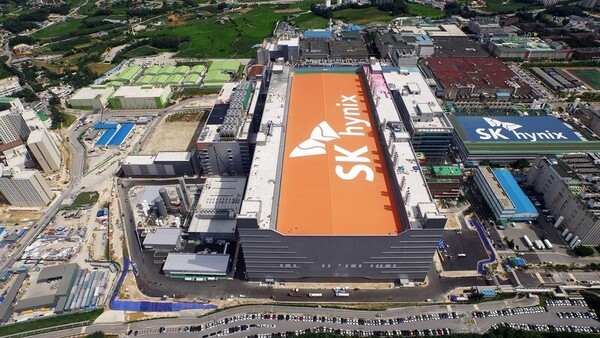
SK Hynix posted a new quarterly record with second-quarter 2026 revenue of KRW 79.3187 trillion and operating profit of KRW 60.5426 trillion. Revenue rose 256.8% from a year earlier, while operating profit jumped 557.2%. First-half cumulative revenue came to KRW 131.895 trillion, and first-half cumulative operating profit was KRW 98.1529 trillion, marking the company's first half-year revenue to top KRW 100 trillion.
The growth was driven by rising demand for HBM, AI server DRAM, and eSSD, supported by expanding investment in AI infrastructure. Demand for high-value-added memory products powered SK Hynix's performance, and the company began mass production shipments of HBM4 in the second quarter and plans to expand HBM4 production in the second half.
The growth trend in the global semiconductor market was reflected in revenue expansion at Samsung Electronics and SK Hynix. The strong growth in the global semiconductor market was confirmed in the performance of the two leading domestic memory makers.
Samsung Electronics' second-quarter revenue came to KRW 171.5 trillion, while SK Hynix's revenue was KRW 79.3 trillion. The combined quarterly revenue of the two companies exceeded KRW 250 trillion.
A semiconductor industry expert said expanded investment in AI data centers and rising demand for high-value-added memory such as HBM are directly linked to growth in the global semiconductor market and improvements in the performance of domestic semiconductor companies.
On the same day, the SIA announced that it had named Michael Robbins as the successor to John Neuffer as chairman and CEO. Michael Robbins is scheduled to officially assume office on October 1.
Neuffer has led the SIA for the past 12 years. Robbins is currently president and CEO of the Association for Uncrewed Vehicle Systems International (AUVSI), which he described as the world's largest trade association for the uncrewed systems, robotics, and autonomous technology industries. AUVSI has about 400 member companies, and its membership consists of companies in the commercial and defense sectors.
The incoming CEO, Robbins, earned his bachelor's degree from the University of Michigan and his master's degree from Georgetown University. He then worked for 10 years as a staff member for the late Rep. John D. Dingell of Michigan.
He later served as a managing director in charge of public relations at the Air Line Pilots Association International (ALPA). He then co-founded the business consulting firm Intrepid and served as its COO.
The incoming CEO joined AUVSI in 2020 and has served as its president and CEO.
Lisa Su, AMD chair and CEO and the 2026 chair of the SIA board, said semiconductors are becoming even more important as an essential sector for the global economy, technological leadership, and national competitiveness. She said she welcomed Robbins' arrival at the SIA at such a critical moment for the industry. She added that Robbins has the vision and experience needed to support policies that strengthen the U.S. semiconductor ecosystem, accelerate innovation, and sustain industry growth.
Su expressed gratitude to Neuffer for leading the SIA for the past 12 years and said she intends to pursue a new start for the SIA together with the incoming CEO, Robbins.
The incoming CEO is expected to carry on Neuffer's management approach and, drawing on his past experience as a congressional staffer, is expected to intensify lobbying efforts aimed at the federal legislature to strengthen the competitiveness of the U.S. semiconductor industry.
Source: TECHWORLD · Park Gyu-chan
Original: https://www.epnc.co.kr/news/articleView.html?idxno=406616
References
This article was produced with the help of an automated content generation algorithm.
Source: TECHWORLD
View originalThis article was summarized and organized by BizCrush based on the original article from TECHWORLD. For exact quotations and full details, please refer to the original article.