LG Energy Solution, Seoul National University Solve LMR Battery Gas Generation Challenge
TECHWORLD ·
✦ AI Summary
LG Energy Solution and Seoul National University developed a technology that suppresses gas generation in next-generation lithium manganese-rich (LMR) batteries and improves their lifespan.
The joint research team boosted oxygen restoration by adjusting the upper charging voltage and lower discharge voltage, and redesigned the operating voltage range and Formation process conditions for a 40Ah-class LMR large cell.
As a result, the 40Ah-class LMR large cell retained 92.2% of its initial energy after 883 charge-discharge cycles, and the research was published in Nature Communications.
LG Energy Solution and Seoul National University have developed a technology that suppresses gas generation in next-generation lithium manganese-rich (LMR) batteries and improves their lifespan. LG Energy Solution conducted joint research with a team led by Professor Lim Jong-woo of SNU's Department of Chemistry, and on the 7th, it announced results that raise the viability of LMR batteries for large-cell use in electric vehicles.
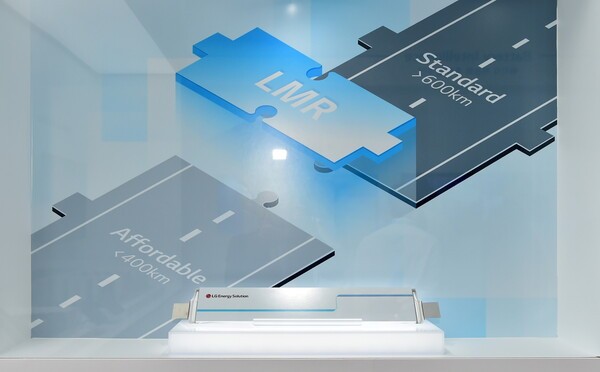
LMR is a next-generation cathode material that does not use cobalt. Its main raw material is manganese, which is relatively inexpensive, and it uses transition metals such as nickel and manganese, as well as oxygen within the material, for energy storage. Based on this, it can achieve high energy density.
However, a key hurdle to commercializing LMR has been solving gas issues during charging and discharging. If oxidized oxygen during charging is not sufficiently restored during discharge, the battery's internal structure can be damaged, and insufficient oxygen restoration can lead to gas generation.
In particular, large cells for electric vehicles have limited internal space, so gas problems inside large cells can lead to rising pressure and degraded performance. This gas generation issue has been identified as a major technical challenge for LMR batteries, and LG Energy Solution said the joint research has secured results that increase the viability of applying LMR batteries to large cells.
To address the oxygen restoration problem, the joint research team analyzed the oxygen oxidation-reduction process under different charging and discharging conditions. In the process, it identified not only the upper charging voltage but also the lower discharge voltage as factors affecting oxygen restoration.
When the upper charging voltage was lowered from 4.6V to 4.3V, the reduction rate of oxidized oxygen rose from 86% to 97%. In addition, when the lower discharge voltage was lowered from 3.0V to 2.0V, most of the oxygen was restored to its original state.
Based on these findings, LG Energy Solution redesigned the operating voltage range and Formation process conditions for a 40Ah-class LMR large cell. During the Formation stage, it applied a temperature-reduction process to suppress gas generation in the large cell.
As a result of this process optimization, cell life improved. The 40Ah-class LMR large cell retained 92.2% of its initial energy even after 883 charge-discharge cycles.
The company said the study confirmed the lifespan stability and commercial viability of LMR materials in large cells that can actually be used in electric vehicles.
Professor Lim Jong-woo of Seoul National University said the study sought to identify the causes of LMR battery degradation from the perspective of oxygen reversibility, and showed the possibility of improving cell stability simply by designing electrochemical protocols. He also said it confirmed the need to comprehensively consider not only charging conditions but also discharge conditions to secure long-term stability for LMR batteries.
LG Energy Solution said the study achieved effective suppression of gas generation, a major challenge for LMR batteries, and has significance as an important steppingstone in demonstrating the possibility of securing stable battery life in large cells and accelerating the growth of the next-generation LMR battery market. The research results were published in the international journal Nature Communications.
Source: TECHWORLD · Kim Seung-gi
Original: https://www.epnc.co.kr/news/articleView.html?idxno=406596
References
This article was produced with the help of an automated content generation algorithm.
Source: TECHWORLD
View originalThis article was summarized and organized by BizCrush based on the original article from TECHWORLD. For exact quotations and full details, please refer to the original article.