China’s CXMT Sees 9.7-Fold Jump in First-Half Revenue, Intensifying Next-Gen DRAM Rivalry With Samsung and SK
TECHWORLD ·
✦ AI Summary
CXMT recorded revenue of CNY 150.31 billion and net profit of CNY 77.605 billion for January-June this year.
CXMT declared mass production of LPDDR6 and said it would be used in Xiaomi’s foldable smartphone, the 'Xiaomi 18 Fold,' while claiming the world’s first commercialization.
However, South Korea’s semiconductor industry said it was premature to conclude that CXMT’s LPDDR6 announcement alone meant the technology gap with Samsung Electronics and SK hynix had narrowed.
According to disclosures CXMT, China’s largest DRAM maker, made through the Shanghai Stock Exchange on the 4th, revenue for January-June this year came to CNY 150.31 billion, or about KRW 30.339 trillion. That was a 9.7-fold increase from a year earlier, with rising memory prices amid stronger AI demand cited as the direct driver of the improvement. Net profit reached CNY 77.605 billion, or about KRW 15.6639 trillion, marking a return to profit. In the first half of last year, net loss was CNY 2.3 billion, or about KRW 464.2 billion.
Against that backdrop of strong earnings, CXMT declared mass production of LPDDR6, its next-generation mobile DRAM. The move signals CXMT is accelerating competition in next-generation DRAM by targeting global memory makers such as Samsung Electronics and SK hynix.
CXMT posted net profit of CNY 24.762 billion, or about KRW 4.9995 trillion, in the first quarter this year, followed by net profit of CNY 52.843 billion, or about KRW 10.6692 trillion, in the second quarter, more than doubling from the first quarter. CXMT attributed the improvement to expanded AI data center deployment, stronger memory demand, and higher memory prices.
CXMT’s improved performance is being interpreted as part of the global memory market’s AI-driven rapid growth. Samsung Electronics and SK hynix also posted record results in the first half this year, driven by stronger DRAM sales for AI servers and increased sales of high-value-added memory such as HBM.
Samsung Electronics posted its best-ever quarterly performance in the DS(Device Solutions) division, with revenue of KRW 127.5 trillion and operating profit of KRW 89.2 trillion in the second quarter of 2026. The DS division’s results were driven by the spread of agentic AI and robust demand for server memory, and Samsung Electronics also announced expanded HBM4 supply and the industry’s first HBM4E sample shipments.
Samsung Electronics saw sharp increases in DS division revenue and profit in the second quarter as well, following the first quarter. First-half DS revenue was tallied at about KRW 209 trillion. AI memory demand was cited as the key growth driver.
SK hynix reported first-quarter revenue of KRW 52.5763 trillion and operating profit of KRW 37.6103 trillion, then saw results surge further in the second quarter. Second-quarter revenue came to KRW 79.3187 trillion, operating profit KRW 60.5426 trillion, and net profit KRW 93.9226 trillion, with all three setting all-time highs. The second-quarter operating margin was 76%, and growth was steeper than Samsung Electronics’.
As a result, SK hynix’s cumulative first-half revenue surpassed KRW 100 trillion for the first time. The company said expanded sales of high-value-added products such as HBM, DRAM, and enterprise SSD(eSSD) for AI servers drove performance, and that higher memory prices also contributed.
SK hynix began mass shipments of HBM4 in the second quarter and plans to expand HBM4 production in the second half. It also completed sample shipments of HBM4E in the first half. Samsung Electronics and SK hynix are posting major results in the AI memory market.
In that context, CXMT is classified as a latecomer in the AI memory market, but it is moving to catch up on the basis of rapid technology-generation transitions.
A subheadline on CXMT highlighted generation-leap R&D and expansion from DDR4 to LPDDR6. CXMT’s earnings report used generation-leap R&D as the name of its technology strategy.
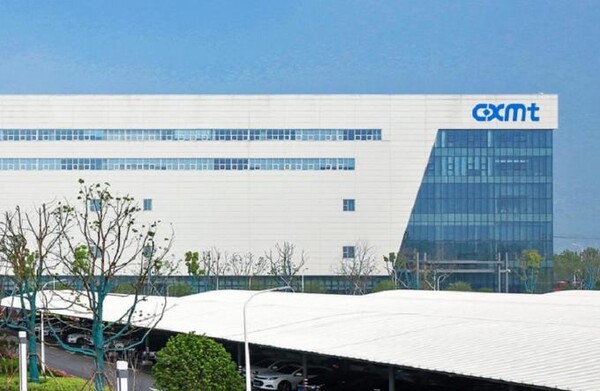
CXMT is China’s largest DRAM maker. The company said it has completed mass production of its first- through fourth-generation process technology platforms.
CXMT said it has expanded its product lineup from DDR4 and LPDDR4X to DDR5, LPDDR5, LPDDR5X, and LPDDR6. That information was presented in its earnings report and on Weibo.
CXMT announced on Weibo on August 29 that mass production of LPDDR6 has begun. LPDDR6 is the next-generation low-power memory.
Chinese memory semiconductor company CXMT said its LPDDR6 is slated to be used in Xiaomi’s foldable smartphone, the 'Xiaomi 18 Fold,' which is scheduled for release in September. CXMT claimed this was the world’s first commercialization of LPDDR6.
CXMT also said this was the first case in which a Chinese semiconductor company had begun preemptive mass production of a high-performance memory standard. It said the product supports data transfer speeds of up to 12,800 Mbps and up to 16 GB per chip.
CXMT has moved into mass production of a next-generation product roughly 1 year after starting mass production of the previous generation. That has led to assessments that its technology development and transition to mass production are moving quickly.
However, within South Korea’s semiconductor industry, there is a view that it is premature to conclude that the gap with global players such as Samsung Electronics and SK hynix has narrowed based solely on the announcement of LPDDR6 mass production. Actual mass-production yield has not been sufficiently verified, and stable supply capability has also not been sufficiently proven, which is seen as a variable.
Samsung Electronics and SK hynix are also preparing to mass-produce LPDDR6. As a result, analysts say additional observation is needed to determine whether CXMT’s declaration of the 'world’s first' mass production will translate into real market competitiveness.
There are reports that CXMT’s memory business is seeking entry into the HBM market beyond mobile DRAM. HBM is a core memory component in AI semiconductors.
The Information reported that CXMT has begun small-scale production of HBM3E. The Information also said Alibaba’s semiconductor design subsidiary T-Head (Pingtouge Semiconductor) has started product adoption evaluation.
The Information also reported that Chinese AI semiconductor company Cambricon Technologies has started product adoption evaluation. If HBM3E production and customer evaluations are real, a turning point could be emerging in China’s effort to build an indigenous DRAM and HBM supply chain.
However, undisclosed details related to HBM3E include production scale, stacking count, memory capacity, bandwidth, and power consumption. The specifications have not yet been made public.
CXMT has also not made an official announcement.
Some observers say Chinese companies are withholding related information to avoid provoking additional U.S. semiconductor regulations. In that context, CXMT is confronting U.S. restrictions on Chinese semiconductors head-on.
According to multiple overseas media reports, CXMT filed a lawsuit in a U.S. federal court. The timing of the suit is said to have followed the U.S. Defense Department’s designation of the company as a 'Chinese military company' in late August.
The purpose of the suit is to challenge the U.S. Defense Department’s designation as a 'Chinese military company.' CXMT is said to have requested removal from the U.S. Defense Department’s list of Chinese military companies.
CXMT says it is a private-sector company that designs, manufactures, and sells DRAM for commercial use and has no ties to the Chinese People’s Liberation Army. Based on that position, it is responding to the designation.
Since being designated a 'Chinese military company' during the Biden administration, CXMT has faced ongoing restrictions on entering the U.S. market. Recently, there were also reports that Apple had considered sourcing CXMT DRAM.
However, the deal between Apple and CXMT did not materialize because price negotiations failed to reach agreement and U.S. government approval issues were also involved. As a result, Apple’s actual procurement of CXMT DRAM fell through.
Within the U.S. semiconductor industry, there is speculation that restrictions on Chinese semiconductor companies, including CXMT, could be discussed at the U.S.-China summit scheduled for September.
Meanwhile, CXMT’s growth suggests the presence of Chinese companies in the global memory market is expanding.
But in terms of earnings scale, Samsung Electronics and SK hynix still maintain a wide gap over CXMT, and they also maintain a large lead in competitiveness for high-value-added products.
Samsung Electronics posted operating profit of KRW 89.2 trillion in its DS division in the second quarter, while SK hynix reported operating profit of KRW 60.5426 trillion. SK hynix is securing high profitability in the AI memory market.
Amid this, SK hynix has begun mass production of HBM4 and shipments of HBM4, while Samsung Electronics is pushing to expand HBM4 supply and has begun HBM4E sample shipments. On that basis, Samsung Electronics and SK hynix are fully intensifying competition in next-generation HBM.
Since CXMT began mass production of LPDDR6, it has also pushed ahead with HBM3E production, accelerating its technology-generation transition. This is being interpreted as CXMT raising the pace of its memory technology transition by starting LPDDR6 mass production and then moving to HBM3E production.
However, a semiconductor industry expert cited LPDDR6 mass-production yield, LPDDR6 supply scale, HBM3E performance, HBM3E customer certification, and the extent to which CXMT can overcome U.S. semiconductor restrictions on China as variables in judging whether it can catch up to South Korean companies. Accordingly, industry assessments say whether the gap with South Korean players narrows in the global memory market will depend on productivity and supply capability, market validation of HBM3E, and the level of response to U.S. restrictions.
Source: TECHWORLD · Park Kyu-chan
Original: https://www.epnc.co.kr/news/articleView.html?idxno=406521
References
This article was produced with the help of an automated content generation algorithm.
Source: TECHWORLD
View originalThis article was summarized and organized by BizCrush based on the original article from TECHWORLD. For exact quotations and full details, please refer to the original article.