Lenovo Expands Hybrid AI Beyond PCs to Smartphones, Tablets, and Wearables
TECHWORLD ·
✦ AI Summary
Lenovo held Lenovo Innovation World 2026 in Berlin, Germany, on September 4 during IFA 2026.
At the event, it outlined a hybrid AI strategy and said it will expand the scope from personal devices to enterprise computing environments.
It also showcased the expansion of the Qira ecosystem for personal AI, new Yoga and consumer products, and enterprise security and AI governance solutions, along with concept products.
Lenovo said it will push to broaden the scope of hybrid AI, positioning it as a core strategy. The company said the target spans everything from personal devices to enterprise computing environments, with the goal of strengthening the AI ecosystem. Lenovo held Lenovo Innovation World 2026 in Berlin, Germany, on September 4 during IFA 2026.
At the event, Lenovo unveiled new products for consumers and enterprises, along with next-generation technology concepts. In its presentation, the company laid out a hybrid AI strategy that connects devices, infrastructure, and services. Lenovo said it will expand AI technologies around real user experiences.
The strategy is based on "One Personal AI, Multiple Devices." The scope of personal AI was presented as PC, smartphones, tablets, and wearables. For enterprise AI, the company also laid out ways to support the use of enterprise data.
Lenovo is expanding the Qira ecosystem by broadening the reach of Qira, its personal ambient intelligence, to more devices, services, and markets. As it pushes to expand Qira-supported devices, applications, and markets, the company is growing the Qira ecosystem.
Support for Qira has expanded to Lenovo PC models equipped with 16GB of memory, in addition to the high-memory lineup. Compatible devices now also include some Motorola edge, razr, and signature series models that are set to receive the Android 17 upgrade, as well as the new Moto Watch Ultra.
Lenovo partnered with Workato to strengthen integration with external services. As a result, Qira support has expanded to Gmail, Google Calendar, Google Contacts, Slack, Outlook Mail, and Calendar, allowing users to carry out intent-based tasks in everyday services without complex separate operations.
The latest announcements were split between Yoga and the consumer lineup. Lenovo added new products to the Yoga portfolio, targeting creators and developers. The company highlighted local computing performance, intuitive input methods, and connectivity across devices as key improvements.
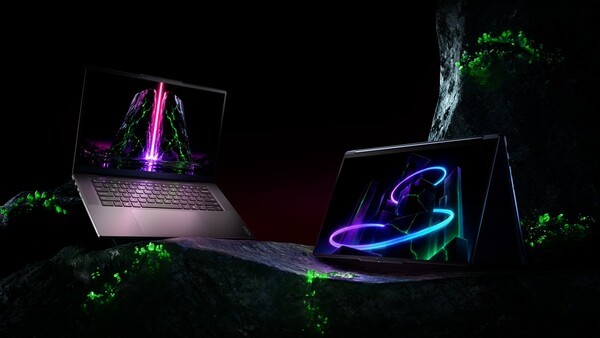
Within Yoga, the premium Yoga lineup includes the Yoga Pro 9n with NVIDIA RTX Spark and the Yoga 9n 2-in-1 with NVIDIA RTX Spark. Lenovo also unveiled the Yoga Tab Plus 2nd Gen, an Android tablet optimized for pen input, and the Yoga Tab 2nd Gen, another Android tablet optimized for pen input.
Alongside those products, Lenovo introduced the Lenovo Smart Canvas Concept. The concept is a new way of using compatible Lenovo devices to capture and develop ideas across devices through voice, pen, camera, and touch.
In the consumer lineup, Lenovo unveiled the IdeaPad Vibe Series and the IdeaCentre AIO i. The IdeaPad Vibe Series comes in 7 color options and a range of configurations, and delivers an AI PC experience. The series emphasizes everyday usability and individuality.
The IdeaCentre AIO i is a home desktop PC. The product adopts a newly designed all-in-one structure and combines intelligent features for work, learning, and entertainment.
Lenovo unveiled a new commercial portfolio for the enterprise market. The goal is to apply hybrid AI across work environments.
For desktop products, Lenovo included the ThinkCentre X Ultra and the ThinkCentre M75 Series. The ThinkCentre X Ultra and ThinkCentre M75 Series provide scalable local AI performance tailored to business environments. For laptops, Lenovo unveiled the ThinkBook 14 9th Gen and the ThinkBook 14x 2nd Gen. The ThinkBook 14 9th Gen and ThinkBook 14x 2nd Gen are characterized by on-device AI, stronger productivity, and greater portability.
Lenovo also launched new ThinkVision displays. The ThinkVision displays combine image quality, video conferencing, docking, visual comfort, and management features. Through these products, Lenovo is targeting stronger workspace connectivity and collaboration.
Lenovo also added solutions for enterprise security and AI governance. The solutions introduced are ThinkShield TraceLock, based on Absolute Security, and Prompt Security from SentinelOne. Through these offerings, Lenovo aims to help enterprises gain device visibility, maintain control over devices, and support responsible AI governance.
Lenovo unveiled PoC products aimed at the future business computing environment. The products are Project AeroBlade Concept and Project Swan Concept. Project AeroBlade Concept is a product for fanless ultrathin mobile PCs, and it points to the possibility of sustained performance.
Project Swan Concept was unveiled as a portable laptop concept. The product was designed to allow the workspace to expand when a broader work area is needed for thinking, creation, and collaboration. Through this, Lenovo presented both the prospect of sustained performance in thin fanless mobile PCs and a laptop concept that expands the workspace when needed.
Motorola then unveiled new products that combine performance, wellness, and design. The Motorola edge 70 Plus uses a four-sided curved design and is equipped with a 200-megapixel camera and the Snapdragon 7s Gen 3 mobile platform. The Moto Watch Ultra, a wearable product, supports Polar fitness and wellness insights and Wear OS by Google, and Qira features are available on compatible devices.
Lenovo also introduced peripherals and premium design products. It also unveiled the Moto Snap Wireless Charger, which supports wireless charging and magnetic case compatibility. In addition, it added the Motorola razr to the Brilliant Collection, the premium design lineup. The newly added Motorola razr features Pantone Meteorite and hand-set Swarovski crystals.
At Innovation World 2026, Lenovo presented a strategy to expand a hybrid AI-based technology ecosystem. The strategy was presented as one that spans both consumers and enterprises.
Lenovo identified idea generation, local creation, connected productivity, security, and AI governance as areas for expanded AI use. It also outlined a vision for connecting various devices, including PC, smartphones, tablets, and wearables, into a single AI experience.
As a result, the company said it aims to provide individual users with a more personalized and flexible AI experience, while offering enterprises a hybrid AI environment that combines local AI performance, device management, security, and governance.
Source: TECHWORLD · Park Gyu-chan
Original: https://www.epnc.co.kr/news/articleView.html?idxno=406534
References
This article was produced with the help of an automated content generation algorithm.
Source: TECHWORLD
View originalThis article was summarized and organized by BizCrush based on the original article from TECHWORLD. For exact quotations and full details, please refer to the original article.