Samsung Electronics Turns Semiconductor Waste Into Resources, Secures 38 Circular Resource Certifications
TECHWORLD ·
✦ AI Summary
Samsung Electronics introduced its expanded efforts to recycle waste generated from semiconductor and home appliance production on Sept. 6, marking Resource Circulation Day.
Samsung Electronics reported a cumulative total of 38 circular resource certifications as of August 2026 and an annual reduction of 6,859 tons of waste in 2025.
The DX division recorded a cumulative 30 circular resource certifications across all sites as of August 2026, and plans to pursue certification for the remaining 8 items by June 2027.
Samsung Electronics introduced its expanded efforts to recycle waste generated from semiconductor and home appliance production on Sept. 6, marking Resource Circulation Day. The initiative showcases practical examples of resource circulation, in which production waste is reused as new raw materials, resources, and materials. Resource Circulation Day falls on Sept. 6 every year and was established to raise awareness of resource value and promote the importance of resource circulation.
Samsung Electronics said that, despite the wide range of waste generated as industry develops, not all byproducts from production processes are unusable waste. It explained that some byproducts can be recycled into raw materials by uncovering new value.
Such utilization is also supported by domestic policy. Since 2018, South Korea has operated the Circular Resource Certification System, whose purpose is to improve resource-use efficiency.
The certification covers waste that meets legal standards for being harmless to people and the environment, as well as economic viability. In such cases, the waste is exempted from waste-related regulations, and it can also be used as a new raw material.
Resource circulation is presented as a method by which companies convert existing waste-handling materials into resources, reducing both the amount of waste generated and the amount of new resources introduced.
Samsung Electronics is continuing to expand its resource-circulation activities. As of August 2026, it had secured a cumulative total of 38 circular resource certifications.
The company also reported that it reduced 6,859 tons of waste in 2025.
In particular, Samsung Electronics' DS division has been steadily expanding waste recycling and resource conversion since 2019, and as of August 2026 had secured a cumulative 30 circular resource certifications across all sites.
The DS division separates and collects various types of waste generated in semiconductor production processes, then works with specialized materials companies and other business divisions. Through high-purity refining technology and materials-conversion technology, it continues turning waste into new, high-value resources and putting them to use.
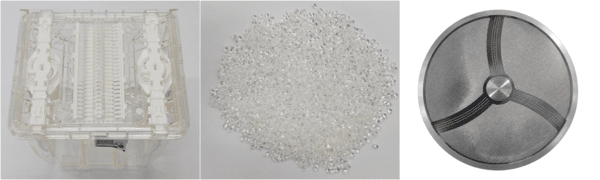
Samsung Electronics is building examples of resource circulation that return waste generated during semiconductor production back into raw materials or product materials. One example is the conversion of wafer trays used to transport semiconductor wafers into resources. The wafer trays are made of high-quality plastic. Samsung Electronics collects used wafer trays and, through collaboration with the DX division's Circular Economy Research Institute, is creating a resource-circulation model based on cross-division cooperation.
The collected trays are reprocessed into recycled plastic, and the reprocessed material is used as a material in DX division products. The recycled material is applied to the side key and volume key of the Galaxy S25 series.
Recycling of defective wafers generated during semiconductor production is also under way. Defective wafers produced in the manufacturing process are separately collected and sent to specialized materials companies after crushing. The specialized materials companies extract silicon from them, and the extracted silicon is recycled as raw material for aluminum alloys. The reclaimed materials are used in industries such as aviation and construction.
The 'Diamond Disk' used in wafer polishing processes is also being recycled. Samsung Electronics separates and discharges precious-metal-based consumables, and specialized companies carry out collection and extraction processes. The metal recovered in this process is palladium (Pd), and the recovered palladium (Pd) is then processed into compound raw materials and reused as a raw material for printed circuit board (PCB) manufacturing.
The DX division is pushing to expand circular resources while systematically managing waste generated at its sites. To this end, it conducted consulting with the DX division and the Korea Environment Corporation in 2024.
The DX division conducted a full review of waste from major sites in Suwon, Gumi, and Gwangju, among others. As a result, it proactively identified 20 items, including waste paper, steel sheets, washing machine drums, and trays, as candidates for circular resource certification.
The DX division is pursuing certification for these items in stages. As of August 2026, it had completed a total of 8 certifications covering 12 items.
It plans to pursue certification for the remaining 8 items by June 2027. In this way, the DX division is first identifying items eligible for circular resource certification by reviewing site waste in full, and then gradually expanding certification based on that.
At the Gwangju site, it completed circular resource certification for scrap from the molding process of plastic materials used to form the internal space of refrigerators. This scrap had already been reused as raw material for Samsung Electronics products after being crushed and processed into flakes by an outside company.
However, under domestic law, the scrap had been classified as waste. Accordingly, it had to comply with standards related to storage and transportation, and it was also subject to separate regulatory procedures such as submitting handover documents to the authorities.
Samsung Electronics obtained circular resource certification in 2025. Through this, it simplified those management procedures and eased regulatory burdens while improving operational efficiency.
Samsung Electronics also expanded the scope of resource circulation. The target includes not only waste from its sites but also waste from outside those sites.
This year, it collected packaging Styrofoam used after home appliance installation from outside its sites. Examples of the appliances collected include refrigerators and washing machines.
The collected Styrofoam was sorted and manufactured into a new plastic composite material with the same quality as existing materials. This new material was applied to the interior materials of the domestically produced 'Bespoke AI WindFree Combo Gallery' air conditioner and the 'Infinite AI air purifier.'
Waste glass generated during product manufacturing was used as a new material. Samsung Electronics recycled the composite fiber material from waste glass and applied it to the outer tub of the all-in-one washer-dryer 'Bespoke AI Combo.'
The company is also continuing to develop new recycled materials, while using recycled cooking oil materials in refrigerator storage compartments.
The company said it plans to continue identifying recyclable items at business sites and to review the introduction of new resource-conversion technologies. It also outlined plans to push for reinserting waste-recovered materials into product raw materials and manufacturing processes, expand circular resource certification, build a circular resource supply chain, and strengthen resource-circulation practices.
Source: TECHWORLD · Park Gyu-chan
Original: https://www.epnc.co.kr/news/articleView.html?idxno=406529
References
This article was produced with the help of an automated content generation algorithm.
Source: TECHWORLD
View originalThis article was summarized and organized by BizCrush based on the original article from TECHWORLD. For exact quotations and full details, please refer to the original article.