Chemistry Research Institute Marks 50th Anniversary, Declares Shift to AI-Based Research
AI TIMES ·
✦ AI Summary
According to AI TIMES, the Korea Research Institute of Chemical Technology unveiled a new 2040 vision at its 50th anniversary ceremony on Se…
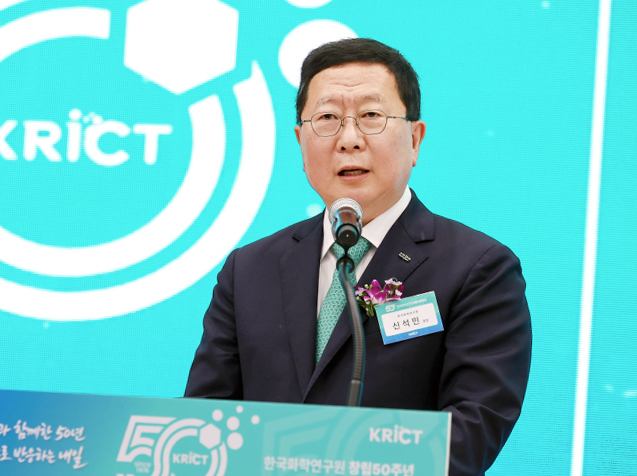
According to AI TIMES, the Korea Research Institute of Chemical Technology unveiled a new 2040 vision at its 50th anniversary ceremony on September 1 and said it would change the way chemical research is conducted around AI, data, and convergent research. Building on the past 50 years of achievements, the institute presented a direction aimed at driving the transformation of the chemical industry and finding new paths to tackle challenges such as supply chains for materials, batteries, and therapeutics. Rather than offering a single correct answer, the new vision puts forward a research philosophy centered on continually taking on difficult problems and broadening the range of possible solutions. In particular, it underscores the intention to use AI not merely as a support tool, but as a means of connecting hypotheses, experiments, and data to expand the possibility of discoveries that have been difficult to reach with conventional methods. It also shows an effort to broaden the institute's mission beyond its past focus on meeting industrial needs and responding to national crises, toward linking multiple technology fields and research entities. President Shin Seok-min (신석민) emphasized that the institute will go beyond the current limits of knowledge and technology and become a research organization that finds paths in chemistry for problems without predetermined answers.
Perspective
This vision can be read as a signal that the competitiveness of chemical research depends not just on accumulating individual technologies, but on how data is handled and how collaboration structures are reconfigured. In the end, the key change is not research speed itself, but a shift in how problems are defined and explored, showing that in both industry and research settings, connection and convergence may become a greater standard than fragmented approaches.
This perspective is BizCrush's own commentary and is not part of the reporting by AI TIMES.
This article was produced with the help of an automated content generation algorithm.
Source: AI TIMES
View originalThis article was summarized and organized by BizCrush based on the original article from AI TIMES. For exact quotations and full details, please refer to the original article.