Daedong AI Tractor Gets Boost for Commercialization After Government New Technology Designation
AI TIMES ·
✦ AI Summary
According to AI TIMES, Daedong's AI tractor was officially recognized as the country's first commercial tractor with AI-based Level 4 autono…
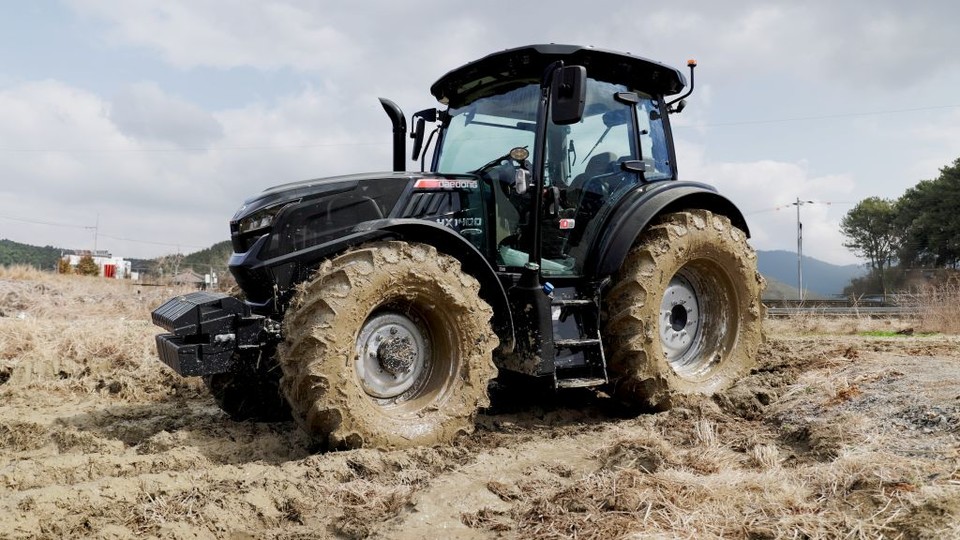
According to AI TIMES, Daedong's AI tractor was officially recognized as the country's first commercial tractor with AI-based Level 4 autonomous driving when it was designated as a new agricultural machine by the Rural Development Administration on September 1. Daedong said it has built a platform into the commercial product based on more than 5 million data points collected during the development process, enabling it to recognize farmland, implements, obstacles, and more on its own and carry out work. The equipment is designed to do more than follow a fixed route: it identifies field conditions by itself and stops in abnormal situations. It also focuses on reducing the operator's burden by allowing work start, stop, return, and progress status to be controlled remotely through an app. The company is developing it as an evolving tractor that keeps improving through software updates, emphasizing a structure in which real agricultural work data feeds back into learning and refinement. With this designation, Daedong's push to expand its agricultural physical AI lineup, following its rice transplanter, transport robot, and combine harvester, has become even clearer.
Perspective
The significance of this designation goes beyond the performance of a single product, as it suggests that the basis of competition in agricultural machinery is shifting from hardware to data and software. If a machine that has already been sold can continue to improve in the field, a manufacturer’s competitiveness will depend not only on its ability to build equipment, but also on the speed of its learning and refinement. In agricultural sites, the transition could reduce reliance on experienced labor and narrow work variations, while also creating an opportunity for the related market to adopt autonomous operation as a practical operating framework.
This perspective is BizCrush's own commentary and is not part of the reporting by AI TIMES.
This article was produced with the help of an automated content generation algorithm.
Source: AI TIMES
View originalThis article was summarized and organized by BizCrush based on the original article from AI TIMES. For exact quotations and full details, please refer to the original article.