Gwangju, South Jeolla Rise as an AI Semiconductor Hub
AI TIMES ·
✦ AI Summary
According to AI TIMES, former senior secretary for AI future planning Ha Jung-woo said in Gwangju on August 28 that memory, data, and power…
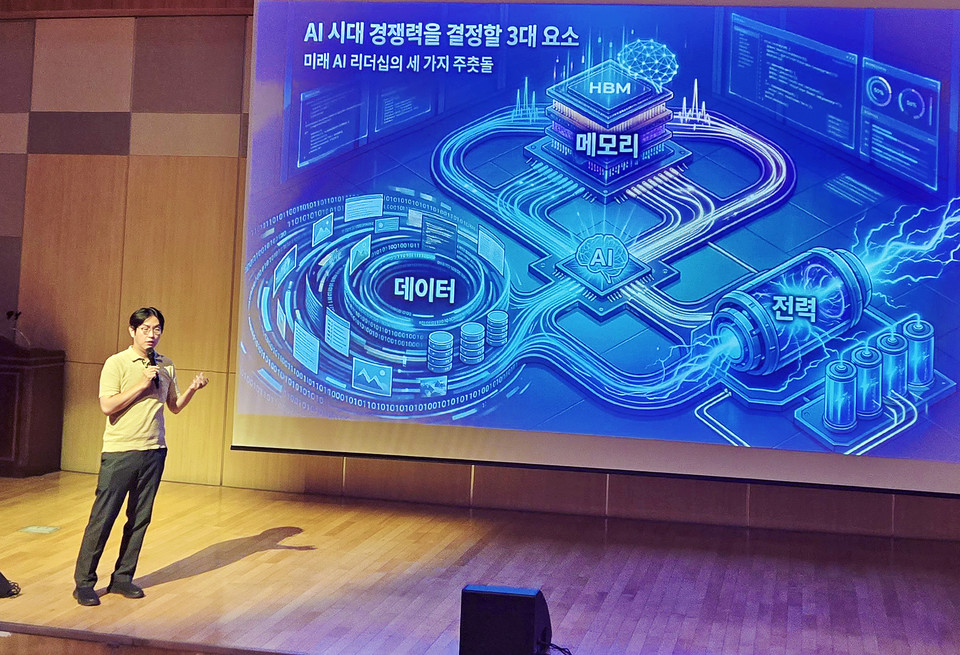
According to AI TIMES, former senior secretary for AI future planning Ha Jung-woo said in Gwangju on August 28 that memory, data, and power are the key factors determining national competitiveness in the AI era, and that Gwangju and South Jeolla should be developed into a strategic hub for AI semiconductors. He presented three major megaprojects linking semiconductors, AI data centers, and physical AI as South Korea's new growth engines. The underlying view was that, as generative AI expands into agentic AI and physical AI, semiconductors and computing infrastructure should be placed at the center of industrial strategy. In particular, he said data centers should be seen not as simple facilities but as production bases that generate intelligence, and predicted that the strategic value of related semiconductors will grow further. He also proposed building an ecosystem that connects Gwangju's AI infrastructure and mobility base with South Jeolla's energy and industrial capabilities into a single industrial zone, linking design, demonstration, and deployment. Attention is now on whether this lecture will spur efforts to connect the region's existing AI assets with its core industries and drive expansion in earnest.
Perspective
The core issue here is the attempt to reorganize AI competition not as the development of individual technologies, but as a regional strategy that bundles resources, infrastructure, and industrial deployment all at once. In particular, an approach centered on memory, data, and power shows that the basis for future competition is shifting away from algorithms themselves and toward the foundations needed to run and scale them reliably. If Gwangju and South Jeolla can actually build such a connected structure, it could change not only regional industry development but also the division of roles across South Korea's AI supply chain and manufacturing ecosystem. On the other hand, if that linkage remains loose, the blueprint presented in the lecture could remain symbolic.
This perspective is BizCrush's own commentary and is not part of the reporting by AI TIMES.
This article was produced with the help of an automated content generation algorithm.
Source: AI TIMES
View originalThis article was summarized and organized by BizCrush based on the original article from AI TIMES. For exact quotations and full details, please refer to the original article.