Xiaomi Unveils Human×Car×Home Smart Ecosystem With 380-Plus Products at IFA 2026
TECHWORLD ·
✦ AI Summary
Xiaomi said it showcased a standalone overseas exhibition booth spanning more than 3,300 square meters and more than 380 products at IFA 2026. The exhibition was organized into three spaces: AI Tomorrow, AI Today and the Human×Car×Home product portfolio. Xiaomi introduced an ecosystem connecting smartphones, electric vehicles and smart homes based on AI, HyperOS, self-developed semiconductors and smart manufacturing.
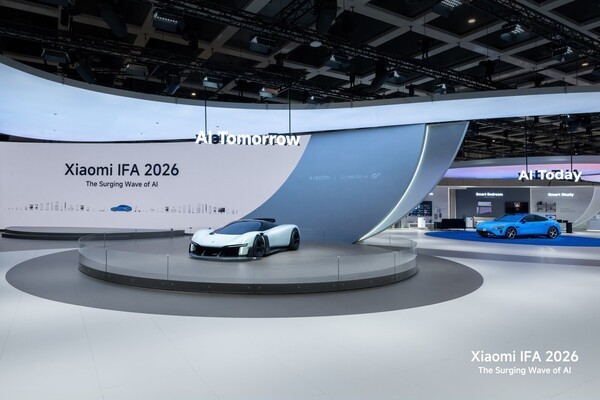
Xiaomi announced that it had participated in 'IFA (Innovation For All) 2026' and unveiled its largest-ever standalone overseas exhibition booth. The exhibition space spans more than 3,300 square meters, and the showcase features more than 380 products. The presentation was designed to condense products, next-generation technologies and real-world use cases.
At the event, Xiaomi positioned the 'Human×Car×Home' smart ecosystem as the centerpiece of its public showcase. The ecosystem spans personal devices, smart home products and smart mobility. Through it, Xiaomi presented its smart ecosystem on the global stage.
Xiaomi introduced a way to connect devices and services across different spaces using AI. It emphasized that this approach enables AI to deliver a more intuitive experience in everyday life.
Xu Fei, Xiaomi's CMO, said this year's IFA participation marks an important milestone in Xiaomi's global journey. She also said Xiaomi's business has expanded from smartphones to smart homes and electric vehicles. She added that the company has continued to invest in foundational technologies including AI, operating systems, semiconductors and smart manufacturing.
Xiaomi presented the Human×Car×Home ecosystem as the connecting axis of its business and technology capabilities, and at IFA it underscored the significance of a large-scale global unveiling of Xiaomi's integrated smart ecosystem to users around the world.
To match that vision, Xiaomi's IFA booth was organized into three main areas: AI Tomorrow, AI Today and the Human×Car×Home product portfolio. The company said the purpose of the layout was to guide visitors step by step, from future-oriented concepts to AI experiences in daily life and then to a broad product portfolio.
The AI Tomorrow zone featured Xiaomi Vision Gran Turismo. The display was designed to present new possibilities for future intelligent mobility by combining automotive design, high-performance technology and digital experiences.
The AI Today zone centered on the Xiaomi SU7 Max and real residential settings such as the kitchen, living room, bedroom and study. Visitors could experience how AI organically connects and controls personal devices, cars and smart home products.
Xiaomi said the AI Today zone was designed to show how it responds to a variety of everyday needs. As a result, the exhibition was structured to sequentially present future AI vision, current AI use in daily life and the Human×Car×Home product portfolio.
This area served as the Human×Car×Home portfolio section and was divided into 7 categories: kitchen appliances, cleaning appliances, air management, home entertainment, home security, personal devices and smart mobility. The exhibition features more than 380 products.
The area placed devices from multiple product categories together to showcase the company's message. That message focused on core technologies, system capabilities and how products with a consistent design language are linked through an organic user experience across product lines.
Xiaomi describes Human×Car×Home as a people-centered intelligent ecosystem. The connected targets of the ecosystem are personal devices, smart electric vehicles and smart home products. Its goal goes beyond simple device connectivity.
Xiaomi cited AI and Xiaomi HyperOS as its foundational technologies, saying they enable products and services to work organically across a range of situations. The company said these technologies help deliver experiences tailored to users' actual needs and provide a more intuitive and seamless smart experience. As AI advances, Xiaomi said the direction of smart experiences is expanding from simple device connections to understanding user needs and proactively providing services.
As the direction for next-generation AI, Xiaomi pointed to understanding real environments and contexts, organically linking multiple devices and supporting everyday tasks, rather than merely answering questions on a screen. The company said next-generation AI must understand the context of real life and be able to manage multiple devices together if it is to move beyond simple question-and-answer interactions.
Xiaomi presented the Human×Car×Home smart ecosystem as the foundation that makes this possible. Its explanation was that smartphones, cars and smart home devices are connected around the user so that AI can understand context such as time, location and surroundings, the necessary devices can work together and services can become more natural and proactive.
At this year's IFA, Xiaomi showcased a range of everyday use cases for the smart ecosystem. It cited an example in which, when a user is heading home, the system adjusts the lights and air conditioner before arrival based on time, location and weather information.
It also introduced examples in which a request to print a photo just taken at home triggers coordinated actions across multiple devices, and in which lighting, curtains and indoor temperature are adjusted together to match the activity during reading.
Xiaomi said it continues to make long-term investments aimed at realizing smart experiences, citing core technologies such as AI, operating systems, semiconductors and smart manufacturing as its investment areas. It also said foundational technologies such as HyperOS support tighter hardware-software integration, and that the scope of application extends across smartphones, cars, smart home devices and new form factors.
Along with that, Xiaomi said it is continuously strengthening its capabilities in self-developed AI models. Recent models it cited included MiMo-V2.5-Pro, Miloco and Miclaw, and it said these models are being used to improve AI understanding, reasoning and execution capabilities while expanding AI support beyond simple question answering to complex real-world tasks.
In self-developed semiconductors, the company said it is focusing on securing core technologies that will determine user experience and long-term technological competitiveness. The areas of innovation include computing architectures and NPU, and Xiaomi said these efforts are aimed at improving on-device AI performance and energy efficiency.
Xiaomi described smart manufacturing as the means by which technology innovation is turned into real products and scaled into mass production.
The company said it has built smart manufacturing capabilities across 3 major areas in mainland China: smartphones, electric vehicles and home appliances. Xiaomi's smart factory has the capacity to produce about 10 million flagship smartphones a year.
The smart factory in Wuhan was introduced as a facility that integrates R&D, production and verification functions. The smart factory houses 46 research labs.
Xiaomi also unveiled new AI computing technologies to support the Human×Car×Home smart ecosystem. The presentation of its latest computing technologies covered how AI experiences can be implemented across diverse devices and environments.
Xiaomi unveiled its first flagship smartphone, the '18 Fold.' The '18 Fold' is equipped with the next-generation self-developed 'XRING O3' chip. Through this unveiling, Xiaomi introduced its latest technologies related to mobile computing, foldable form factors and on-device AI, while also highlighting that it is advancing technologies in these areas.
The exhibition included 3 vehicles and highlighted how the Human×Car×Home smart ecosystem is expanding into mobility. It also presented Xiaomi's electric vehicle technology direction, from future-oriented concept cars to today's intelligent driving experience.
The centerpiece of the car display was 'Vision Gran Turismo.' The vehicle is a concept car created for the racing game series 'Gran Turismo' and is intended to present the design and technological possibilities of a future high-performance electric vehicle.
Xiaomi Vision Gran Turismo was designed as a virtual concept car. Xiaomi said the vehicle is characterized by a future interpretation of car design, aerodynamics and intelligent interaction that goes beyond physical constraints.
Its exterior concept is 'Shaped by the Wind,' and a teardrop-shaped cockpit was applied as an exterior element. It also features the 'Active Wake Control System,' which has the function of actively controlling airflow at the rear of the vehicle.
At the exhibition, the new SU7 and SU7 Ultra were unveiled at the same time, and the wide product portfolio of smart home brand 'Mijia' and its smart home strategy were also introduced.
In the car segment, the SU7 was presented as featuring an elegant and sporty design along with tight integration with HyperOS and Xiaomi's smart ecosystem. The SU7 Ultra was positioned as a high-performance flagship model that embodies Xiaomi's electric vehicle engineering capabilities.
In the smart home segment, Mijia put forward 'The Art of Smart Living' as its core value. It also presented the combination of user-centered intelligent technology, proven quality and practical design as its guiding direction, saying this approach delivers a natural and intuitive smart home experience in daily life.
Xiaomi said it plans to continue strengthening smart home products and services to expand a more integrated and intelligent smart home experience. It also said it will extend the use of AI beyond the digital environment and into real daily life, and work to make intelligent services part of everyday living.
Source: TECHWORLD · Lee Gwang-jae
Original: https://www.epnc.co.kr/news/articleView.html?idxno=406517
References
This article was produced with the help of an automated content generation algorithm.
Source: TECHWORLD
View originalThis article was summarized and organized by BizCrush based on the original article from TECHWORLD. For exact quotations and full details, please refer to the original article.